
Christian activists urged to seek common cause with non-believers
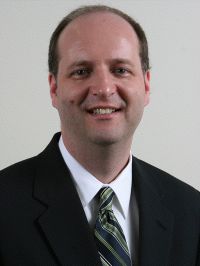
VANCOUVER -- Canada's increasingly secular society means Christian social activists have no choice but to broaden their agenda and start building coalitions with non-Christians who share the same goals on an issue, according to Derek Rogusky, senior vice-president of Focus on the Family Canada.
"It's more out of necessity . . . because there is a lower number of people identifying themselves as Christians," he said. "And if you want to get something done, you've got to start working with those people."
Rogusky issued his challenge to about 100 people attending a seminar in downtown Vancouver on the interface between faith and politics hosted by Reform Party founder Preston Manning and his Calgary-based Manning Centre for Building Democracy.
This need to make common cause with non-Christians, Rogusky said, has special relevance for British Columbia, where more than anywhere else in Canada, fewer and fewer people describe themselves as Christian.
As the 2001 Census revealed, BC reported "the lowest proportion of Roman Catholics among the provinces" at 17.2 per cent, while 31.4 per cent called themselves Protestant, down 11 per cent from a decade earlier. By contrast, 35.1 per cent professed to have "no religion," compared to 16.2 per cent for Canada as a whole.
"I think we're going to see that more and more in Canada as the label 'Christian' doesn't have as much meaning as it once did, where people . . . only take that label if it really means something to them," said Rogusky.
As for which issues to tackle, Rogusky suggested several where Canadians generally seem to be in agreement. He cited a 2003 Ipsos-Reid survey to show that evangelicals and "all others" share a similar desire to reduce homelessness; help children caught up in poverty, child pornography and the sex trade; and care for people with HIV/AIDS.
"Depending on what issue it is, it's going to be a different kind of group of people," he said, "but I think that we just need to be seeking those folks out and working with them for a better public policy, better communities and a better nation."
"I'd like to see Christians develop a better capacity for coalition-building," said Manning, especially since "you don't sacrifice your own identity. . . . But you say, 'In order to achieve this objective, I'm willing to work with this other group with whom I don't agree probably on eight or nine things, but we do happen to agree on this.'"
One current issue with potential for coalition-building, he said, is the ban on the use of pre-natal genetic testing to determine the sex of an unborn child. Manning believes this will eventually reveal publicly which abortion clinics routinely terminate more females than males based on the parents' desire for a boy.
"This is beyond the old pro-life, pro-choice debate," he said. "I know feminists who vehemently disagree with any regulation of abortion at all. But when they start seeing those statistics on abortion being used for sex selection, [they'll] say, 'Wait a minute. There's got to be some change here.'"
Rogusky added that "a great starting-point" would be a combined attack on worldwide human trafficking, given that 2007 marks the 200th anniversary of the abolition of the British slave trade -- a campaign largely spearheaded by Christians.
"I mean, who's going to be against us on that?" he asked. "For the Church to take a leadership role in that, I think would do the Church good. It's what people in the churches want -- to stop human slavery -- and it's what Canadians think the Church should be doing."
December 7/2006
