

 IT SEEMS like only a few weeks since I was observing the Great Ottawa
Snowmelt. It required a little less patience this year than the
previous 11 years -- with the capital's spring having come not long after its
Vancouver onset.
And now we are into June -- and the impending National Summit of the First Peoples of Canada, set for June 11-13. Taking the title 'Forgiven: Catch the Dream,' the event will take place in the Civic Centre.
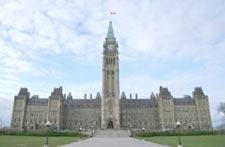
That is an arena where the NHL's Ottawa Senators used to play before ScotiaBank Place was built in the western suburb of Kanata. The centre is on Bank Street, close by the Rideau Canal. Take either the Canal route by boat or jogging trail or the street, by car or bus -- and, within minutes of northward travel, Parliament Hill would come into clear view.
The beginning of the Summit marks the second anniversary of Prime Minister Stephen Harper's historic apology, in the House of Commons, to the First Nations, Metis and Inuit people -- for historic wrongs, including the abuses many aboriginal people experienced in residential schools in Canada.
Chief Kenny Blacksmith is the visionary behind Forgiven. He is a gentle person, and quite patient in the way he works through the process of building consensus among his people, for the task at hand.
Notes one of the Summit's promotional pieces: "A national coalition of First Nations, Inuit and Metis believers in Creator God, under the guiding principles of The Covenant of the First Peoples of Canada, will take their place in a national public response."
The three-day event will focus on three themes: Gathering and witnessing unity of purpose; forgiveness protocols; and celebration of the freedom that forgiveness imparts.
The Summit's website provides much of the rationale for the event, as well as linking to videos featuring Blacksmith.
 It also traces the Journey of Freedom, which began January in Vancouver
and has been tracing its way east and north across Canada, arriving in
Ottawa in time for the Summit.
The Journey has touched major cities like Edmonton, Saskatoon, Montreal and Quebec City. But it has also taken in places like Six Nations (Ontario) and Flying Dust (Saskatchewan) -- locations important on First Nations maps.
The Journey, Blacksmith notes, helps to "prepare the hearts of the people to release forgiveness."
While the Summit is theologically somewhat less than specific, the thrust has come mainly from charismatic-leaning evangelical Christians, many of whom have been impacted by spiritual renewal in First Nations communities scattered across the country.
And, for those who wonder -- both about the cost of the Journey, and whether there is a way to contribute to caring for that cost -- it is noted that "tax deductible receipts will be issued by Gathering Nations International: 788 Covehead Crescent, Gloucester, Ontario K1V 1M3."
As I have listened to some of the run-up to the Summit, I have been impressed that a number of the backers of this event believe it could lead to a long-awaited spiritual renewal in Canada. It is a statement I have heard often, since childhood, from many spiritual leaders. Whatever happens, it cannot help but bring some encouragement to people who believe apologies and forgiveness mean much in a society where conflict study, management and resolution are all part of the mix.
* * *
Lloyd Mackey is a member of the Canadian Parliamentary Press Gallery in Ottawa and author of Stephen Harper: The Case for Collaborative Governance (ECW Press, 2006), More Faithful Than We Think: Stories and Insights on Canadian Leaders Doing Politics Christianly (BayRidge Books, 2005) and Like Father, Like Son: Ernest Manning and Preston Manning (ECW Press, 1997). Lloyd can be reached at lmackey@canadianchristianity.com.
June 3/2010