Native new waves
"More of the heathen are converted to God, and many more are preparing to renounce heathenism," wrote the missionary. "The foundation of darkness has been [shaken] up by God's mighty power."
Some observers would deem such a comment a typical manifestation of the 'white man's gospel' - an alien mindset, imposed for centuries upon vulnerable Aboriginals by imperialistic evangelists.
Angels' food
The quotation, however, comes from an Aboriginal missionary working in the Skeena River area of B.C.
Edward Sexsmith, writing in a 1888 issue of Missionary Outlook, continued: "Our people are busy every day like bees in gathering lots of good Indian food for the winter, also they are eating the angels' food, even the Word of Life."
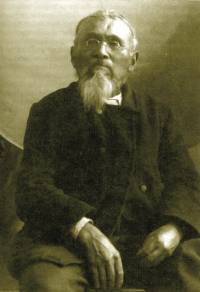
While Native North American evangelists were rare in the 19th century, some of them were sufficiently dynamic to confound the still-prevalent notion that Christianity was the exclusive property of European rulers, conquistadors and merchants. One of the more interesting missionaries from that time, Methodist Arthur Wellington Clah, traveled tirelessly throughout B.C. to evangelize his Tsimshian people. His remarkable diary, written from 1857 to 1909 in rudimentary yet eloquent English, bears ample witness to his zeal.
"When I felt stronger in Spirit of God I start walk," he wrote. "I keep the Holy Bible with me to tell the people about Jesus Christ the lord. Because Jesus Said . . . go ye therefore and teach all nations. So I Believe what God will Said in my heart to teach the poor people . . . God Father Sent words upon us to stop everything wrong Make Him angry stealing liars murder. Jealous fighting Quarling. but god Sent words to know Him and to Save Him and to Believe his Son Jesus Christ who die for us."
At one point, Clah was told he needed a license to preach. He responded: "God gave the Licence in our hearts he gaves us One Soul in our hearts to Teach us to love Him an to know him with all our hearts and Keep his commandments Jesus Teach us how to Prayer and how to thank God. He teach us everything."
Noble savages

Meanwhile, non-Native missionaries plied their trade, many blissfully ignorant of the realities of Aboriginals' lives.
"In natural gifts of mind and heart," declared a 1883 article in The Foreign Missionary, "some of the noblest specimens of manhood that have ever appeared on this continent were of pure Indian blood." Some missionaries embraced - and later rejected -- this 'noble savage' stereotype of Aboriginals. One was John Booth Good, who operated a school for B.C. natives in the mid-19th century. "How great the shock of surprise, and how sobering the actual contact, is mine to tell," he wrote. Elsewhere, he described some of the Natives he encountered in stark terms: "Truly in their then semi-civilized and more than half brutalised condition, a sadder or more disheartening spectacle, morally as well as physically, one could scarcely disclose."
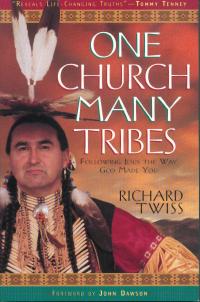
Many other whites of that era clearly lacked any such empathy. "From the very beginning," wrote Richard Twiss in One Church Many Tribes, "misunderstanding, lack of respect and eventually hatred toward [Natives] were evident among the immigrants."
Twiss quoted a powerful 1993 message from non-Native David Tavernier of Lighthouse Full Gospel Center in Parrish, Florida, who wrote: "The Holy Spirit made me aware that our ancestors were an aggressive people, who overcame the less powerful Indian Nations with malice, anger, wrath, hatred, lying, covenant-breaking, deceit, fraud and trickery - all fueled by greed and self-righteous bigotry.
 |
Violence and abuse were repeated countless times - to the degradation, destitution and wholesale destruction of Indian culture and people. Whole tribes were shattered and lost forever [because of] men who, with no fear of God before their eyes, shamelessly and without mercy exercised brutal power over them to satisfy their own sinful desires. It was never the purpose of our Creator Father to crush the original inhabitants of the land in order to 'manifest our destiny.'"
Twiss, who was once a militant American Indian Movement activist, remarkably added: "In the providence of almighty God, I believe it was his plan that the white man from across the great water would deliver the sacred message of Jesus to the First Nations of this continent. Our gracious heavenly Father redeems our worst blunders, and causes all things to work together for good. Had the roles been reversed, I doubt we Native people would have performed any better than the Europeans."
The Jesus Way
Tragically, he stressed, "among nonbelieving Indians the word 'Christianity' has come to mean only the abusive religion of the white man." As a result, he pointed out, many Aboriginal evangelicals "are using the term 'the Jesus Way' to describe their faith in Jesus Christ. This phrase speaks of away of life, a trail we walk on and live by." The Jesus Way, he added, offers Christ to Aboriginal non-believers "in terms that are more in line with the way Native people approach life."
While most observers agree that early attempts to bring the gospel to Aboriginals were fraught with problems, some maintain they played a crucial role in the Great Commission. "We never want to minimize the role that the early missionaries played, and most Christian Natives today are thankful that they brought the gospel," said Roger Armbruster, a non native who works with the Manitoba-based Canada Awakening. However, he cautioned, "many in the Native church are not as impressed that the church brought in a Christianity where the denominations were fighting among themselves, and where the church often became the arm of the civil government . . . to impose assimilationist policies."
According to Walter Selke, a Saskatchewan-based non-Native church planter with NAIM, evangelization of Natives has had increasing success "as missionaries learn to listen and truly become learners within the community that they serve."
"There's been progress, but it's been slow," said George Gunner, a Cree who works mainly in Ontario as national coordinator of First Nations ministry for the Pentecostal Assemblies of Canada. Aboriginals, he stressed, "want to make their own decisions. In the old days, the missionary came in, did everything -- built the church, ran the programs, pastored the church. First Nations people have a different way of doing things. It's not that we don't need help from missions; but now First Nations people want to work through partnerships." Faith in Christ has helped some Aboriginals develop a healing perspective on the history of mistreatment visited upon their forebears. Members of Melaney Gleeson-Lyall's family survived what she termed "horrendous" abuse inflicted by the notorious church-run residential school system.
"The injustice was done under the guise of 'Christ,'" she told Mission Fields, "but those men and women of 'god' used their power for their own purposes. They lost sight of the true God and Jesus Christ." As a result, she added, "now there are generations of people who don't want anything to do with Jesus."
Tribe of Judah
Gleeson-Lyall, however, will not be deterred by such resistance. Originally from a Coast Salish background, she now likes to say she is "from the Tribe of Judah." She was a Catholic at one point, and now attends Kingsway Foursquare Church in Burnaby, B.C. As a member of the New Warriors Drum Team, she has performed in various parts of North America, Europe and the South Seas. The purpose of her ministry is to "bring the heart of Christ back to [Aboriginals] . . . the life of the resurrected Christ that died for them, and died for those people who ran those schools."
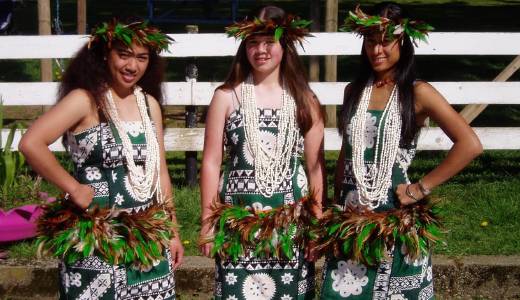
Aboriginals from other cultures are also extensively involved with evangelizing North America's Natives. Vae Eli is a Samoan who works with Alberta-based New Waves. Among other things, the ministry runs a Multi-Cultural Discipleship Training School, and conducts outreaches in Native reservations.
"First Nations people," he told MF, "are a very important part of the church; they are not just a mission field. They have a lot to give to the rest of the body of Christ. If the church could have seen that we need the Natives as part of the body - and that, in God's plan, we cannot do without them - we would have done a lot better in interactions with the First Nations."
"I believe that the destiny of the 'Native Church' and the 'non-Native church' in Canada are linked together," said Armbruster, "and that they need to see one another as partners - rather than as one being dominated by the other, or the Natives being treated paternalistically. In places where the Native church has been empowered to see their own leadership rise up from within, the church is thriving much more than where it is still being controlled by outside organizations."
According to Gunner, Christian faith among Natives "is not really thriving. It's more like surviving." But he hastened to add, "I see a hunger for God, and a move of God. A lot of young people, nationally, want the fire of God." However, he cautioned, "there are not enough Native leaders -- so that tells me there's a problem."
'Baptized' shamanism
Some Christians utilize elements of aboriginal culture as part of their outreach to Natives. Concerns have been expressed that this amounts to 'baptizing' Native spirituality and shamanism.
"This is one area which keeps Natives divided," observed Gunner. "Some in Alberta and B.C. lean more toward utilization of elements of Aboriginal culture, such as drums. There are Native Christians who maintain that we can take Christ into the pow wows. But in eastern Canada and the Northwest Territories, we tend to oppose that.
"I can be Native, and redeem my culture -- things such as hunting and fishing. But traditional Native spirituality has no place in Christian worship. Jesus did not die to redeem our culture -- our eagle feathers, bear paws and drums."
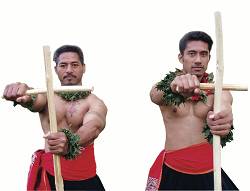
"I believe that as a white missionary it is not my job to judge the cultural expressions that the First Nations People choose to use in their worship of God," responded Selke.
"I use First Nations Regalia and hand drums and native styles of music to share the Good News," stressed Gleeson-Lyall. First Nations culture, she said, "is welcomed in every community - and it is a door that continues to open for ministry purposes. It is powerful to see God return to First Nation non-Christians the identity that man took away from them through residential schools, government and the church.
"We were created First Nations people - and have a unique culture, to be used in the mosaic of the Kingdom of God. Our identity is in Christ first, and culture comes second - but it is intricately woven into our spiritual and earthly heritage." "There is a movement afoot today which is very much of God, that has nothing to do with glorifying the Native culture," Armbruster agreed, "but it does have to do with restoring whatever is in Native culture that is redeemable - such as the Native drums and dances - to glorify God. The non-Native church should not move in a spirit of fear in this area, nor make judgments - unless and until they know the heart of the Native drummer, or the Native dancer.
"Most instruments that we use in our white churches, such as electric guitars, keyboards and drums, have been used at some point for satanic purposes. So when we use these instruments in our services, do we call this 'baptizing' satanism?"
"There are many wonderful expressions of God and witnesses of the Creator in the First Nations' culture," said Eli. "Our job is to encourage the First Nations to bring these back to the One who gave it to them in the first place. We need to introduce Jesus as the son of the Creator - who has always been there, according to Romans 1:20. As the people come to relationship with the Creator through his son Jesus, then their culture and the way they order their lives each day will come into alignment with the Kingdom of God."
Jesus the storyteller
Drama, music, dance and painting, said Gleeson-Lyall, "are the ways of the First Nations culture. So I believe that they are the best means to share the gospel of Jesus, the storyteller. The First Nations arts have become a part of 'popular culture,' and are being utilized for many endeavours. Why not for ministry as well?"
The established church, said Eli, "is using the arts in evangelism; but we are not encouraging the Natives to use their arts for evangelism. Are the Western, European arts any more spiritual than the First Nations arts? Or are the First Nations arts any more demonic than the church arts, which are very European influenced?"
The arts, said Armbruster, "are very important . . . as a form of outreach which is very effective, in my view. The gospel is communicated with much more than mere words - but visually and contextually, in a way that can speak the message in their own heart language. Disciples can be made when Natives understand that God speaks their language."
Many Natives, said Gunner, are not waiting for ministries to help them evangelize their own people. "A lot of Natives have started churches, without outside help. These are ordinary Christians, who felt they needed to do something. Some built their own churches, and started daycares."
"It is exciting," said Selke, "to see First Nations pastors taking over First Nations churches, with a passion to reach their own people."
Further, Armbruster said, "there is a call upon the Native church to reach out to others. It is amazing how open the Jewish people, for example, are to Natives. They have so many similarities in their history that there is an instant bond." However, he maintained, "for the Native church to become strong, there is a great need for more to be called to pastor at the local level to equip the saints, rather than to only feel the call to travel. Where indigenous pastors are committed to a community, there you see the local church become strong." Despite slow movement in some areas, some involved in Native ministry believe extraordinary things are in store for Aboriginal Christians.
North America's First Nations people, said Eli, "are the most gracious and forgiving Aboriginal people I've ever worked with; yet they are warriors through and through. When they and their culture are welcomed into the church to worship Jesus, Canada and America will suddenly enter into the original ancient plans of Yahweh - and revival will hit our land and our continent, and the whole world will fear and bow to the name of our God.
"But the church needs to be discipled into this process - so that it will no longer be a strange place for the First Nations and Native Americans."