
Church care group helps Sudanese refugees
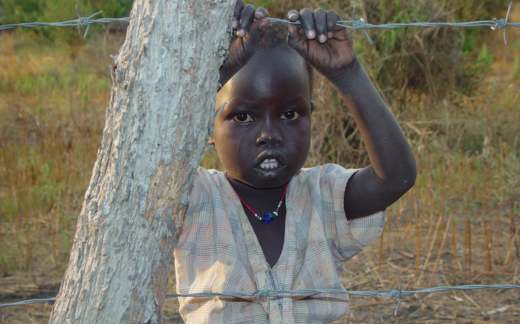
WHEN Mennonite Central Committee (MCC) approached North Kildonan Mennonite Brethren Church with a request to help three Sudanese refugee boys, Henry Bergen's care group was quick to step forward.
"There were people among us who could relate to their experience," says Bergen, whose family immigrated to Canada in 1947 as a result of conflict in eastern Europe. "Back then, there were people in Canada willing to help us, and now we wanted to give something back," he says.
The young Sudanese men, ages 13, 15, and 20, had fled their war-torn homeland. Sudan has been mired in civil war for decades. The root causes of conflict include religious differences, demands by the Sudan People's Liberation Army for a greater role in government, and access to revenues from the country's petroleum-rich land.
"Here in Canada, we can sit and watch the troubling events taking place in other parts of the world," says Bergen. "Few people fully understand the fear and uncertainty that these young men would have experienced."
Two million people have been killed in Sudan over the past two decades, four million remain internally displaced, and more than one million live in exile in other parts of the world. The young men arrived at Winnipeg International Airport with little more than the clothes on their backs, and each other.
>From a refugee camp in neighbouring Ethiopia, they had applied and been accepted as refugees by the Canadian government. A federal refugee sponsorship program would look after their financial needs for the next two years. Bergen's church care group had responded to a request from Ottawa, via MCC, to provide social support.
Bergen describes his own refugee experience as typical, similar to that of many other Mennonites. He had arrived in Canada as a 16-year-old boy with his mother and her children, fleeing their home in the Ukraine during the Second World War, travelling through refugee camps and finally to West Germany before immigrating to Canada.
"Our stories have some similarities, but they are still not the same," says Bergen. "Many Mennonites were reunited with their families after arriving in Canada, but that won't be the case for these young men."
The father of the younger two boys had gone to fight and never returned home. Illness had claimed the life of their mother en route to a refugee camp. Sickness took the life of an uncle travelling with them as well. It was their second uncle, now 20, who accompanied the surviving boys to Canada.
For now, all three are living with Bergen and his wife. The Bergens, their care group and other members of the North Kildonan Mennonite Brethren Church are all taking an active role in helping the boys adjust to life in Canada, getting them enrolled in school, introducing them to a neighbouring Sudanese family down the street, and welcoming them to the congregation.
"We know there will be challenges, but nothing is insurmountable," says Bergen. "For now, they're enjoying some of the games we've introduced to them, like crokinole, and we hear a lot of laughter coming from the basement."
He concludes: "Hopefully it will help them shed some of the tensions and fears that have been such a significant part of their lives."