
B.C. Christian News, November 1997
Lessons from Bosnia's fragile peace
BC Christian News, · Editorials
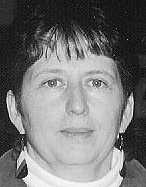
Annie McKitrick spent two weeks in Bosnia Herzegovina last month, where she was part of a team of 250 observers who were dispatched throughout the country to provide an international presence and report back on the fairness of the election process. The team included Members of Parliament and Elections Canada workers.
I RECENTLY returned from a country where ethnic hatred prevails, and is officially sanctioned by the government.
For those of us from Canada -- where we have worked hard at respecting our ethnic diversity and eliminating all forms of discrimination -- what has occurred in the former Yugoslavia is hard to grasp.
The part of Bosnia Herzegovina where I monitored the election is in the Serbian-controlled area. All traces of Croats or Muslims have been erased; mosques have been destroyed and villages razed.
The presence of heavily-armed troops is currently preventing hostilities, but I discovered that peace was only skin deep. While travelling from the Muslim side of the country to the Serbian side in a van -- which unfortunately did not carry diplomatic license plates -- we were shot at and pursued for a frightening 20 kilometres because the van was thought to be carrying Muslims or Croats.
In another instance, our Serb driver and interpreter were visibly frightened when accompanying us back to the Croatian side of the country, as we entered a town know to be a Croatian and Muslim stronghold.
On the surface, those we interacted with made an effort to maintain normalcy. But how normal can life be when one is daily reminded of what happened to one's former neighbors, whose houses had been bombed, of your friend who was gang-raped by policemen, of the fact that you cannot walk in the fields for fear of land mines, and where your hopes of university and a career have been shattered?
Children, many of whom lost years of schooling due to the war, now attend schools lacking essential resources, and where they are indoctrinated with ideas that stress the supremacy of their own ethnic group.
The current lack of major clashes between ethnic groups is directly attributable to the massive numbers of troops and police officers (including the RCMP) that the international community has sent.
I have returned to Canada with a greater appreciation of living in a country now committed to policies of human rights and multiculturalism, where people of many different ethnic backgrounds participate fully.
However, this understanding of full civic rights for all is relatively recent, as Asians and First Nations people obtained the right to vote only in the late 1940s. Resentment of those who are ethnically or linguistically different still dominates the thinking of many Canadians.
Religious faith was stifled and religious teaching discouraged in the former Yugoslavia; in Canada the church must play a leadership role in dealing with racism and resentment. Increased integration of people from various ethnic and linguistic backgrounds in our churches would be a step in the right direction.
Annie McKitrick is a consultant in the area of multiculturalism and community development. She is also a School Trustee in Richmond and was formerly a missionary with Overseas Missionary Fellowship.