
BCCN: God has not abandoned Sudan
• BC Christian News • JANUARY ISSUE 2000 • VOL. 20 #1 • Formerly "Christian Info News" •
God has not abandoned Sudan
- - - - - - - - - - - - - - - - - - - - - - - - - - - - - - - - - - - - - - - - - - - -
By David F. Dawes
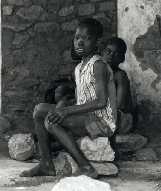
AS THE HORRORS of Sudan gain increasing media coverage, Christians continue their efforts to help the beleaguered populace. Ministries such as Voice of the Martyrs, LeSEA Feed the Hungry and the B.C.-based Friends in the West are conducting campaigns to aid the strife-worn region.
The 16-year war in Sudan has resulted in an estimated two million deaths. There have been frequent accusations levelled at the governing National Islamic Front, alleging that, in its zeal to defeat the Sudan People's Liberation Movement, the regime has committed atrocities against non-Muslims, including Christians and animists.
There have been reports outlining nightmare scenarios of torture and slavery; critics have spoken of forced conversion to Islam and literal crucifixions of Christians. The alarm has been sounded mainly by Christian groups; but allegations have also been made by organizations such as the United Nations and Amnesty International.
Recently, North American attention has been focused on Talisman Energy Inc. of Calgary, Canada's biggest oil and gas exploration company. Talisman has extensive investment in an oil project in Sudan.
Churches and human rights groups insist that oil revenue is financing the war and therefore encouraging further atrocities; some churches own stock in the company, and have attempted to exert pressure on Talisman officials. The deluge of publicity has resulted in the devaluing of Talisman stocks, and criticism of the Canadian government's reluctance to pressure the company or to institute sanctions against Sudan.
Meanwhile, Christian ministries soldier on.
Friends in the West (FITW) operates from an office in Langley. The focus of the ministry is its African Children's Choir, which performs to raise funds for children victimized by armed conflict in Sudan and elsewhere.
FITW staff and volunteers recently visited Southern Sudan, where they held a leadership seminar for 40 Sudanese pastors and teachers, and also provided training in first aid and trauma counselling. They also toured seven literacy schools established by FITW. The schools currently serve 1,400 children, and represent a tangible restoration of stability to the devastated region.
Team member Gary Short was galvanized by the tour, and declared: "These people, after all these years, have still not lost hope. They need our help, not because the lamp of faith is flickering, but because they are battle-weary. They have been alone on the front lines; it's time for the church to send in spiritual reinforcements."
One highlight of the trip was a prayer dinner in Nairobi, Kenya. The dinner was held on the eve of peace talks aimed at halting the Sudanese civil war, sponsored by the Kenyan government; the event was attended by Southern Sudanese officials, and Anglican, Presbyterian and Pentecostal church leaders.
For FITW director of Africa programs Louise Short, the dinner was a pivotal event. "It was a very emotionally-charged evening, as the different leaders shared with us their views of the situation. We wondered why no one had brought them together like this before. We left determined to remember them in prayers, and renewed our commitment to help them rebuild for the future."
Some ministries are currently active in the more unstable areas of the country; they have witnessed first-hand the strength of faith nurtured in conflict and isolation.
LeSEA Feed the Hungry has been working with Voice of the Martyrs, travelling into Sudan several times to distribute food and supplies to some of the most endangered people in the country. Joe Wilkey, LeSEA's director of international development, recently returned from one such expedition. He was especially moved by the tenacious Christian faith he encountered in the village of Wuncule.
"The Anglican and Catholic churches," he writes, "came together along with some other independents, and there was a great deal of singing and praising God all morning in African style, with drums and homemade instruments. I preached to the group, encouraging them to continue to hold fast to the faith. I also told them that they were actually ministering to us because of their willingness to die for their faith."
Another high point came when Wilkey's team was about to leave. "Groups of men, women and children with spears and banners [were] chanting and coming toward us. It was the churches coming to thank us. Word had been sent out to the surrounding areas, by drum and by runners, that we were there to feed the church. They surrounded the plane, praising God for our presence there. It was an overwhelming sight. Our plan to bless them was pale in comparison to the blessings we received."
Wilkey concludes: "This project was by far the most significant that we have done in the Sudan. Most of the area was populated with the churches who were willing to suffer for their faith. [The project] brought a sign to those who were lost, that God does care -- and encouragement to those Christians who have been suffering for such a long time."
Call Friends in the West: (604) 532-9660; LeSEA Feed the Hungry: (604) 543-3519; and Voice of the Martyrs: (905) 602-4832.