
BCCN: Bach Academie a treasure trove of sacred masterworks
BC Christian News, · Arts
• BC Christian News • NOVEMBER ISSUE 2000 • VOL. 20 #11 • Formerly "Christian Info News" •
Bach Academie a treasure trove of sacred masterworks
- - - - - - - - - - - - - - - - - - - - - - - - - - - - - - - - - - - - - - - - - - - -
By David F. Dawes
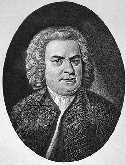
TO MARK the 250th anniversary of Johann Sebastian Bach's death, a German company has released recordings of all of his extant music. The Bach Academie, presented by the Hanssler Classic label, consists of more than 160 CDs.
One purpose of the project is to highlight some of Bach's more obscure material, such as his four Lutheran Masses. In addition to his own compositions, the series also includes CDs of his choral arrangements for dozens of hymns.
The Bach Academie's artistic director is acclaimed conductor Helmuth Rilling, who has been extensively involved with sacred music. He is the only conductor who has recorded all of the known Bach church cantatas, and has also commissioned major sacred works by composers such as Arvo Part and Krzysztof Penderecki.
Calling Bach "perhaps the most important composer" of all time, Rilling asserts: "His composing, his musical philosophy is very much the turning point in the history of music . . . When you technically master Bach's music, the door to a spiritual dimension opens up at the same time."
Rilling and his colleagues have lectured on Bach in various countries. He observes: "In East Europe, you could be sure that the young people there would raise the question of freedom. In Japan, they were interested in the historical environment in which Bach's music was played; so we reconstructed whole church services with Bach's music, and people would ask us whether you had to believe in Christ in order to understand the St. Matthew Passion. In Venezuela, after a lecture about the Christmas Oratorio, performances of this piece were spontaneously organized all over the country, in which . . . hundreds of kids from the slums were allowed to sing along to the hymns."
Asked to give reasons for the composer's growing popularity, Rilling states: "Bach impresses people everywhere, because they recognize the order which informs his music. This order does not restrict people or fence them in -- but offers space, governed by the utmost freedom. Everyone finds this fascinating, irrespective of culture or tradition."
The best sacred choral works of some master composers -- such as Bruckner's Mass in F Minor, Beethoven's Missa Solemnis, Liszt's Christus, Verdi's Requiem and Penderecki's St. Luke Passion -- are equal in quality to Bach's work. But, as the Bach Academie amply demonstrates, no composer comes close to Bach for the sheer number of great Christian-based works. Employing his Gachinger Kantorei choir and the musicians of the Bach-Collegium Stuttgart, Rilling has given the world some of the very finest performances of this rich repertoire.
• Mass in B Minor, 1999.
In this work, Bach was summing up the music of the preceding two centuries, and taking it to an exalted plane. It has plenty of his wonderful choruses -- which are the glories of his best work, and the very essence of sublimity. The opening 'Kyrie Eleison' is subdued, very effectively conveying a penitent mood; this is followed by 'Christe Eleison,' featuring a lovely intertwining duet between sopranos Sibylla Rubens and Juliane Banse; then the 'Kyrie' returns, now with a poignant quality -- and seldom has repentance sounded so uplifting.
'Cum Sancto Spiritu,' 'Sanctus' and 'Osanna' are joyfully energetic choruses, sweeping waves of celebration over the listener. The most effective moment occurs when the terribly sombre 'Crucifixus' abruptly leaps into the wonderfully triumphant 'Resurrexit,' jolting one out of the previous passage's reverie of grief.
• St. Matthew Passion, 1994.
From the exquisite opening chorus to the magnificently touching closing passage, this is one of the supreme choral works. Christ is impressively portrayed by bass Matthias Goerne, conveying the Saviour's stalwart, authoritative pursuit of his mission. The choir is also very effective at playing various characters -- as in their hair-raising portrayal of the crowd calling for the release of Barabbas.
The emotional watershed is the much-loved aria, 'Erbarme Dich, Mein Gott' ("Have mercy, Lord, on me"), beautifully sung by alto Ingeborg Danz. As the Evangelist, Canadian tenor Michael Schade embodies the wide gamut of emotions experienced by a true disciple of Christ, powerfully conveying the deep importance of the proceedings; his brilliant performance is the heart and soul of this exemplary production.
• St. John Passion, 1996.
Some critics have maintained that this work is somewhat inferior to the St. Matthew Passion. Judging from this recording, it's hard to understand why. The opening chorus is glorious in its consummate artistry and sheer power; it must surely be among Bach's very best work. Once again, Schade brings exquisite sensitivity and commitment to his role as the Evangelist.
One of the high points is the aria, 'Es ist Vollbracht' ('It is finished'), movingly sung by Danz. It begins with simple, spare accompaniment, then suddenly launches into an exuberant statement of the triumph represented by Christ's atoning death, and finally returns to the plaintive mood of the beginning -- an altogether stunning effect. This recording also includes five pieces from earlier versions of the work. Of these, the best is the stately 'Christe, du Lamm Gottes' ("Christ, thou Lamb of God"), which Bach once used as the concluding chorus of the work.
• Praise and Thanks, Death and Eternity, 1976 - 84.
It is estimated that Bach produced more than 400 cantatas; of these, 194 sacred works survive. Thirteen of them are presented in this excellent compilation. As expected, the choruses stand out, as do several sparkling trumpet passages. Notable soloists include the renowned bass, Dietrich Fischer-Dieskau; he especially shines on I Will the Cross-Staff Gladly Carry, conveying a palpable longing for Jesus.
The standout is soprano Arleen Auger, whose pure and supple voice is featured in most of the cantatas. She portrays the Soul in I Had So Much Distress and Woe. The cantata is a delightfully fanciful dialogue between the troubled Soul and Jesus -- with the Soul convinced that she will meet a horrible fate, and the Lord reassuring her. Auger also delivers an absolute tour-de-force performance in the soprano solo cantata, Praise Ye God in Every Nation. As an introduction to Bach's incredible versatility in sacred composition, this collection can't be beat.
See also: Celebrating Bach's life -- and his faith.
andBach's music honoured in many ways