
BCCN: Celebrating Bach's life -- and his faith
BC Christian News, · Arts
• BC Christian News • NOVEMBER ISSUE 2000 • VOL. 20 #11 • Formerly "Christian Info News" •
Celebrating Bach's life -- and his faith
- - - - - - - - - - - - - - - - - - - - - - - - - - - - - - - - - - - - - - - - - - - -
By Flyn Ritchie
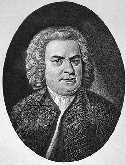
THE 250th anniversary of Johann Sebastian Bach's death has been marked by books which offer new insights into his life and work.
• Calvin R. Stapert: My Only Comfort, Eerdmans, 2000.
Subtitled 'Death, Deliverance and Discipleship in the music of Bach,' My Only Comfort focuses on his text-related works, allowing readers to appreciate the spiritual roots of his music.
Stapert provides the doctrinal and scriptural starting points of each work, as well as a literal translation of the text set beside the original. He then offers a commentary on the work as a whole, giving particular attention to the way the music emphasizes, illustrates and interprets the text.
He addresses scholarly disputes about whether Bach had any particular liking for church music, or whether it was just a job for him. This controversy followed the publication, in the 1950s, of a chronology of his sacred cantatas.
Most of the cantatas, it was revealed, were written during a short burst early in his tenure as a cantor at Leipzig, rather than throughout his time there (1723 - 1750). The implication, spelled out by some scholars, was that he produced them only as long as they helped his career.
Stapert's view is that "it was not merely a job; it was a vocation. Or rather, writing music to the glory of God was his vocation, as he usually proclaimed at the end of his scores with the initials SDG -- Soli Deo Gloria."
He quotes Jaroslav Pelikan on Bach's attitude to his work, which "bespeaks the conviction of Luther and the Reformers that the performance of any God-pleasing vocation was the service of God, even if it did not lead to the performance of chorales. The Bach of the Peasant Cantata, the partitas and the concertos was not 'too secular.' These were, rather, the expression of a unitary . . . world view, in which all beauty, including 'secular' beauty, was sacred because God was one, both Creator and Redeemer."
• Christoph Wolff: Johann Sebastian Bach: The Learned Musician, Norton, 2000.
Bach's was an uneventful life; he lived in small German towns, never went abroad and had few, if any, intellectual or elite associates. Would-be biographers thus face a challenge.
But Christoph Wolff, whose name is virtually synonymous with current Bach scholarship, has produced an impressive 600-page work, which Robert L. Marshall, in a lengthy assessment in The New York Review of Books (June 15), states "is likely to be the standard one-volume Bach biography for some time to come."
Although he feels that Wolff, "like his predecessors, is fundamentally an apologist for [Bach]," he describes Johann Sebastian Bach: The Learned Musician, as "a solid, richly informative treatment, presenting the copious details of Bach's life in a coherent, readable narrative."
Regarding the composer's spirituality, Wolff states: "for Bach, theological and musical scholarship were two sides of the same coin: the search for divine revelation, or the quest for God."
He also reprints a prayer hymn upon which Bach meditated during the week between suffering a stroke and dying in 1750: "Before your throne I now appear / O God, and bid you humbly / turn not your gracious face / from me, a poor sinner. Confer on me a blessed end / On the last day, awaken me / Lord, that I may see you eternally / Amen, amen, hear me."
• Hans T. David, Arthur Mendel, Christoph Wolff, editors: The New Bach Reader, Norton, 1998.
In this volume, the indefatigable Christoph Wolff has revised and expanded upon the work of two earlier Bach scholars. Included are all of Bach's letters, reports, testimonials, complaints, thank you notes and other writings. A wide range of other archival material is also included.
Of particular interest are excerpts from Bach's marginal comments in his copy of Abraham Calov's edition of the Lutheran Bible:
• Beside the beginning of Calov's commentary to Exodus 15:20: "First section for two choirs to be performed to the honour of God."
• Beside the outline of 1 Chronicles 26: "This chapter is the true foundation for all church music that is pleasing to God."
• Beside Calov's commentary on 1 Chronicles 29:21: "A splendid example [showing] that, besides other forms of worship, music especially has been ordered by God's spirit through David."
• Beside the text of 2 Chronicles 5:13: "With a devotional music, God is always in his presence of grace."
For a related article please see here