
BCCN: Understanding restorative justice
BC Christian News, · Arts
• BC Christian News • NOVEMBER ISSUE 2000 • VOL. 20 #11 • Formerly "Christian Info News" •
Understanding restorative justice
- - - - - - - - - - - - - - - - - - - - - - - - - - - - - - - - - - - - - - - - - - - -
By Wayne Northey
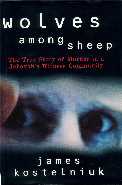
• James Kostelniuk: Wolves Among Sheep: The True Story of Murder in a Jehovah's Witness Community, HarperCollins, 2000.
• James J. Megivern: The Death Penalty: An Historical and Theological Survey, Paulist Press, 1997.
NOVEMBER 12 - 18 is Restorative Justice Week in Canada. Something has been happening in criminal justice understandings across Canada, the United States and the world that has produced a favourable climate for restorative justice.
Restorative justice concepts include these themes: crime is principally between the victim and the offender, with the wider community implicated; crime calls forth all the healing resources of society, and redirects all its punitive impulses towards restorative outcomes; crime is a peace issue, not a war issue; crime rarely involves the state as primary victim, and never enlists it as executioner.
Wolves Among Sheep raises restorative justice issues. Kostelniuk recounts the utterly tragic events surrounding the murder of his former wife Kim, and children Juri (10) and Lindsay (8). They were killed by Jeff Anderson -- Kim's second husband, who was estranged from her -- in Burnaby, August 29, 1985.
The story takes place in the context of a rigid Jehovah's Witness faith, to which the murderer and his victims all adhered. Kostelniuk, who had also been a member, had left the religion by that time.
In the epilogue, Kostelniuk explains that writing the book "was a way of shining a light on the darkness, of bringing the truth to light." He saw it also as a means of memorializing the victims, especially his children, and of dealing with his guilt for not having saved them. The story is written in sparse prose which makes for compelling reading, despite its disturbing subject matter.
I know the story well, having visited Anderson in jail for 15 years. As well, Kostelniuk researched part of his book while a guest at my house. I visited him numerous times in Manitoba, and have communicated with him intensely and repeatedly about the events in the book.
Kostelniuk used me as a 'foil' persona in seeking to make a statement about what to do with the likes of Anderson. Part of the story is the author's quest to understand the killer's motivations. Six years of correspondence between Kostelniuk and Anderson, and one face-to-face visit, provide the essential data for the investigation.
The author affirms a robust commitment to the tenets of restorative justice -- with clear limits. He quotes approvingly from David Paciocco's 1999 book, Getting Away With Murder: The Canadian Criminal Justice System: "The more gentle among us have an abiding but naive belief that we can rehabilitate our worst offenders, even against their will."
On the contrary, he argues, "Those killers who have committed the most heinous kind of first-degree murder, who by the very nature of their acts and inability to grasp the full import and effect of their crimes, cannot possibly ever be considered capable of rehabilitation . . . and there must never be any possibility of release from prison."
He includes the killer of his kids in that category, and counts me among the naive. I guess that, by his criteria, I am.
Kostelniuk asks of himself: "Do I support the reinstatement of capital punishment?" He responds: "No, like many others I believe our society has evolved beyond such primitive and barbaric expressions of justice, and agree the death penalty is as immoral as the crime it seeks to punish."
The Death Penalty: An Historical and Theological Survey considers that issue in depth. Restorative justice invariably raises the question of the legitimacy of punishment in response to crime, or as it is often referred to, 'retributive justice.' Capital punishment is the ultimate application of the punitive side of retributive justice.
The jacket of the book makes the simple remark: "The Death Penalty includes more information on the history of thinking about capital punishment than is available in any other English work." The book delivers that, and much more.
The massive survey concludes thus: "In the end, as in the beginning, the case for respecting human life prevails: from a Christian perspective, the death penalty has nothing to be said for it, and everything to be said against it." It is a resounding apologia for restorative justice, with reference to the most extreme case.
The death penalty is a crucial subject for all restorative justice proponents. And for all Christians, the death penalty raises ultimate questions about the doctrine of hell.
James Kostelniuk once asked his second wife if she still supported capital punishment after they had visited Jeff Anderson in prison. She responded: "Not for this one. He's personal."
That is the ultimate aim of restorative justice: to make crime personal. Then let the road to healing begin!
Wayne Northey is director of M2/W2 Association in B.C., a Christian prison visitation agency.