
• BC Christian News • APRIL ISSUE 2001 • VOL. 21 #4 • Formerly "Christian Info News" •
DVDs improve quality and fill in the gaps
IF WE bracket off Oscar-nominated films like Traffic, which are shown in a handful of cities in late December but don't go into wide release until after the New Year, the first month or so of each year is often something of a wasteland for new movies; one weary critic suggested a few years ago that studios cancel January altogether. This year, the winter months have been more dismal than usual, and I often find myself looking forward to home videos with greater anticipation than I do going to the theatres.
This is partly because I have finally joined the DVD bandwagon. DVDs, or digital video discs, are the same basic size and shape as compact discs, and they do for video what compact discs did for audio, providing an unparalleled clarity of picture and sound, and allowing viewers greater flexibility in skipping straight to the scenes they want. Unlike laser videos, DVDs are also very affordable, and because it is possible to fit more than three hours of content on a single-sided disc, most films can be watched without any interruption.
But the real attraction is the bonus material which comes with many DVDs. Separate audio channels allow you to watch some films with all the sound turned off except for the music, or to hear critics and filmmakers analyze a film as it plays. Many discs include trailers, behind-the-scenes documentaries, and scenes that were deleted before the films went to the theatres. Some discs even allow you to choose between two or three different versions of the same film.
Sometimes, the bonus features highlight themes that have a special significance for Christian viewers. In a commentary track for the noir-ish science-fiction film Dark City, film critic Roger Ebert points out an obscure biblical allusion or two that most viewers would probably miss. The Fantasia discs allow you to page through original sketches for all the cartoons, including a series of overtly Christian designs for the 'Ave Maria' sequence that was eventually abandoned in favour of a more non-religious approach.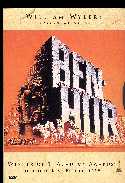
The discs for summer hits Gladiator and X-Men both include deleted scenes that refer to the persecution of the early church. In the deleted scene from Gladiator, Maximus (Russell Crowe) watches through a barred window as lions attack Christian families in the Colosseum; the director says this scene was cut from the film because the dummy mauled by the lion did not look sufficiently lifelike. And in the scene from X-Men, a history teacher tells the super-powered teens in her class about the persecution faced by Christians before the conversion of the emperor Constantine. The parallel is obvious: like the early Christians, the teen heroes are despised and rejected by the world, but must try to redeem it even so.
Thanks to the success of Gladiator, which currently ranks as the best-selling DVD of all time, studios are now combing through their vaults in search of other ancient epics they can repackage, many of which have biblical themes. For obvious reasons, films that have an obvious marketing hook are sometimes given priority over films with a more spiritual bent. The Robe, a classic 1953 film based on Lloyd Douglas's novel about a centurion who oversees the crucifixion of Christ and ultimately comes to faith in him, has not yet come out on DVD, but in March, the studio released its much inferior 1954 sequel, Demetrius and the Gladiators. Note the title.
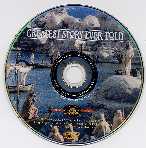
Two other major films were released last month, both part of what I like to call "the Charlton Heston Bible movie trilogy." Heston won an Oscar for playing the lead role in the 1959 version of Ben-Hur, and he also steals the show as John the Baptist in George Stevens' life-of-Christ epic The Greatest Story Ever Told. (The Ten Commandments, the first film in this 'trilogy,' has been available for some time.) Both films are presented in their original theatrical aspect ratio, which means the picture is nearly three times as wide as it is tall, and I find I have developed a new appreciation for The Greatest Story Ever Told, in particular. It's a flawed film in many ways, but Max von Sydow is impressive, and sometimes even moving, as Jesus, and the scenery, once you get used to its old-west, cowboy-movie feel, is breathtaking.
Buyers should beware, though. The extras that come with DVDs are not subject to the same scrutiny that movies themselves must face before they are considered appropriate for all audiences. Ben-Hur, for example, is rated a family-friendly G -- which is remarkable, when you consider how much violence it has -- but the bonus materials have no rating whatsoever. These include a documentary in which screenwriter Gore Vidal says he gave the relationship between Judah Ben-Hur and Messala a homoerotic subtext, and a clip of the silent 1925 version of Ben-Hur in which topless women throw flowers in the street during a triumphal procession -- and in Technicolor, no less.
Still, those who have venerated Ben-Hur as an example of what Hollywood used to produce when it took Christianity more seriously, may learn something from these extras. The documentary points out that General Lew Wallace wrote the original novel on a dare from an agnostic, and ended up becoming a Christian himself. But it also points out that the 1959 film is "vague" when it comes to the conversion of its protagonist. In the book, and in the silent movie, Judah Ben-Hur's conversion to Christianity is fairly explicit, but in the Heston version, he converts to what one commentator calls a belief in "the brotherhood of man."
DVDs are a hit because they allow for greater interactivity -- one version of the Men in Black disc even lets viewers "edit" scenes together for themselves. At their best, they can also encourage us to be more critical viewers, in the best sense of the word