
November 2001
A case for tragic optimism in troubled times
BC Christian News, · Counselling Supplement
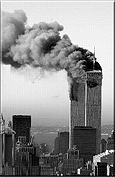
"OUR LUCK has run out," CNN's Jeff Greenfield poignantly commented in the immediate aftermath of the September 11 catastrophe.
What was once unimaginable has happened in our backyard. Terrorism, which has wounded so many other countries, has descended on American soil. The terrorists have struck, with such deadly force and accuracy, the symbols of American wealth and might -- the World Trade Center and the Pentagon. The world's only superpower now seems so vulnerable; the nation has been torn with grief by the sheer magnitude of the death toll. Other countries, including Canada, have also lost citizens in this disaster.
How does one cope when terror hits home, and destroys everything one values dearly? How do we respond to the ongoing threat of bioterrorism, as people are infected by anthrax-laden letters? And how will we deal with future terrorist attacks, which may very well result from America's retaliatory bombing of Afghanistan? It is not easy to cope with such things; but we cannot let fear cripple us, nor can we find healing simply by striking back in anger.
Following the initial shock, numbness and outrage, the enormity of the September attacks has sunk in. We now know that we are no longer safe from terrorist attacks. Americans, especially, now have a heightened sense of the fragility of life; they now realize that all their power, wealth, confidence and competence will not be able to protect them from moments of horror. They will need to renew their faith in God, for security and comfort in a time of great uncertainty.
For those whose lives have been devastated by these evil acts, the real struggle to overcome grief, pain and despair has begun. It is a lonely and difficult journey in a strange and rugged terrain, full of hills and valleys. It will take a lot of courage and resolve to move on to new purposes, new life goals. But we can learn from those who have been there.
Dr. Viktor Frankl, who survived unspeakable horrors in Nazi concentration camps, developed the concept of 'tragic optimism.' Different from positive illusions, tragic optimism refers to "the capacity to hope, in spite of . . . tragic experiences."
Frankl has concluded that it's not helpful to struggle with questions like "Why did God allow this to happen?" There are no satisfactory answers. He thinks that it is more helpful to ask: "What is the meaning for me in this situation? How can I respond in a courageous and responsible way?"
Tragic optimism is predicated on the defiant human spirit, the belief that what cannot destroy me makes me stronger. It has no use for wishful thinking or positive illusions. It is based on at least five virtues:
Affirmation enables one to believe in the value of life, regardless of the circumstances.
Acceptance enables one to confront what cannot be changed ñ both past traumas and future losses.
Self-transcendence enables one to feel worthy of suffering for a higher purpose.
Faith gives one a flickering light in an otherwise very gloomy situation.
Courage enables one to endure the pain and strive for a better future.
These virtues will triumph over evil, and the pain, grief and fear it has inflicted on the human soul. These virtues will give birth to tragic optimism -- the only kind of hope which cannot be dashed by terror.
Paul Wong is director of the graduate program in counselling psychology at Trinity Western University.