
November 2001
Red Cross founder an extraordinary Christian
BC Christian News, · Editorials
AS NEW YORK and Washington were still reeling from the unexpected tragedies on September 11, the Red Cross flew into action, saving lives and bringing hope. Thank God for this wonderful organization; over and over again, it has made a difference in times of great tragedy.
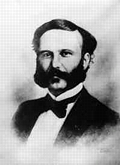
Great organizations invariably are birthed from great people. The Red Cross was birthed from the vision and drive of Jean Henri Dunant, who received the world's first Nobel Peace Prize.
Dunant was a Swiss businessman who happened to be on hand to see the carnage and horror of the battle of Solferino, Italy, in 1858. Forty thousand wounded lay in their death throes under a blazing sun, in suffocating heat, helpless and unattended. Amid their agonized cries, in an atmosphere of panic and confusion, he gathered together a team of volunteers to relieve the inexpressible sufferings of war.
Four days after the battle, Dunant discovered 500 wounded men who had been overlooked. He later commented: "I succeeded in getting together a certain number of women, who helped me as best as they could to aid the wounded. . . . Food, and above all drink, had to be taken around to these men. Then their wounds could be dressed and their bleeding, muddy, vermin-covered bodies washed. All this took place in a scorching, filthy atmosphere, in the midst of vile, nauseating odors, with lamentations and cries of anguish all around!"
From Dunant's courageous action, the International Red Cross was born.
Dunant returned to Geneva; but he was so preoccupied with what he had seen that he wrote a book at his own expense. Published in 1862, it was entitled A Memory of Solferino. He wrote at length about the wounds and suffering he had seen, and the shambles in which urgently necessary surgery was done. He pleaded: "Would it not be possible, in time of peace and quiet, to form relief societies -- for the purpose of having care given to the wounded in wartime, by zealous, devoted and thoroughly qualified volunteers?"
On August 22, 1864, through the impetus of Dunant's book, the historic First Geneva Convention was birthed. It provided for the alleviation of the sufferings of soldiers wounded on the battlefield; and it gave neutral status to the military hospitals and medical personnel of the armies of the signing countries. As an identifying symbol, the Geneva Convention decided that these non-combatants should wear a red cross on a white field, a reversal of the colours in the Swiss national flag. In 1865, Great Britain and Canada were among the first 10 countries to sign the Geneva Convention treaty.
Tragically, Jean Henri Dunant subsequently suffered from business failure and deep depression. Resigning from the Red Cross in 1867, he virtually disappeared from sight. In 1895, Dunant was discovered in Heiden, Switzerland by a newspaper reporter. By then, the Red Cross had become famous -- and financial assistance began to pour in for Dunant from all around the world.
In 1901, Dunant shared the first Nobel Peace Prize with Frederick Passy, a French internationalist. From Geneva, his old home, came this message from the International Committee of the Red Cross: "There is no man who more deserves this honour -- for it was you, 40 years ago, who set on foot the international organization for the relief of the wounded on the battlefield. Without you, the Red Cross, the supreme humanitarian achievement of the nineteenth century, would probably have never been undertaken."
Dunant gave all of the Nobel Peace Prize money away to charity, and died peacefully in his sleep October 30, 1910.
Few people realize that Jean Henri Dunant also helped co-found the International Young Men's Christian Association (now know simply as the YMCA). He started very humbly by inviting a few friends to meet regularly at his house -- to study the Bible, to encourage each other in good works and to bring about a spiritual awakening among young people.
Jean Henri Dunant proved that one person can indeed make a difference -- one person can change this world. Jean Henri Dunant knew Jesus Christ as his 'Bridge over troubled water.'
My prayer, during this time of great uncertainty, is that many of us may turn to the Bridge who will give us the strength to care for our neighbours -- for better or worse, in sickness and in health, for richer or poorer.
Ed Hird is rector of St. Simon's Anglican Church in North Vancouver. This column first appeared in the Deep Cove Crier.