
May 2002
Confronting crises and scandals over sexuality
BC Christian News, · Editorials
 |
THE TRAGIC story of sexual failure in the Catholic church concerns us all. It is clearly an issue with international implications -- and ramifications in B.C., as recent cases in Terrace and Victoria demonstrate. Is this a structural problem in the church?
The Catholic doctrine of priestly celibacy is often identified as a major factor. Undoubtedly, it has its impact, as many Catholic leaders acknowledge. It raises serious questions: Is celibacy not a denial of natural law? In addition, it attracts to the priesthood people who are confused about both gender and sexuality. It then puts these already vulnerable people in the heart of temptation.
Other serious questions arise. While the leadership of the church is in the hands of good people, they are people who have no intimate experience of either marriage or family. Indeed, enforced celibacy comes close to a denial of biblical norms of sexuality -- which is something to be celebrated, not denied.
All of this contributes to the crises in the Catholic church, which challenge the most devout. There is certainly a structural problem that the Catholic church must address.
But the issue of sexuality is not simply a Catholic problem that would be resolved by permitting priests to marry. In the branch of the church that permits and indeed encourages the clergy to marry, sexual problems also abound.
In our book on the subject, Betrayal of Trust, Stan Grenz and I argued that, in evangelical churches, the issue is both a misuse of power as well as an abuse of social trust.
The media frenzy over the sexual abuse of children in places like Mount Cashel -- and over the failure of Catholic leaders to deal with pedophile priests -- is almost unbelievable. But the media appear to be missing the fact that these high profile incidents are but the tip of the iceberg. The bigger issue is the failure of the church, in the broadest sense, to model healthy sexuality.
The sad and tragic reality is that a church member is much more likely to be propositioned sexually by a pastor than by a secular therapist.
This is always made worse by the way the victim is characterized and treated. The vulnerable woman is the person who is demonized, while the guilty pastor is often excused -- or even justified. It is not pleasing to God that, in the church, the Samaritan woman is rejected -- while the Pharisee is excused. There has been a serious unwillingness to even confront this problem, let alone deal with it.
In Betrayal of Trust, we do distinguish between the Wanderer and the Predator. It is a distinction that needs to be observed.
Restoration and renewal are appropriate for the Wanderer -- i.e. a person who is not a habitual offender. In unusually vulnerable circumstances Wanderers fall into sexual misbehaviour. In the case of such people, most of us may feel that "but for the grace of God, there go I." In such cases, churches can deal with the problem by instituting a process that is constructive and biblical.
The Predator, on the other hand, is a much more serious and destructive individual. Such people use the church to exploit and manipulate. In these cases, authorities beyond the church will likely have to deal with the problem.
Clearly, there are multiple issues involved in the current crises over sexuality. These include the demonic; psychological insight; and biblical and spiritual norms -- all of which need to be addressed.
I raise the issue of structural problems because it is the obvious place to begin. Is there something in the very way we do church life, regardless of denominational affiliation, that impacts this tragedy?
We can no longer fall back on denial or secrecy or cover-ups. All of these are morally wrong and counter-productive. All church groups can begin by recognizing the extent of the problem. They can set up a process of accountability. They need to understand that theological institutions will need to include this in their training.
This is an issue that is not going away. The concern is that the financial consequences could destroy the church, as it is now functioning. Its impact on the credibility of the message we proclaim is horrifying. Legal consequences and blatant self-interest may motivate denominational leaders to take a stand. But surely, that is not the Christian motivation.
I conclude with a quote from Betrayal of Trust: "When the church gives up its own agenda -- which focuses on its own survival as an institution -- and begins to be genuinely caring towards those affected by clergy sexual misconduct, healing can begin."
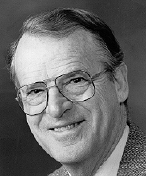
Roy Bell is a retired pastor, and former professor of family ministries at Regent College / Carey Theological College.