
May 2002
Pioneer church thriving in Dagestan
BC Christian News, · International
"WHERE the heck is Dagestan, anyway?" I heard that question many times as I prepared to go there.
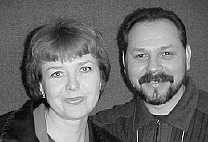
Dagestan is an oblast (province) on the Caspian Sea in the North Caucasus region of southern Russia. Virtually all of its two million people are Muslim; but the Christian church has begun to establish itself. Phil and Lorna Johnston and I went to Dagestan on behalf of New Life Community Church in Burnaby, to look into adopting a people group until it had established a self-sustaining church of its own.
We were hosted by Hosanna Church in Dagestan's capital city, Makhachkala. Their three-storey building reminded me of a mid-sized high school, with long hallways and a variety of rooms on either side. It actually houses a small Christian day school and a Bible school now, and hosts Bible studies and many other activities.
It wasn't long before we discovered that Hosanna's building functions more as a community centre than what we think of as a church. Members, friends and strangers troop in and out all week long. Each day opens with an hour of prayer and Bible study in the office of pastors Artur and Zina Suleimanov. Some people then move downstairs to the cafe, which is open to the community; others head out for their day in the city.
This Christian centre was truly purchased at a cost. Artur and Zina tell a moving and sacrificial story of how the church came to own this valuable property. They sold their own apartment to make the down payment; with their two young children, they now live in a cramped apartment on the second floor of this hive of activity. Other members sold jewellery and various treasures to make further payments; they also received generous gifts from many people overseas.
Hosanna Church, with about 500 members, is the nerve centre of the Christian community in Dagestan. How significant that is depends upon one's perspective. A cynic might say that is like being the major Tibetan Buddhist temple in Surrey. But Artur is optimistic: "This is a wonderful time for the gospel in Dagestan -- a time of positive changes and opportunities for our ministry by the grace of God."
The region is troubled. The North Caucasus could be seen as a buffer between the Christian north and the Muslim south. Dagestan's nearest neighbour, Chechnya, is in the midst of a disastrous attempt to assert its independence from Russia. Much of the impetus for the rebellion derives from the renewed Islamic fervour which is sweeping all of Central Asia.
In Jihad: The Rise of Militant Islam in Central Asia (Yale, 2002), Pakistani journalist Ahmed Rashid states that Dagestan's immediate neighbours to the east (Kazakhstan, Kyrgyzstan, Tajikistan, Turkmenistan and Uzbekistan) are "almost certain to become the new global battleground." He reports that the area has become a breeding ground for radical Islamic groups, some affiliated with Osama bin Laden's al-Qaeda movement.
Many of the Muslim militants in these former Soviet republics have limited religious knowledge, and were radicalized particularly because of the Soviet Union's brutal treatment of Afghanistan.
Dagestan is influenced by its neighbours, but thus far has resisted Chechnya's path of rebellion from within the Russian state -- and has remained somewhat more open than the newly formed states to the east. However, like them, it is affected by corruption and high unemployment, and new oil discoveries could radically affect the area.
Until last summer, the borders had been closed to most outsiders for several years because of the instability; many local and foreign people had been kidnapped. In 1998, two young Swedish missionaries being hosted by the church were kidnapped shortly after their arrival in Makhachkala. After being held for ransom for several months, they were released unharmed. Just last year, Chechen rebels invaded Dagestan's western border. They were forced out quickly, and the net effect was to strengthen Dagestan's resolve not to follow the Chechen path.
Although we saw no signs of danger -- beyond a heavy military presence -- we were accompanied by members of the church everywhere we went. They were not taking any chances of losing us to kidnappers.
But Hosanna is not hiding its light under a bushel. Artur feels that a high profile will do more to protect its members, in the long run, than trying to avoid being noticed. Members have put on anti-drug concerts all over Dagestan; and, while the Christian message is necessarily muted, it is there.
Hosanna also supports International Bible Translators and others in the church community as they translate Christian literature, audio and video materials into all of the main language groups. On the horizon is a Christian radio station.
One very appealing feature of Hosanna is that it is made up of people from many of the 40 ethnic groups in Dagestan. Artur warned us that working with only one people group could actually harm the unity that exists. Russian is the common language, and cooperation between the various people groups is well-rooted. We are still thinking through what adopting a people group would entail in Dagestan.
Hosanna Church is thriving, and there are three other small churches in Makhachkala; Hosanna has several groups in other cities and towns in Dagestan.
But the total number of Christians in Dagestan is still less than 1,000, according to Duane Palmer, a member of Broadway Church who has worked in the region for several years. There is a tremendous amount to be done.
Other churches in the Lower Mainland are working in the Caucasus and Central Asia, and we hope to partner with them in the future. This is pioneering work!
To learn more, contact Phil and Lorna Johnston at 604-937-0999 or p_johnston@telus.net