
May 2002
We should be honouring God with what we eat
BC Christian News, · Top Stories
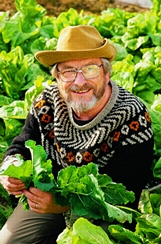
RHODY LAKE takes her food seriously. Though she knew she would be offering a dissenting opinion that wasn't likely to be appreciated, Lake once spoke up in her church about their choice of elements used in communion.
"I told them white bread is made from ingredients that have been denatured, it's not really food anymore . . . how can we say it represents the body of our Lord," the editor of Alive magazine -- produced in B.C. for health food stores across Canada -- recalls.
Lake argued that white bread, an unhealthy food choice made with white flour, stripped of its whole grains so that it will have a longer shelf life, doesn't belong in a ceremony that symbolically honours the sacrifice of Christ. Her point, which may be construed as nitpicking by some, illustrates the larger theme of ascribing serious spiritual significance to healthy lifestyle choices.
The exhortation to treat the body as 'God's temple' is receiving a makeover in many corners. Within the church, and in the secular academic community, the links between the body and the spirit are being explored in various degrees.
In March, the Canadian Journal of Psychiatry published a study linking 'religious commitment' to better mental health. The study looked at the lives of 44 male and 44 female patients who were admitted to Canadian psychiatric in-patient units in 1999.
The study's authors, from the University of Saskatchewan, interviewed the subjects, had them answer questionnaires, then reviewed their medical histories. Among their findings was a decisive connection between the soul and the body.
"Our results show that religious commitment has a significant impact on depressive symptoms, satisfaction with life, hospital use and alcohol use," the authors surmise. In an interview with Dr. Marilyn Baetz, who helped conduct the study, The National Post cited the doctors' conclusion that "a patient's belief system must be addressed by a mental health professional, and that, in some situations, clergy should be involved."
The message is not an endorsement of Christianity, but the mere fact that a secular study welcomes the involvement of clergy in the treatment of mental health forges past the tired 'science-versus-sacred' tug-of-war in health issues.
Christian adherents to the 'holistic' view of health say the connection between mental, spiritual and physical health is readily observed in scripture -- although many of them note that the church doesn't always promote the concept, since New Age practitioners have taken it as their own. Beyond the Levitical food laws, the Bible speaks directly about the soul/body connection.
In Alternative Medicine: The Christian Handbook, authors Donal O'Mathuna and Walt Larimore continually reinforce the fact that humans are complex beings with physical, spiritual, mental, relational, emotional and moral dimensions that continually play off of each other. They cite 1 Corinthians 11:29 -- "For anyone who eats and drinks without recognizing the body of the Lord eats and drinks judgment on himself. That is why many among you are weak and sick, and a number of you have fallen asleep" -- commonly read during communion, as one example of the "morality of our actions affecting our health." And they point to 3 John 2 as an example of how spiritual and physical health can build each other up: "Dear friend, I pray that you may enjoy good health and that all may go well with you, even as your soul is getting along well."
Food addicts?
Over the last decade, one of the most salient examples of Christians embracing an overall health philosophy within the context of their faith was the popular Weigh Down Workshop. The workshop's founder, Gwen Shamblin -- a dietician and one-time faculty member at the University of Memphis -- struck a chord with Christian women who began to ascribe spiritual principles to their eating habits. By the mid-'90s there were more than 30,000 Weigh Down Workshops in over 60 denominations in 70 countries around the world.
Shamblin stays clear of diets and counting calories, preferring to focus on the motivation that comes before the mouthful.
"God is broken-hearted over the fact that so many of his children have learned to run to the food instead of to him for comfort, companionship and acceptance," she writes on the official Weigh Down website (www.wdworkshop.com). "God does not care what we eat, so we should no longer feel self-righteous about following any man-made rules. Instead, what God cares about is how much we eat; he cares very much about -- and is displeased with -- over-indulgence."
Due to doctrinal issues -- mainly Shamblin's views on the trinity, and her belief in works as integral to salvation -- the Weigh Down Workshop has fallen out of favour with most evangelical churches today, although it does still operate. Regardless of the controversy, Weigh Down's initial popularity highlighted the need felt by many Christians to link their spiritual and physical well-being together.
When the 'health food movement' began over two decades ago, Lake became sold on the idea of holistic health. As a result, she began to limit her diet to whole and unprocessed foods. Around the same time, she became a Christian. When she entered this new realm, she was surprised to discover the Christian community didn't share her enthusiasm for healthy eating. In fact, the average church attendee linked the health food community to more sinister forces.
"I was quite appalled to learn that Christians thought that the movement was of the devil,"she says, adding that people would unquestioningly link health food eaters with New Age philosophies.
Since that time, most of the church has "come around," she says, now understanding that merely being health conscious isn't compromising one's faith. But Lake says the average church still has a lot of room for improvement in this area.
"Food is a very insidious addiction, because it's socially acceptable," she says. "The coffee break, for instance, is very accepted and even promoted in most churches."
Because of this, people who have problems over-indulging -- or those who have unhealthy diets -- don't have much support if they want to abstain, she believes.
"To understand your body and find out how it works best gives honour to God," says Lake. To her, one way to accomplish this is to stay away from "degenerated food" -- any food that has been processed so that it's molecular structure has been changed.
She cites olive oil as an example of how foods can be degraded the more they are processed. Extra virgin olive oil is the best for your body because it hasn't been tampered with. The list then goes downhill as the grades are lowered to simply olive oil, which comes from intense heat forcing the last bit of oil out of the olives.
Adventists CHIP in
The Seventh Day Adventists (SDA) have long focussed on diet as an integral aspect of their devotion to God. They are known for following a theology which stresses healthy living. Harvey Kellogg, one of the best known adherents of that wing of the church for much of his life, devoted his energies to trying to manufacture healthy foods.
Adventists largely follow the Levitical food laws, abstaining from meat and shellfish in favor of a vegetarian diet. But their emphasis on the body goes beyond mealtime.
A basic summary of their convictions can be seen in Adventist Ellen G. White's 'eight natural laws of health': nutrition; exercise; water; sunshine; temperance; air; rest; trust in God.
In recent years, several studies have shown that Adventists, on average, live up to a decade longer than the general population.
"If we were bought with a price -- which we were -- then we have a moral obligation to take care of the body that Christ purchased," says Frank McMiller, who, out of his Abbotsford office, oversees health education and initiatives for 100 congregations in B.C.
The church health director believes Christians have "a responsibility to model health reform," especially in times of crisis in health care. To that end, McMiller forged a partnership with California doctor Hanz Diehl to develop the Coronary Health Improvement Project (CHIP), a 40-hour program designed to help people make healthy lifestyle choices.
"Programs like these could potentially save the government millions and millions of dollars," says McMiller. "We can teach people how to beat Type II diabetes by teaching them how to modify their diet to near zero fat . . . we teach people how to eat more, weigh less. And we also include principles on how to grow healthier kids."
The program has been well received by the general public and is being taught through hospitals in Langley, Surrey, Chilliwack and Aldergrove.
Although the church doesn't explicitly combine religious doctrine with health information within CHIP, the program does exhort attendees to develop a "buoyant, happy, forgiving spirit to other people." However, McMiller says the program does have higher motives. "We want people to live optimally so hopefully they will eventually get to know their creator."
Soul food
Within the different corners of the health and fitness realm, adherents -- each with their own convictions that might conflict with those of other 'health nuts' -- universally agree on one thing: North American church leadership treats physical fitness as a non-issue.
Some point out that the pastor with a 'spare tire' hanging over his belt would have trouble speaking with any conviction about practicing healthy eating habits.
Sermons about over-indulgence and vice most always focus on easy targets like alcohol, drugs, gambling and pornography. But it's extremely rare to hear a pastor preach on the perils of overeating or on the moral quandaries of following a nutritionally poor diet.
"Gluttony is a big issue for many Christians," says Denise Kewen, who, with her husband Ted, runs an association for natural bodybuilders. Kewen says it takes a lot of work to practice healthy eating and exercise habits. She points out that, without exhortation or direction from the pulpit, it takes extra effort to exercise both the body and soul and keep them in tune with each other.
But can the balance be tipped the other way as well? "When people start competing [in bodybuilding] it can be hard not to go overboard and ignore the other aspects of your life,"says Kewen, who spends roughly 90 minutes at the gym four to five times per week. "There are a lot of people who think we err on the side of 'too much' -- and sometimes we do."
While Christians are becoming health conscious in increasing numbers, they are mostly taking the initiative on their own. Both Siegfried Gursche -- who started Alive magazine in 1975 -- and Kewen feel that the structure of churches implicitly encourages a laissez-faire attitude about good health.
"Whenever I'm invited to weddings -- it doesn't matter where it is . . . the food is junky. White sugar, coffee, margarine, white buns, fatty dressing . . . it's standard military field rations," says Gursche. "Everything is served according to cost . . . that's their only concern."
Years ago, Gursche's pastor at a Baptist church in Vancouver encouraged him to hold biblically-based seminars on the basics of healthy eating and faith. The publisher says the Sunday night gatherings were very popular, with some meetings hosting over 160 people.
Many attendees were from the community and didn't attend church regularly. But though he has tried to start the meetings again, the new leadership hasn't been as receptive.
Gursche brought it before his board of elders (where he also sits as a member), but was turned down. "They were totally opposed . . . they take the view that the topic is more cultural; not the duty of the church to teach nutritional health." He still speaks occasionally, and by request, at some local churches.
Christ's menu
Don Colbert, a Florida medical doctor, says looking at Jesus' diet can help us understand the relationship between our eating habits and our spiritual fulfillment.
In What Would Jesus Eat?, which hit bookstore shelves in March, Colbert raises a few eyebrows by prescribing the popular What Would Jesus Do? (WWJD) litmus test to diet and exercise. Colbert's book is not a standard diet book. It's a treatise for taking food intake seriously.
Most would agree that a steady 'diet' of television makes for sloppy minds and weak souls. Colbert makes the case the we should be just as serious about the food we consume and its toll on one's body and, in turn, the spirit.
Although a large portion of the book details what Jesus' diet likely was -- local grains, breads, oils, fish, poultry, fruits, vegetables, figs and bled meat on special occasions -- and examines the benefits of following the Levitical food laws, its main point is that Christ cared about what he ate.
In an age of processed foods, the average person has a tough time finding food choices that nourish the body, not just satiate the stomach and taste buds. But Colbert says the extra effort is worth it.
"If you truly want to follow Jesus in every area of your life, you cannot ignore your eating habits. It is an area in which you can follow him daily and reap great rewards for doing so. Following Jesus in your diet requires a commitment to change, a commitment to be all that God created you to be, and a commitment to yield your desires to God's instruction. God, in turn, will honour your heartfelt commitment by giving you more energy, better health and a greater sense of well-being," he writes in the book's introduction.
Nowhere in society is this struggle more magnified than on university campuses, where students with irregular schedules are balancing their studies with myriad activities and dietary choices. Many students are making lifestyle decisions for the first time, as they leave their parents behind and forge ahead on their own.
To address the situation, last fall Trinity Western University opened the Wellness Centre on its Langley campus. The centre, with 3 John 2 as its motto, strives to be a full-service facility that educates and counsels students on everything from exercise regimes to study habits and eating disorders.
Their popular 'Eating For Energy' workshops provide a wake-up call for students who rarely consider the effect their eating habits have on their grades and their spiritual walk.
"Being conscious of our health should be in everything we do, just like prayer should be,"says Rita Loewen, the nurse at the centre.
Each year, Loewen and Kurt Lundberg, the centre's director, help out students with minor diet problems, as well as those who have eating disorders like anorexia and bulemia. Lundberg says "the roots of those disorders often have spiritual components that deal with power and control."
Loewen adds that the popular "fasting for a cause" tactic employed by ministries and campus clubs may be sending the wrong message to those who struggle with food-related issues.
"People who are anorexic love fasting. They show up to those things in droves," she says. "Fasting as a fund raiser? Maybe we should ask ourselves "Is that what Jesus would fast for? . . . it would be much better if we would fast from TV."