
August 2002
Globalization: a solution to poverty
BC Christian News, · Editorials
 |
FROM a Christian viewpoint, all 'idealisms' and 'ideologies' are suspicious -- because, so often, they promise to realize the kingdom of God in secular history, and on the basis of merely human effort.
Christians must always be cautious, especially when it comes to big social and political questions such as poverty. Let's consider where we were economically just a couple of hundred years ago.
Unrelieved wretchedness
As economists Nathan Rosenberg and L.E. Birdzell Jr. have observed:
"If we take the long view of human history and judge the economic lives of our ancestors by modern standards, it is a story of almost unrelieved wretchedness. The typical human society has given only a small number of people a humane existence, while the great majority has lived in abysmal squalor. We are led to forget the dominating misery of other times in part by the grace of literature, poetry, romance and legend, which celebrate those who have lived well and forget those who lived in the silence of poverty. The eras of misery have been mythologized and may even be remembered as golden ages of pastoral simplicity. They were not."
Consider life in pre-industrial Britain, for example. As British historian Allan Gilbert has noted: "Here was a population which was, by modern standards, exceedingly liable to pain, sickness and premature death. Even among the aristocracy, one infant in three failed to live to the age of five, and life expectancy at birth around the time of the Restoration was not quite 30 years. It was a society dependent upon a precarious food supply, on the recurrent contingency of an annual harvest which appears to have been a total failure as frequently as one year in six, and which even at the best of times left the majority of the people with debilitating vitamin deficiencies. Pre-industrial existence was [quite literally] a 'vale of tears' not simply because dirt, disease and death were so prominent, but because its frequent crises were at once inexplicable and uncontrollable -- at least in human, mundane terms."
Modern society is still a far cry from the kingdom of God; but we, for the most part, very well fed, healthy and astoundingly comfortable relative to our ancestors. We have seen a dramatic increase in life expectancy, a decline in malnutrition, a declining incidence of fatal diseases, steady improvements in education, an increase in privacy and personal choice, and any number of other improvements.
Global prosperity
As Rosenberg and Birdzell comment: "Only during the last 200 years has there come to Western Europe, the United States, Canada, Australia, Japan and a few other places, one of history's infrequent periods when progress and prosperity have touched the lives of somewhat more than the upper tenth of the population."
Poverty has been the normal condition of most of humanity throughout most of history, and still is the norm for many in our world today. The generalized prosperity that 'the West' has enjoyed for the last couple of hundred years is an historical aberration.
What are the causes of the extraordinarily high quality of modern life? Technology and the market system form the heart of what we call 'industrial capitalism.' This system began to work its magic in England, then spread to the Continent, to North America, Australia, Japan -- and, over the last generation, to Korea, Hong Kong, Taiwan, Singapore, Mexico, India and China.
Industrial capitalism has generated, and continues to generate, the greatest productive power in human history. No other system has been able to generate comparable productive power. Industrial capitalist development is, therefore, much more likely than any other system to improve the material standards of life for people in what used to be called the 'Third World.' Industrial capitalism also has close affinities to democracy. This is because it separates political and economic power -- and also because economic power is, in effect, distributed between competing firms.
Now, Canada's future as a free and prosperous nation hinges upon our continuing participation in the global economy. Indeed, any government seeking to improve the material standards of living for its people would be well-advised to enter the global economic system.
Investors 'voting'
Does participation in the global economy require us, then, to simply surrender ourselves to the whim of 'speculators' and to the caprice of multinational corporations? No, of course it doesn't. We must fight injustice, and try to remedy inequities wherever we find them. However, within the context of an increasingly global marketplace, we must recognize that international investors are, in effect, given a 'vote' in the management of our political and social conditions. As these investors value long term economic growth -- and as long term growth hinges upon political and social stability, freedom from arbitrary political interference, ready availability of information, etc. -- they will tend to 'vote' for countries which manage their internal affairs in a stable and more or less open fashion. They will 'vote' against countries that fail to manage their internal affairs in a stable and more or less open fashion.
Governments that fail to inspire the confidence of the market, then, are going to find it increasingly difficult to finance themselves, and they are going to face increasing pressures from within their countries to do whatever it takes to 'get into the game.' On the other hand, regimes that inspire the confidence of global investors will find it increasingly easy to raise capital and will increasingly reap the material benefits of modernity, which will further enhance their social stability.
Backlash
New York Times columnist Thomas Friedman believes globalization holds the key to prosperity and long-term economic growth. But he recognizes there will be a backlash:
"The opponents of globalization resent it, because they feel that, as their countries have plugged into the globalization system, they have been forced into a Golden Straitjacket that is one-size-fits-all. Some don't like the straitjacket because they feel economically pinched by it. Some worry that they don't have the knowledge, skills or resources to enlarge the straitjacket enough to ever really get the gold out of it. Some don't like it because they resent the widening income gaps that the straitjacket produces, or the way it squeezes jobs from higher-wage countries to lower-wage ones. Some don't like it because it opens them to all sorts of global cultural forces and influences that leave their kids feeling alienated from their own traditions. Some don't like it because it seems to put a higher priority on laws to promote free trade than it does on laws to protect turtles and dolphins, water and trees. Some don't like it because they feel they have no say in its design. And some don't like it because they feel that getting their countries up to the [global] standard is just too hard."
And yet, Friedman predicts that there will probably also be a backlash against the backlash. "With all due respect to revolutionary theorists," he comments, "the 'wretched of the earth' want to go to Disney World -- not to the barricades. They want the Magic Kingdom, not Les Miserables. And if you construct an economic and political environment that gives them half a sense that, with hard work and sacrifice, they will get to go to Disney World and get to enjoy the Magic Kingdom, most of them will stick with the game -- for far, far longer than you would ever expect."
And the reason they will 'stick with the game' is because it works. 'Industrial capitalism,' or 'globalization' -- whatever you choose to call it -- is really quite an amazing system, and it's one for which we should all be pretty grateful. No, it's not the kingdom of God, and it poses any number of perplexing social and political difficulties, but it's a far sight better than the existing alternatives.
We are the beneficiaries of the system's largesse. We should think long and hard before we decide either to try something altogether different, or that others should be dissuaded from trying to take advantage of what the system has to offer.
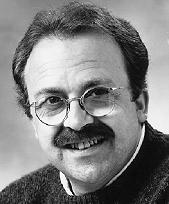
Craig Gay is associate professor of interdisciplinary studies at Regent College.