
August 2002
Turning the Tables on globalization
BC Christian News, · Editorials
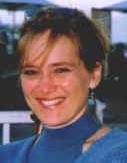 |
KAIROS, a coalition of Christian groups, has been combating poverty through its 'Turning the Tables' campaign -- inspired by the Gospel of Mark's account of Jesus overturning the moneylenders' tables in the temple. The following is excerpted from a sermon by KAIROS education specialist Jennifer Henry.
THE G8 SUMMIT. . . was an opportunity to protest the way that free market globalization has ransomed our economies, our societies, to idols of profit -- an opportunity to testify to our faith that another world is possible . . .
On the margins
What do we mean by Turning the Tables? We mean turning over our worldview and looking at things from another perspective -- through the eyes of those on the margins, not those at the centre. Looking at things from the bottom-up not the top-down -- that sense we achieve when we turn that map of the world 'upside down' and see Africa and South America at the top.
We mean turning over the accounting tables, accounting tables that say the countries of the South owe us. Instead we ask "what might we owe to the people of the South, to aboriginal people?" If we put things in an historical perspective and addressed colonization and slavery, as well as resource extraction by the North, might we find that we ourselves are the debtors?
We mean turning around, or even inside-out, an economic system that counts environmental disasters and war as a 'good' because it makes the moneyed economy grow. Turning around a system that puts profits before people, corporate rights before human rights.
Market god
If we are to take the challenge of Jesus to turn the tables and reveal oppressive practices towards the poor, if we are to turn out the market god from the centre of the temple of our world and restore to the centre the God of life, if we are to respond to the challenge of Jesus in our own time, then we must turn the tables on free market globalization.
This is not because we reject commerce, but because we observe in free market globalization a form of commerce that increasingly makes expendable the poor or the 'uncompetitive.'
Our Southern partners identify the policies and practices of the international financial institutions -- institutions at the core of the global economic system in our day -- as potentially oppressive as those the writer of Mark strives to reveal in [the] gospel story.
The poor may not have to buy doves to be cleansed in our temple economy. However, poor countries do have to 'buy into' a free market approach that ultimately leads to their further undoing. They bear the sacrifice, and the foreign investors (and debt-collectors), in whose name their countries are restructured, reap the profit.
We do not oppose commerce, but we oppose a system that elevates profit, corporate interests and the 'free working of the market' over and above principles of dignity and life. We oppose a system whose ideological frame . . . elevates the market to an idol, a god that requires not justice, kindness and humility, but sacrifice by the poorest and weakest . . .
Church must choose
Our churches are faced with a particular moment of grace, truth and decision: Are we going to be part of the global movements of hope which believe another world is possible, or are we going to be ransomed to the market idol, to live in its shadow and out of its edicts?
German theologian Ulrich Duchrow explains it this way: "Churches wanting to respond to the liberation and life-creating God have, for theological reasons, to denounce the transnational market that is solely subject to the laws of money accumulation . . . Failure to make a choice between Yahweh and Baal -- or God and Mammon -- demonstrates not only a failure to understand analytically how the present system functions on a global scale, but also what functions as God within this system . . ."
It is perhaps not a coincidence that opposition to globalization is coming increasingly from young people, often dismissed as naive and stereotyped as violent. An 82 year old minister from Nova Scotia, reflecting on the protest movement of young people, said this shortly after the summit in Quebec:
"I feel that young people are holding up a mirror to the kind of world we live in. We don't like what we see, so we blame the mirror holder. Maybe we need to wake up to what [our] young protesters are saying -- most of whom are nonviolent -- before its too late, and our Jericho walls crumble before the trumpets of the dispossessed . . ."
Through this year we have been exploring the way in which economic globalization is creating multiple debts -- moral debts, social debts, historical debts -- for which its proponents must ultimately account . . .
We are challenged to be table turners. Turning the table on globalization means calling our leaders -- and through them ourselves -- to account for these outstanding debts . . .
Conversion
Jesus turned over the tables in a moment of judgment. But we are led to believe that this moment stimulated another kind of turning -- a turning of the tables of their hearts, conversion and hope that startled and disturbed the authorities . . .
Our leaders could collaborate in turning the tables, and begin to account for the debts they owe. If they reached out to dialogue instead of turning in behind walls and ramparts, if they took actions which symbolized a capacity to listen, they would begin to turn their exclusive table to a place that holds the promise of equity and sharing . . .
It is the globalization of solidarity, side by side, people to people, that is going to turn the tables on free market globalization. When we are sustained and inspired by the hope and visions of one another, we cannot help but find Christ in our midst, turning tables again and again.