
November 2002
Fix characters reflect on Owen's legacy to the city
Dean Wilson
On his relationship with Mayor Philip Owen:
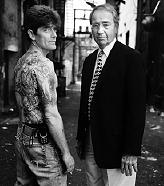
We agreed on two things: that we came from very disparate backgrounds and would agree to disagree, and that we did not believe that anybody's life was expendable. From those two things we developed a working relationship that turned into a friendship, because I really believe the mayor is good for what he says.
On why Owen would be willing to sacrifice his political career over the issue:
I think he's just a decent guy. It was the right thing to do and the man's got integrity. No matter what the result he was going to stick to the program. He also believes it doesn't matter if you stick a needle in your arm, it doesn't mean you should be sentenced to death. I think the mayor looks for the good in everybody, he sees a lot of good in everybody down here. You should see the guy work down here, he's incredible. He's definitely a man of the people. I don't agree with everything he says, but I respect him, and I think he's a decent man. You really can't go wrong with being decent in this world.
On faith:
As I've grown as a person, I believe that somewhere inside we have to believe in something. We have what I call poverty of soul down here, that people don't realize that they do have a spirit inside them.
As people grow and get out of addiction they're going to have to realize that they need to replace that, because you can't have that empty feeling. I'm definitely not speaking about Christian missions that come down here and essentially make us stand in lines to get secondhand food. I'm talking about real spirituality, about somebody's inner beliefs that are a connection with others' inner beliefs. Through those connections we make ourselves whole. I believe addiction eradicates that in people and it has to be replaced.
Nettie Wild
Fix filmmaker on Owen's faith:
It was one big hole in my film. I knew he was driven by a certain spirituality, but I forgot to put it in the film. It was a long forget. It would have given people more of an insight into him.
On how her impression of Owen changed throughout the filming of Fix:
He seemed like a very nice guy who was open to the plight of the people. He's somebody who likes the pothole covers to be on all the potholes, no graffiti on the walls, no cracks in the streets. With that same spirit he moved into cleaning up the drug problem because it was the right thing to do. The movie is about him plugging into a genuine movement. To his credit, there are few people in his position of power who are willing to take on an issue like that.
Ann Livingston
On her relationship to Owen:
I've given the mayor a really bad time, and it shows in the movie. I think that the bond that we have is probably around a very basic Christian principle. We probably approach it very differently, although I don't imagine he's any more closeted about his beliefs than I am. The whole Christianity thing just boils down to one thing: to stand with the lepers, to eat with the lepers. I've never really been able to find any other message in Christianity than that. Other Christians may think I'm being very simplistic -- if they have something else they manage to find in there, I don't hear it.
The real bond between the mayor and myself, and the thing I admire him for is there's a personal cost to doing that, and I think he's paid it and I've paid it. There's way more reward, but that's hard for people to understand.
He felt there was nobody who was disposable. He simply couldn't ignore them as a person with a conscience and a Christian.
Fix: The Story of an Addicted City is showing at the Granville 7 theatre until November 7. Check www.canadawildproductions.com for showtimes and for information on showings after November 7.
-- Interviews by Meg Johnstone