
February 2003
Canadian aid to North Koreans continuing
BC Christian News, · International
SABRE-RATTLING statements have escalated in recent weeks between the United States and North Korea, regarding the latter country's nuclear capability. Despite this, several Canadian Christian-based groups are attempting to keep humanitarian programs going in North Korea.
The hardline communist country "has been in crisis since the late 1990s," states Angelika Dawson, media spokesperson for the Mennonite Central Committee (MCC) in B.C. "Both flooding and drought destroyed millions of tonnes of food, in a country that has little arable land. Since losing most of its trading partners when the Soviet Union collapsed, North Korea's economy has suffered -- and the country has faced continuous food shortages during the past decade. People are still living hand-to-mouth."
Children, she says, have been hardest hit. "Studies show that the average North Korean child is more than two years behind in physical development compared to South Koreans."
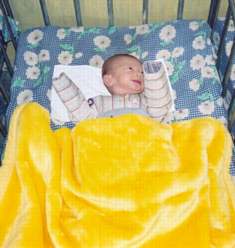
To combat widespread malnutrition, MCC has been sending food to orphanages, aiding pregnant women and supporting cooperative farms. Working with one of its Asian partners, Caritas Hong Kong, MCC has been supplying 'Newborn Kits' to North Korean mothers. The kits include clothing, diapers, blankets, soap and toys. The organization's goal is to supply at least 12,000 kits.
MCC is working with the Winnipeg-based Canadian Foodgrains Bank (CFB) -- which, in conjunction with the Canadian International Development Agency, has sent some $38 million worth of food aid to North Korea since 1996.
An October visit to the country by a CFB monitoring delegation confirmed the need for continuing assistance. "Without further food aid deliveries, the health of people, especially children, will be put at serious risk," said Rick Fee, who led the delegation.
"While we observed noticeable stunting in children, they do appear healthier and not as malnourished as on previous visits. This is due to the food aid provided over the last several years. But children who faced the worst of the famine are still smaller by two to four years of growth."
Fee said there had been "significant changes at many levels in North Korean society. People are much more approachable, and we were able to visit the institutions and families we wanted to see.
"The new economic policy put in place by the North Korean government signifies that it recognizes the need to change systems to address the economic and food crises currently facing it."
First Steps is a charity created in 2001 by members of First Baptist Church in Vancouver. The ministry provides food for malnourished North Korean children. Susan Ritchie, the prime mover of the initiative, visited North Korea in November to oversee distribution of the food. She wrote a poignant account of the inspiration for the ministry, in the church's First People magazine:
"Two years ago, I travelled to North Korea as the interpreter for a Canadian government delegation, visiting parts of the country foreigners rarely have the opportunity to see. Outside the capital, primitive human hardship was visible almost everywhere . . . With little foreign currency to spend on essentials like fuel oil, and little hope of attracting viable foreign investment, North Korea has been isolated -- and dependent, in many ways, on handouts from international aid agencies.
"This national tragedy, affecting the majority of North Korea's 23 million people, was brought home for me when our delegation visited a pediatric hospital in outlying Hwanghae province. The lifeless look of the children in the pediatric ward shook me in its stark sadness; many malnourished moms were unable to provide sufficient breast milk to their babies.
"I gradually learned that this was not uncommon all over North Korea. The problem was compounded by the fact there was little appropriate weaning food that could be given. I prayed for guidance as to what I should do, and increasingly felt led to help feed these babies."
First Steps sent a shipment of Pablum to North Korea this past summer, as well as various medicines.
"Given the scale of the dilemma," Ritchie writes, "it seems like a drop in the bucket; but it's only the beginning." Meanwhile, she emphasizes, "the situation is getting worse, [as a] result of international aid cutbacks caused by political developments, [which affect] only the innocent."
She concludes: "North Korea's problems are myriad; but it's my experience, from six trips in the past two years and from speaking to many North Koreans, that there is a strong yearning among the common people to have contact -- and a desire on the part of the government to open up to our global community."
Contact:
MCC: 1-888-622-6337 or www.mcc.org
CFB: 1-800-665-0377 or www.foodgrainsbank.ca
First Steps: 604-683-8441.