
April 2003
Mennonites try to balance activism, evangelism
BC Christian News, · Top Stories
HENRY KRAUSE didn't think much about being a Mennonite when he was young.
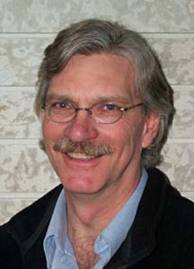
He grew up attending a Mennonite church in Aldergrove, and he graduated from a Mennonite high school in Clearbrook; but as he got involved in the hippie-ish Jesus Movement of the 1970s, he was more interested in winning souls for Christ than in emphasizing his religious roots.
"I didn't really see being Mennonite as being important," he says now. "It seemed to me that the denomination got in the way."
Krause did not abandon his Mennonite beliefs, including his commitment to pacifism -- he just took it for granted that other Christians would see things the way he did. But when he went to Regent College, he discovered that he was in the minority. "Maybe five percent or less of the people there had that assumption, that if you followed Jesus, you would naturally not go to war or kill your enemy," says Krause, who has been a pastor at Langley Mennonite Fellowship since 1989, and became moderator of the Mennonite Church Canada last summer.
He recalls an evangelism class at Regent. An excited professor introduced the idea that evangelism could be a two-step process, in which people convert to Christianity, and then engage in some sort of discipleship.
"He presented this as though this was a brand new understanding, and the students said, 'Yeah, this is wonderful,' and I listened to it and thought, 'But that's the way it is! That's what I've been taught!'" says Krause. "It pushed me back to the history I have, and how the theological understanding that I had needed to be spoken more clearly. So as a result of my studies at Regent, I became a confirmed Anabaptist Mennonite."
Krause has since become involved in peace and justice issues -- most notably through the Arts & Peace Festival, which began as a protest against what he saw as the "overt militarism" of the Abbotsford Air Show.
Some Mennonites, however, are concerned that political activism can become a distraction from the more spiritual and evangelistic aspects of their faith.
One such Mennonite is Ron Redekop, who grew up attending the same church as Krause -- and is his second cousin. A dozen years ago, Redekop became dissatisfied with his denomination, then known as General Conference (GC) Mennonites. He was concerned that the GC had become too "embroiled" in debates over feminism, the authority of the Bible and the uniqueness of Christ. He changed denominations.
"The Mennonite Brethren were more in line with where I was, in terms of the evangelical thrust of the church," says Redekop, who is now pastor of Northside Community Church in Mission. "I have not disregarded the social emphasis aspect of it -- I think that that is an essential part of the life of the church -- but it is secondary to the evangelical mission."
Non-violence
The debate over how political the church should be -- especially where peace is concerned -- goes back to the very roots of the denomination.
Menno Simons was horrified by the religious warfare of the 16th century -- some of which, such as a Waco-like incident in Munster, had been perpetrated even by his fellow Anabaptists. Menno taught that no believing Christian should ever use physical force, even if called upon to do so by the state -- but he did not necessarily think the state itself should abstain from violence.
Following Romans 13, Menno believed that God had ordained secular authority to keep justice and order among those who were not living as disciples of Christ. In 1540, he even exhorted the state to "punish the wicked and rightly wield the sword that God has given you." But in later years, he seemed to soften his tone -- as when, in 1558, he advised magistrates to "punish the wicked in a Christian manner."
This ambivalence in Menno's mind, over how the church and the state should influence each other, continues in the community that bears his name.
"The Mennonite community isn't unified [on this issue] and hasn't been unified, probably, since its inception," says Gay Lynn Voth, who teaches theology and history at Columbia Bible College.
No matter which branch of the Mennonite church you belong to, says Voth, "your main emphasis is separation of church and state; so cooperation with the state is dependent on how you see the church. So the mission of the church becomes the more leading question: are we here to evangelize, or to get involved in social structures?"
Krause is reluctant to give one of these callings priority over the other. "Calling people to a faith in Jesus is primary, calling people to a full understanding of what Jesus means . . . The primary act of Christ is reconciliation, as 2 Corinthians 5 says, where God has reconciled us through Christ, and we have been given the ministry of reconciliation."
Elsie Wiebe Klinger, who runs the Mennonite Central Committee (MCC) peace program, compares evangelism and peacemaking to walking. "I think being a peacemaker is central to being a Christian, just as sharing the good news is pretty central. If you go with one and not the other, it's like hopping and not walking. You have a more balanced walk when you put them hand-in-hand."
Redekop maintains that evangelism ought to come first -- though he says he is a pacifist. "When we talk about pacifism, it is primarily, as Jesus talked about it in the Sermon on the Mount, related to personal relationships. I think it is a mistake to extrapolate that into general politics." He cautions against making Jesus a "first century Gandhi," and notes that Revelation paints a militaristic picture of Christ. "He will come as a warrior, and the blood will run high . . . We will see the justice aspect more significantly when he comes the second time."
Political causes
Redekop, who sits on the Mennonite Brethren national board of faith and life, says he and others are concerned some Mennonites may be so involved in politics that their faith has become "enmeshed" in "left-wing" causes.
In an open letter to the MCC last summer, Redekop and his elders' board expressed concern that MCC writers and speakers were watering down the faith while taking sides in specific political debates, including the Palestinian situation in Israel and the recent B.C. referendum on native treaties. "Since when is it the mandate of MCC to tell anyone how to vote?" the letter asked.
Redekop admits the pursuit of justice has political ramifications, but says the church should be more balanced in its approach to politics. "I would suggest there is naivete, or political posturing, here -- just wanting to see one side of the situation, and not wanting to see the entire picture."
Redekop also says Mennonites should be reluctant to demand that the state behave according to the rules which guide the church. Paul, he says, "didn't go protesting Rome, and there were lots of inequities and injustices in Rome. I'm not sure that it's our job . . . to tell the state how to do its job."
Krause, however, says the church needs to actively call governments to pursue nonviolent resolutions to conflicts.
"Traditionally, we Mennonites have extracted ourselves from the world and said, 'Do what you want to do as long as you leave us alone.' We can't do that any longer -- nor do I think it's biblical."
Even supposedly non-political activities, he adds, can take on a political element -- especially when Christians explore what causes the problems they are trying to solve. "Evangelism and feeding hungry people are seen as non-political issues; but as soon as we decide which hungry people we feed, in which country, or which regime is important . . . it has political implications."
Bob Burkinshaw, a professor of history at Trinity Western University, says differences of opinion like these are inevitable now that Mennonites in North America -- many of whom migrated here from other countries -- have become more involved in their surrounding culture. "They can't be a colony like they were in Russia, and so they come down on various sides on various issues."
He notes that, just as some Mennonites say the MCC has become dominated by left-wing politics, others say the Mennonite Brethren have abandoned their own identity, all for the sake of winning more converts.
Mennonites on both sides, however, insist they have had an influence on people outside their community. Redekop says other churches have put a stronger emphasis on discipleship because of their contact with the Mennonite Brethren.
"I think the evangelical church as a whole has moved in our direction, and understands the need for a holistic approach to Christianity. It's not just about saving people and getting them out of hell, it's about a lifestyle."
Krause agrees -- but he cautions that, while Mennonites have helped introduce new ideas to Canadian society, such as restorative justice programs, they should also be wary of becoming too comfortable with the world.
"At some point, if we are proclaiming the radical gospel of Jesus into the world, it will be met with both acceptance -- because we are made in the image of God and we long for God -- and rejection, because what Jesus called us to is a radical realignment in our understanding of being human."