
May 2003
Christians: the ultimate rock 'n roll rebels
 |
ROCK 'N ROLL has always identified with rebellion, yet it could be argued that the ultimate act of rebellion would be rejecting all the transitory pleasures offered by the modern world and embracing the claims of Jesus Christ.
As Alice Cooper once said, "Drinking beer is easy. Trashing your hotel room is easy. But being a Christian, that's a tough call. That's rebellion."
Contrary to public perception, rock music -- if not embracing -- has at the very least been open to the gospel message. Players have been coming to faith in Christ pretty much as long as the form has existed. Scratch below the surface, and images of the Christian story are rife throughout the music's half century history.
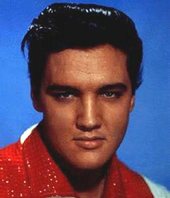 |
Elvis Presley was singing and recording gospel from the beginning. In 1957, he had to fight the powers that be to sing the gospel standard 'Peace in the Valley' on The Ed Sullivan Show. Sullivan, at the time one of the most powerful players in the entertainment business, felt the song was inappropriate, and encouraged Presley to stick with his more popular material. Presley stuck to his guns, and won out.
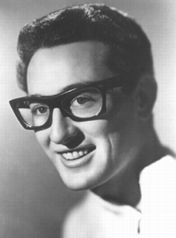
That same year, at the height of his popularity, Little Richard shocked the industry and fans alike when he abandoned music to enroll in Bible college, for the next few years limiting his recorded output to gospel material. Buddy Holly was baptized shortly before commencing his recording career, and -- contrary to an extremely dubious film biography -- was encouraged and supported by his local church. He faithfully tithed throughout his career, and was planning an album of devotional music shortly before his life was cut short in 1959.
 |
Pat Boone -- during the '50s second in sales only to Elvis -- expressed his faith consistently, and was a strong supporter of the burgeoning Jesus Music movement of the seventies. In later years, Little Anthony, Carl Perkins, Johnny Cash and Dion all came to faith in Christ.
During the 1960s, as the drug culture blossomed, New Age experimentation followed suit.
All forms of spiritual dabbling -- save traditional Judeo/Christian -- were popular. Talking openly about one's faith was far less prevalent, and generally frowned upon. One of the precious few who were public in their faith was Cliff Richard -- Britain's highly popular equivalent to Elvis Presley -- who accepted Christ's claims in 1967. While he was one of the few publicly acknowledged believers during that turbulent decade, numerous players from the era -- including Bob Dylan, Roger McGuinn (Byrds), Van Morrison, Delaney and Bonnie Bramlett (Delaney & Bonnie), Johnny Rivers, John Lodge (Moody Blues), Bryan MacLean (Love), Noel Paul Stookey (Peter, Paul & Mary), Kenny Rogers, and B.J. Thomas -- all made public confessions of faith in later years.
One of the few believers at the time was steel guitarist Al Perkins, who worked with Richie Furay (Buffalo Springfield/Poco) and Chris Hillman (Byrds/Flying Burrito Brothers/Desert Rose Band) in the Souther/Hillman/Furay band. Both credit Perkins' influence as a major factor in their subsequent decision to accept Christ's claims.
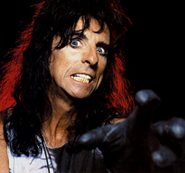 |
During the '70s, Bruce Cockburn, T-Bone Burnett, Al Green, Dan Peek (America), various members of the Earth, Wind & Fire, Little River Band, Santana and Kansas were all vocal regarding their beliefs. Others, including Rick Wakeman (Yes), Mark Farner (Grand Funk Railroad), Michael McDonald (Doobie Brothers), Donna Summer, Charlie Daniels, Maria Muldaur, Lou Gramm (Foreigner), Alice Cooper, Arlo Guthrie -- gave public proclamations of faith in later decades.
The '80s gave birth to acts like the Alarm, Run DMC, U2, The Call, King's X, as well as individuals like Gordon Gano (Violent Femmes), Maria McKee (Lone Justice), Peter Garrett (Midnight Oil) sharing their faith.
By the 1990s, the landscape had changed as the once almost overwhelming gulf between the sacred and secular narrowed, if not blurred completely. Bands like P.O.D., Collective Soul, Creed and various others rose to the upper echelons of the charts where few Christians -- with the exception of Amy Grant -- had ever ventured.
For the first time, acts coming out of the Christian subculture began penning major hits in the pop charts. Sixpence None the Richer, dc Talk, Lifehouse and Jars of Clay all scored noteworthy secular success, and today the once almost insurmountable journey is being made on a regular basis, as mainstream acts praise God, and CCM acts have hits.
As John Lennon -- himself a believer, according to one account of his last days -- once said, these are strange days indeed