
June 2003
Andrei Tarkovsky's poetic cinematic legacy
BC Christian News, · Arts
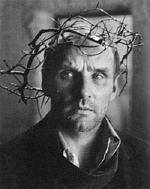
THE LIFE'S WORK of Andrei Tarkovsky is one of the great treasures of film history. Those unfamiliar with his films will have an opportunity to see them all at Vancouver's Pacific Cinematheque, running June 20 to July 2.
When he died in 1985, the Soviet-born director left behind seven unique feature films of profound and enduring artistry. All the films, in varying degrees, have distinct Christian elements, reflecting his Russian Orthodox background.
Tarkovsky's style is characterized by slow tracking shots; atmospheric soundtracks; innovative use of colour; and carefully orchestrated, unedited sequences. His films possess a rare emotional and spiritual depth, full of complex, haunting images; he is one of the few filmmakers whose work can truly be described as visionary.
Andrei Rublev (1965). A speculative biography of the renowned 15th century icon painter, this is Tarkovsky's most overtly Christian work; it was banned by Communist authorities for many years. The story follows Rublev as he encounters the repression of a troubadour, the bizarre allure of pagan rituals, a deadly rivalry between two princes, and the betrayal and sacking of a city.
The final episode, involving the creation of a huge bell, redeems the brutality suffered by most of the characters. Anatoly Solonitsyn plays the painter with sensitivity and conviction as he progresses from idealism, through bitter cynicism to revitalized hope. The black and white cinematography is outstanding -- surpassed only by the final 10-minute sequence of gorgeous colour images of Rublev's art. While the film contains scenes of graphic violence and nudity, these elements are integral to the story, and are never used gratuitously.
Andrei Rublev is a deeply moving presentation of Christian faith, and a monumental work of art. It is also the most exciting feature of the upcoming retrospective, as the director's cut (20 minutes longer than the usual version) is getting its British Columbia premiere.
The Sacrifice (1985). A well-to-do intellectual presides over a family gathering at his country home. News of a distant nuclear conflict forces him into a spiritual crisis; for the first time in years, he finds himself praying. He implores God to restore the world to wholeness; in exchange, he promises to give up his idyllic life. Erland Josephson effectively conveys his transformation from complacency to poignant, transcendent nobility.
Rather than focus on images of nuclear horror, Tarkovsky depicts the pathos of fragile people faced with the devastation of all their hopes. This is perhaps his most extraordinary achievement, a brilliant synthesis of cinematic experimentation, emotional richness and spiritual eloquence.
Ivan's Childhood (1962). The great Russian obsession, World War Two, is handled with uncommon lyricism. The protagonist is a 12 year old boy conducting his own private war against the Nazis. Memories of his pre-war life add elements of innocence to the director's celebration of heroism.
Solaris (1972). Scientists on a space station encounter flesh and blood replicas of loved ones. The replicas are the creations of a planet which possesses its own intelligence. When one of the replicas proves capable of genuine love, the men are forced to re-examine their perceptions of true humanity.
Stalker (1979). Three men trek through a bleak, supernatural landscape in search of a legendary chamber which will grant them anything they wish. Along the way, they ponder their own motives; and at their destination, they are inspired to reconsider their desires -- with surprising results.
Mirror (1974). A dizzying collage of human experience, portraying the life of a dying artist in a series of flashbacks, dreams and fantasies. The surreal effect is compounded by the inclusion of documentary footage, linking the artist's life to historical events. Chaotic on the surface, the film has a kind of instinctive continuity which transcends logic. The result is a poetic meditation on the totality of one man's life.
Nostalghia (1983). In a resort town, a writer encounters a recluse whose fear of apocalypse drives him to prophetic extremes. The writer is confronted with his own emptiness and mortality; he then seeks redemption by attempting to conduct a ceremony involving healing waters and a candle. The final image, of snow falling in a cathedral, is truly breathtaking.