
June 2003
Why we're reading Christian novels
BC Christian News, · Top Stories
MORE AND MORE people are reading novels by Christian authors. Christian fiction is in a growth phase like the one Christian music was in 10 years ago. Fiction sales are now 15 percent of the Christian book market for adults, compared to a mere 4.3 percent in 1985.
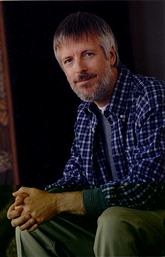
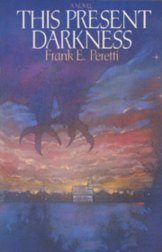
The swift rise surprised many observers at first. But now the industry is scrambling to meet firm estimates of continuing growth. The upward movement began with Alberta author Janette Oke, whose first novel, Love Comes Softy, was published in 1979. Oke's more than 75 books, many of them prairie romances, have sold over 20 million copies. The movement continued with Frank Peretti, whose unusual suspense novel, This Present Darkness, topped the Christian bestseller list in 1988. Bodie and Brock Thoene's meticulously-researched historical novels brought in more readers. In 1994, Jan Karon's Mitford series about an older rector in a small present-day parish came out from Lion Publishing. Now mass marketed by Viking, the series has sold 10 million copies in both the secular and Christian markets. The 1990s also saw 'secular' romance authors switching to the Christian market, with the likes of Francine Rivers, Terri Blackstock, and Dee Henderson bringing in new vibrancy and greater realism. In the late 1990s, the Left Behind series of end-times novels exploded onto the scene with numbers that astonished everyone (current total: 50 million products, including children's and audio), forcing secular bestseller lists to pay attention and enticing new writers and secular publishers to enter the Christian fiction field.
 |
How far the boom in Christian fiction will go is uncertain. In the secular adult market, fiction makes up 51 percent of sales. If the sudden growth that Christian music experienced 10 years ago is any indication, secular booksellers will need to pay increasing attention: Christian music now makes up 14 percent of the total music business.
So why the new popularity? Christian fiction is beginning to overcome the shortcomings that kept away readers in the past. Changes in the market, changes in the content of the novels, and changes in our perception of the value of fiction have all contributed to its growing success. While some Christians continue to dismiss Christian fiction as 'prairie romance' or 'end-times pulp,' the scene has changed drastically.
Marketplace changes
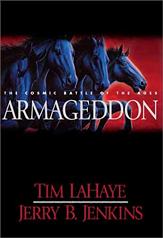
Much of the recent interest in Christian novels is the result of the unexpected success of the Left Behind novels, an end-times series that took advantage of a wave of year-2000 anxieties and kept going. Christians and non-Christians alike have flocked to read these books, some for the action-packed stories and some because they see the books as a blueprint for the future, not caring that they are fiction.
Others have been drawn to fiction by the 'Oprah effect.' Book discussion groups have been popularized by television superstar Oprah Winfrey. Although Oprah's taste in fiction is not shared by all Christians, the cultural phenomenon that she helped shape has also taken root in churches. In the last five years, many congregations across North America have begun hosting vibrant book-discussion groups.
These and other changes have increased the visibility of Christian fiction. (For example, most Christian publishers have been bought by multinational corporations and so have increased marketing muscle.) The summer of 2002 saw a cover story in Time Magazine, a full spread in Publishers Weekly, and a story in The Los Angeles Times -- all devoted to Christian fiction.
Content evolving
Christian novels have evolved in their content, and this has drawn a wider audience. The suspense novel Sadie's Song, written by New Brunswick author Linda Hall, is an example of a new breed of Christian novels that are resonating with readers because of their deep character development, fast pace, and realism.
In the past, many novels were constrained by the overriding desire to avoid offending any potential customers. Publishers were inflexible in their demand for books with a clear takeaway message and no offensive words or behaviour. At the same time, many writers began with an agenda -- something specific they wanted to say. Enduring fiction usually has an emphasis on character rather than plot or theme -- with the story coming out of the characters, and the theme coming out of the story. Beginning with a theme and plotline, as most Christian novels used to do, and then developing characters to fit is not the best way to write. The result has been too many books with cardboard characters, superficiality, preachiness, lack of realism, and failure to address tough issues.
 |
As well, more and more evangelicals have been to university and studied the great writers. Consequently, they are looking for books with the ability to touch people's hearts as some great Christian writers such as Tolstoy, Dostoevsky and C.S. Lewis have done -- books more concerned with honesty than safety. So the demand to get beyond squeaky-clean novels is growing.
Lando Klassen, owner of the House of James bookstore in Abbotsford, thinks that the new writing is starting to meet that demand. "In the past five years the quality of the writing has completely changed -- it's getting better all the time."
What has improved? Primarily, topics that used to be taboo are now being dealt with realistically. Sadie's Song, for example, deals with spousal abuse in a Christian family, something that years ago would not have been talked about, let alone used as a major theme for a Christian novel.
Despite this new boldness restrictions are still the norm. The publisher originally would have liked Sadie's Song to end happily with the family together. However, Hall knew that would not likely happen in real life. The resulting compromise, with no mention of what will happen in the future, allows the integrity of both publisher and author to be maintained.
"Some of my characters are Christians, but I don't write to preach," says B.C. accountant Andrew Snaden, co-author of Vancouver Mystery. "I write to keep people turning pages. I hope readers will take something away with them on how those characters dealt with life's problems."
Changes in content and character development are pulling more and more readers into Christian fiction, but they are also finding new ways to use it. Many Christians in Canada are discovering that novels can change lives for the better.
Fear of fiction
Books that teach people have been seen as far more important than fiction, which is often regarded as fluff or, at best, something to take along on holidays at a sunny beach. Most seminaries don't teach courses on how to use novels as tools for discipleship or outreach. The tendency is to rely on the Bible, theology, or self-help books.
Some Christians are actually afraid of fiction, says Larry Willard, executive director of Augsburg Press Canada and its imprint Castle Quay Books. "Theology we know what to do with, fiction we don't know what to do with."
But this hesitation may change as more people talk about how fiction has influenced their lives. Michael Coren, speaking at the God Uses Ink writers conference in June, was asked what books had affected him the most. He mentioned reading The Lion, the Witch, and the Wardrobe as a young child, and said he believes seeds sown then bore fruit years later.
"If you don't have time to read, read fiction rather than Christian living books," argues Klassen. "With straight teaching, the author only gets one chance to get a point across and it's gone. But if it's a story, you'll probably talk about it with someone and keep thinking it over. I would say, 'Are you really learning from these other books? Try reading a good story and see.' "
This understanding of fiction as more than entertainment is shared by most Christians who write fiction. They believe they are performing a ministry which can help others learn about God, gain understanding about themselves, and grow.
Linda Hall's fiction helps bring emotional and spiritual health to hurting Christians.
"The books that have affected me and caused me to make changes have been fiction," she says. " Non-fiction touches our intellect, but fiction touched that deep sense -- our soul -- our emotions. I want people to come away with a sense of who they are in God's eyes. I want their emotions to be touched so that they will make changes."
Hall has talked to many women and men who have found hope and comfort in her books. "One woman who had been in an abusive relationship said that reading Sadie's Song made her feel it was okay not to have stayed with her abusive husband." That knowledge gave the woman peace and the freedom to go forward.
Seeing lives changed. That's why Christians write novels. And they love to hear from readers and know that something they wrote made a difference.
Best-selling Alberta author Sigmund Brouwer says, "A lot of the ideals that I took into adulthood I [first] absorbed through fiction." Now he gets dozens of letters, many from boys and men, saying, "This was something I needed to read" or "This helped me in my life."
Raymond Reid took five years to write and self-publish his historical novel, The Gate Seldom Taken. Now the Guelph, Ont., author has files full of letters from people who "insist the book has had a major impact on their thinking." The work was worth it!
In a sense, this discovery by evangelicals that fictional stories can change lives is actually a rediscovery. 'Stories' are what people of all cultures have used to teach principles and retain their heritage.
Why we read
Mythology and legends are merely stories transmitted from one generation to the next to pass on values and cultural mores. Aesop's fables were stories written to illustrate truth. All of us know the story of 'The Tortoise and the Hare.' We also know about the three little pigs, Cinderella, King Arthur, Aladdin -- why do these stories beg to be told and retold in so many forms? Because the truths in the stories remain with the readers, often for life.
That's why Jesus used stories. The prodigal son, the rich man and the foolish man, the pearl of great price -- all stories. The prophets told stories as well. The most famous is probably the story Nathan told King David about the poor man and his lamb. David had no difficulty getting the point.
These stories entertain us, make us laugh or cry, strain to guess the outcome, and exert our imaginations while at the same time helping us forget our problems, work out our frustrations and -- assuming the author has done a good job -- feel satisfied and energized.
Many readers choose Christian novels because they want an overt message or books that they can trust to be free of unwelcome language or plotlines. There is certainly justification for having books that can be given without any possibility of embarrassment.
"Christian fiction writers and indeed their readers are often much more comfortable when the ugly side of life is portrayed" by non-Christian characters, says Margo Smith, co-owner of three Hull's Family Bookstores in Winnipeg.
"But the best Christian writers effectively weave in the theme of ordinary people committing evil, which is much more interesting, applicable and even helpful to those of us who are trying to come to grips with a complex world."
Different preferences as to the portrayal of the realities of sin will undoubtedly continue among Christian readers, requiring the continuation of a range of fictional approaches.
In a world full of stress, everyone -- even Christians -- needs to relax. A novel can be a little get-away but a very stimulating one. It can instruct, encourage, challenge, entertain and empower.
And most of all, it allows us to step into another world for a few brief hours and explore what it would be like if . . . in a safe, secure environment.
Yes, you could watch TV or a movie, but the truth is a novel can stimulate your mind and imagination -- and your faith -- much more.
Novelist N. J. Lindquist is executive director of The Word Guild. This article originally appeared in Faith Today.