
March 2004
Jones, Travis excel with gospel
BC Christian News, · Arts
 |
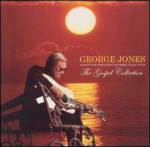
• George Jones: The Gospel Collection, BNA, 2003.
• Sawyer Brown: True Believer, Curb, 2003
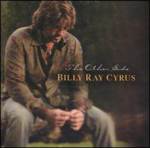
• Billy Ray Cyrus: The Other Side, Word/Curb/Warner, 2003
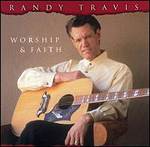
• Randy Travis: Worship & Faith, Word/Curb/Warner, 2003
• Rodney Crowell: Fate's Right Hand, DMZ/Sony, 2003
• Charlie Daniels: Ain't No Rag: Freedom, Family and the Flag, Regnery,
2003
 |
IN the time-honoured tradition of country acts recording gospel albums, Billy Ray Cyrus, Randy Travis, George Jones and Sawyer Brown have all stepped up to the plate in the last year.
Stalwart George Jones' new double CD collection - all of which could squeak onto one disc - sees the welcome return of long-time producer Billy Sherrill. Arguably the greatest voice in country music, Jones has rarely strayed from his honky tonk roots, regardless of the setting. With well over 100 albums under his belt, it would be hard to pick an absolute standout, but as far as specifically gospel-oriented efforts - of which he's done quite a few - this is the finest of his career.
 |
Billy Ray Cyrus and Sawyer Brown were two of the more vapid acts popular on the country charts a decade ago. In 1992, Cyrus sold millions with the omnipresent 'Achy, Breaky Heart.' His pop-lite tunes, like his mangy mullet, soon fell out of favour, and he never came close to repeating his first album's sales figures. Resigned to one-hit wonder status, he slogged on, releasing discs with diminishing returns and pursuing acting roles (including a minor part in David Lynch's Mullholland Drive). He's currently enjoying a return to semi-prominence as the title character on the TV series Doc.
The Other Side is Cyrus's first inspirational effort. Rather than traditional offerings, it's mostly original pop songs about God. Over-the-top production leaves no room for subtlety - and the one traditional song attempted, 'Amazing Grace,' is performed as a blues shuffle. An all-too-typical example of what Nashville - at its worst - foists on the listening public.
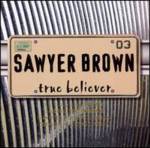 |
Sawyer Brown first came to fame after winning Star Search, a precursor to American Idol, back in the early '80s. Over the past 20 years, they've released almost as many slick, pop-oriented albums. While bearing scant relation to what made country great, they can be unpretentious in a goofy sort of way - and could be considered successful, when taken on their own terms. True Believer collects seven previously-released songs and adds three new tracks. For fans, it must be nice to get these packaged together on one disc.
 |
Randy Travis was one of the most popular country crooners in the 1980s. His debut album, Storms Of Life, reached triple platinum status, far surpassing the more contrived efforts of his less talented contemporaries. A leading light in the New Country phenomenon - who helped return the music to its roots after the more commercial 'Urban Cowboy' craze - Travis had a voice strikingly similar to '50s country legend Lefty Frizzell.
He produced hit after hit, managing to sound contemporary while harking back to the music's golden era. Sales plummeted during the '90s, with the advent of macho 'hat acts' like Garth Brooks and Clint Black. While there's never been a decline in quality, nowadays Travis is rarely heard on country radio.
Worship and Faith finds him in excellent form. The lengthy (over one hour) release is his third gospel effort, following Inspirational Journey (2000) and Rise and Shine (2002). Comprised of 20 traditional gospel standards, Travis delivers each in his trademark relaxed delivery. Clearly sincere, the disc sits well alongside the finest work.
In the eighties, Rodney Crowell was another Nashville golden boy; his biggest selling release, Diamonds and Dirt, included five number one country singles. His songs have been covered several hundred times, by everyone from the Grateful Dead to John Denver. And the icing on the cake: his marriage to Rosanne Cash meant Johnny Cash was his father-in-law.
The nineties were rougher; his sales slumped, and after a painful divorce he took time off to raise his four daughters. While his public profile decreased, the time away was well worth the professional sacrifices, according to Crowell: "It was the best thing I could have done. Not only did I develop a deep and lasting connection with my daughters, I also found a way to re-invent myself as an artist. The so-called down period of my career was in many ways the richest by far."
In 2001 he released The Houston Kid, a magnificent return to form. The album, which took a hard, at times ruthless look at his past, was one of the highlights of the year.
Fate's Right Hand shows that Kid was no fluke. It is a continuation of sorts, as Crowell has commented: "If The Houston Kid was about putting your ghosts to bed, this record is about dealing with what's there, shaking with the darkness. But if you'll do that, look at it, address it, what's inside can lift you up. Of course, it's about being as comfortable with being lifted up as it is being pushed down - which is what most of us are used to."
Full of angst-ridden confessionals acknowledging life's highs and lows, the disc runs from rude and crude to joy, sadness and grace, packing an emotional wallop that resonates far deeper than formulaic gospel tunes. Refusing to compromise, Crowell -- who describes himself as a "Southeast Texas Pentecostal Buddhist" -- is writing the most honest, revealing songs of his career. An unqualified triumph, Fate's Right Hand hits the listener in the gut and reveals Crowell to be at the peak of his abilities.
Charlie Daniels fits well into the persona of classic redneck. Endorsed by Oliver North, and described in the book's jacket as a great patriot, Daniels' Ain't No Rag espouses plain ol' Cowboy sense; this includes traditional values, love of country, and reverence for the 'rag' referred to in the title - Old Glory.
Outspoken and not afraid to tackle contentious issues, Daniels takes aim at policies as well as politicians, and names names -- including specific celebrities such as Chrissie Hynde, Barbara Streisand and Sean Penn. But he can change his stripes: he includes an open letter to Jane Fonda regarding her embrace of Christianity, which includes an apology -- asking her forgiveness for his condescending attitude towards her over the years.
The book is made up for the most part of columns from his website, divided into three sections: 'Cowboy Logic,' 'Why I Love America,' and 'Faith and Family.' On occasion it's obvious Daniels has done very little research to support his arguments, and at times his us-versus-them mentality can be a bit disconcerting. Upcoming release:
Canadian Paul Brandt flirted with the big time country industry, at one point being named by Billboard as country music's best selling new male artist during the mid-nineties, and garnered sales in excess of a million albums.
After eight years living in Nashville he returned home to Canada last year, frustrated by the questionable machinations of the music business. Brandt recently described the industry in general as "full of blatant sexuality, every wickedness, evil, greed, vanity . . . God-hating insolence, arrogance and boastfulness."
He also addressed his own genre: "even the seemingly moral genre of country music is overrun by sexual innuendo and humanism." While Brandt is clear about his faith in Christ, he has no plans to release a full-on gospel effort. His upcoming disc, This Time Around however, will include an original song that deals directly with his faith: 'That's What I Like About Jesus."