
Contemplatives and The Great Tradition
BC Christian News, · Top Stories
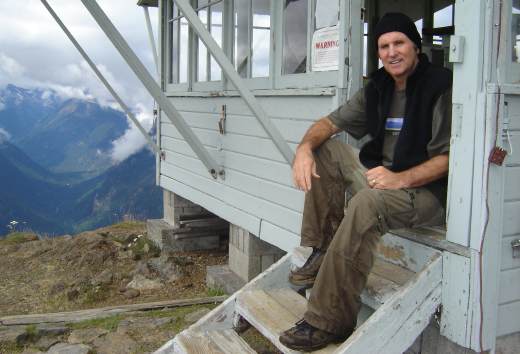
I RETURNED, a few weeks ago, from the North Cascades Institute on Diablo Lake, Washington, having taken a fine course with Tim McNulty on 'Poetics of the Wild.' Tim is one of the best mountain poets of the Pacific Northwest and it was a gift to spend a few days in the high regions and rock rims with him.
I was quite taken by the fact that most who attended had turned to the Eastern traditions to answer their deepest longings. Few knew anything about the Christian contemplative way and most associated Western Christianity with President Bush and Republicanism; they were interested in neither.
I have mentioned, in the last few articles, that there is a growing thirst for the contemplative way of being and knowing, but many turn to the East to slake such thirst. Thankfully, in the last few decades, there has been a growing interest in recovering the Christian contemplative way.
In terms of the Christian church, the contemplative path leads in three directions. First, there is the postmodern or emerging church tradition that seems to be both radical and, in its better aspects, interested in The Great Tradition.
Second, there is the modern bourgeois Protestant tradition that aches to keep the ecclesial status quo of the last 500 years while dipping into the contemplative way.
Third, there is The Classical Christian Tradition that we find in Orthodoxy, Roman Catholicism and the Anglican tradition.
There has been a decided turn to this Great Tradition for insight, wisdom, depth and contemplative and ecclesial breadth in the last few decades.
Books such as Evangelical is Not Enough: Worship of God in Liturgy and Sacrament (1984), Evangelicals & Catholics Together: Toward a Common Mission (1995), Reclaiming The Great Tradition: Evangelicals, Catholics & Orthodox in Dialogue (1997), and Evangelicals and Tradition: The Formative Influence of the Early Church (2005) tell their convincing tales.
The postmodern emerging church tradition is paper thin when set beside such historic depth, and Protestant sectarianism can be found wanting. But sadly such a tradition merely perpetuates and accelerates the schism and fragmentation that is part of the Reformation heritage.
The turn to the Classical Christian contemplative tradition is a turn to a more integrated understanding of faith, mysticism, church, arts and politics. It is somewhat contradictory to argue for an interest in The Great Tradition that affirms the 'one, holy, catholic and apostolic church' while perpetuating schism and being sectarian.
There are, in short, serious shortcomings with both the modern and postmodern notion of the church.
We live in a culture dominated by a longing for more depth and meaning than is often served up on religious tables. But there are many counterfeits on the trail. The turn to The Great Tradition offers us a time-tried wisdom for the journey that is missing in many forms of Christianity.
I will, in the next three articles, hike to the white peaks (Three Sisters) within The Great Tradition: Orthodoxy, Roman Catholicism and Anglicanism. The winding path from the valley, up skyline trails to alluring peak vistas and back to valley life again is an essential tension in the journey.
If we ever hope to nourish greater depths within and speak to those with the same questions, such pilgrimages must be taken. The course with Tim McNulty on 'Poetics of the Wild' spoke much. I have done my limited best to hear.
Ron Dart teaches religious studies at the University College of the Fraser Valley in Abbotsford. He has just published a book on the Beatitudes. This column is part of a series on spirituality.