
Dead Sea Scrolls' long and winding road to the public
BC Christian News, · Top Stories
SINCE their discovery well over half a century ago, the Dead Sea Scrolls (DSS) have held a special place in the imaginations of Christians, Jews and biblical scholars - at times generating conspiracy theories, bogus translations and dubious scholarship.
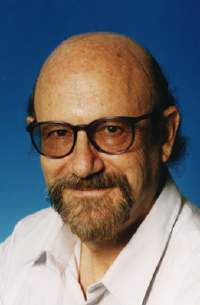
Emanuel Tov, editor-in-chief of the DSS publication project, gave an illustrated lecture at Trinity Western University September 22, detailing the long and winding road from the caves of Qumran to your local bookstore.
Tov has written humorously of the confusion swirling about the DSS: "A few years ago, I was interviewed by US News and World Report, which then reported: 'When Emanuel Tov was six years old, the Dead Sea Scrolls were discovered.' This major news item was picked up by the newspaper of the Korean Christian community in the United States, whose headline read: 'When Emanuel Tov was six years old, he discovered the Dead Sea Scrolls.'"
"No one," he told the audience at TWU, "had the slightest idea to what extent these scrolls would preoccupy the minds of scholars and the general public alike. Ever since the 1950s . . . hundreds of books and thousands of articles have been written on the scrolls. There has been sensation, and journalists spoke of scandals; according to some, these scandals still persist today."
Some journalists, he stressed, write of the DSS "without any factual basis. Scholars, too, are often responsible for diffusing incorrect information about the scrolls. Some impatiently write premature articles based on partial information, and prematurely publish texts and translations, often in an attempt to reap some of the fruits of the fame of writing on the scrolls."
The confusion has been compounded by the nature of the scrolls themselves. "We were in luck that the scrolls were found at all. However, it was simply bad fortune that the fragments were handed over to the scholars in complete disarray, often after having been maltreated by Bedouin." For example, the famous Temple Scroll spent several years hidden in a shoe box in a Bethlehem garden.
The scrolls were accessible only to a small group for decades, sparking rumours that they were being suppressed by the Vatican because of faith-shattering revelations. The truth was much more mundane, Tov said.
"Inexperience caused the initial group of eight scholars to believe they would be able to publish these fragments themselves, without involving additional scholars. Had their approach been more open from the outset, many an outcry would have been avoided.
"It was also lack of experience which accompanied the first steps of the physical treatment of the scrolls, which were pieced together with scotch tape. Two decades later, that scotch tape caused serious decay at the points where the fragments were joined."
While some of the scrolls were in reasonably good shape, most of the material posed a logistical nightmare. "Piles of literally thousands of fragments were sold to scholars, who then spent five years categorizing them and making the initial identifications . . . Some fragments have been either mislaid or lost, and therefore cannot be consulted at this stage. In these cases, the photographs provide the only record of the fragments."
Publishing a definitive edition of the DSS has been a special challenge. "To determine the sequence of fragments of an unknown composition is like working with a jigsaw puzzle for which we have no picture. Often we did not even know whether a given fragment belonged to Composition A or Composition B, copied by the same scribe. As a result, over the course of the initial identification and subsequent research, some fragments were shifted from one composition to another."
Further, "when a group of fragments that was once considered to represent a single Qumran composition was identified as representing two separate compositions, a new Qumran scroll was born, so to speak - creating a new entry in our list. In this way, the number of Qumran scrolls, once complete, has grown in our imagination from 600 to 930, together with several hundred documents from the other sites in the Judean Desert."
This herculean endeavor, he said, has triumphed over many other obstacles.
"If more funds had been available from the beginning, greater progress could have been made; but I don't think that insufficient financial support was the major reason for the delay. The major reasons for the delay were probably the limited size of the initial team, lack of organization of the publication procedure . . . and certain prejudices."
Nevertheless, Tov emphasized, "we would not have succeeded in our task without the valuable input of our predecessors. We still stand on the shoulders of that first generation of scholars who did all the preparatory groundwork."
The DSS project is as close to definitive as possible; however, it may never be truly complete - because the Dead Sea region continues to yield its secrets.
In July, an Israeli scholar announced the discovery of yet another 'Dead Sea scroll.' For the first time in more than three decades, a portion of biblical text - Leviticus, in this case - was found in a Judean cave.