
Greek speak: a few tips on charis
BC Christian News, · Top Stories
 |
C.S. LEWIS once walked in while experts debated what tenet, if any, was unique to the Christian faith. After learning what "all the rumpus" was about, Lewis replied: "Oh that's easy. It's grace."
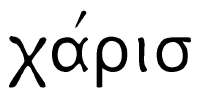
Easy to distinguish from other religions, that is, but difficult to understand grace itself. The Greek word for grace is charis, meaning both 'gift' and the 'thankfulness' the gift inspires. Charis can be given and received. For "unto every one of us is given charis" (Ephesians 4:7). But also, "I give charis to God" (2 Timothy 1:3).
Another rendering of charis is 'favour.' Catholics say "Hail Mary, full of grace" - not because Mary was lovely, or moved like a ballerina, but because she had found charis with God (Luke 1:30). But what is favour? What is God's gift?
Our word 'grace' comes from the Latin gratia, meaning 'favour,' or gratis, meaning 'as a free gift,' from which we get 'gratuity.'
When I was a waiter, I received gratuities for my service. Sometimes my service stunk, and so did the 'free gift.' When it is earned, it is justice. Sometimes a customer would overlook my faults and tip me anyway. That is mercy. Grace would be like getting a tip from someone whom I was not expected to serve.
Yet God's grace far exceeds this, for he does not give a little extra - but declares that every bill, past and future, has been paid in full; and he asks for my server's apron, because I do not need to earn my wage anymore. Instead, he has prepared a banquet for me.
And this magnanimous patron of ours did not come with power and wealth, but in compassion and humility - as a baby in a manger, as a carpenter on a cross. Gratis. Free of charge. Charis be to God!
Mark Smith is a freelance writer from Burnaby. This article is one of a series.