
Remember - with an attitude of gratitude
BC Christian News, · Editorials
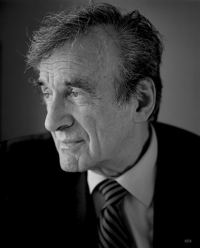
NOBEL Peace Prize winner Elie Wiesel, who survived the concentration camp in Auschwitz, tells about his experience in his 1960 book, Night. It is not an easy read. But then, war numbs us as we read about the atrocities that human beings have committed and the victims who survived.
November 11 helps us all to commemorate those who give their lives for our freedom and the six million Jews who died at the hands of Nazis.
As a boy of 12, Elie Wiesel sought out a Jewish master who worked at the Hasidic synagogue in Hungary. He was a praying youth, who wanted to be taught the Kaballah (Jewish mystical tradition). In 1944, Elie, 15, together with his parents, his three sisters and 15,000 of his Jewish neighbors, were captured by the Nazis, put into cattle cars and shipped to Auschwitz, Buna, Birkenau and Buchenwald. Elie became separated from his mother and sisters, but he and his father survived together. A year later, he witnessed the destruction of children; gold being taken from prisoners' teeth; and his father's death from dysentery and starvation.
Wiesel is now 77, and the author of 36 books - in which he deals with the moral responsibility of human beings to fight genocide, racism and hatred. He says: "To remain silent and indifferent is the greatest sin of all."
Since 1976, Wiesel has been a professor at Boston University and has traveled to Bosnia, Kosovo and Macedonia trying to stop barbarity.
In an interview with Oprah Winfrey, he was asked if he hated Germans. Wiesel replied he didn't believe in collective guilt.
"The children of killers are not killers, but children. And they deserve my affection, my efforts to make them human, to give them a world that is worthy of them. Occasionally, I have students from Germany in my classes and they are the best students I could have. They go back to Germany, and they become leaders who teach their generation the perils of hatred and the danger of indifference."
Wiesel is a man of great human strength and dignity. He says he doesn't know why he didn't go insane. Immediately after the war, he told people: "Thank you just for living, for being human."
He claims that when a person does not have gratitude, something is missing in his or her humanity. A person can almost be defined by his or her attitude toward gratitude.
Perhaps that is an appropriate disposition for us to have as we remember those who died and those who survived.
Esther McIlveen is a Richmond journalist.