
Prayer event seen as 'Bushite crusade'
BC Christian News, · Island Insight
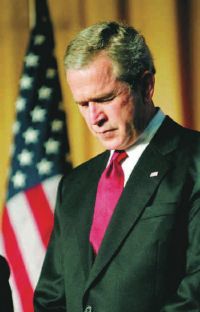
FORMER Victoria-area NDP MP Lynn Hunter says she is shocked to have been invited to the 41st annual parliamentary prayer breakfast by a Conservative MP.
Hunter is also objecting to the fact that taxpayers' money paid for the postage to send the invitation; she also believes the semi-official endorsement the event receives excludes non-Christian Canadians.
As well, she believes the event is suspiciously American in spirit. In a letter printed May 9 in The Victoria Times Colonist, she said it "smacks of the Bushite crusade."
Hunter, a prominent environmentalist and MP for Saanich-Gulf Islands from 1988 to 1993, has the support of the Humanist Association of Canada.
However, she apparently has no like-minded colleagues among the many other ex-MPs invited to the event - at least, so far as organizers of the event are aware.
As well, they maintain, she has evidently misunderstood almost everything about the event.
According to Hunter, the event excludes non-Christians because the invitation states that - as a result of annual prayer breakfasts in Ottawa and provincial legislatures - "people are finding, through meeting in the spirit of Christ, a fellowship that is helping to build true community in Canada."
"During my time in the House of Commons," she continues, only Christian MPs attended such prayer breakfasts. Now, however, "the Bushite crusade" has come to Canada, and with it overt governmental endorsement of Christianity.
"President Bush is an evangelical Christian," Hunter explained to BC Christian News. "He sees the world through that prism which sees that the world's problems would be solved if everyone else in it were Christian."
Hunter, who is a practicing member of the Unitarian church, added, "I don't see the world through that prism."
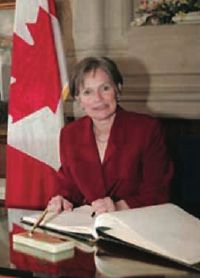
The MP who sent the invitation, Karen Redman, says Hunter has got several facts wrong.
"I'm not a Conservative," says Redman, who is MP for Kitchener Centre. She the Liberal whip, responsible for caucus discipline and attendance.
Redman says prayer breakfasts do indeed come from the United States, but not during the presidencies of either president Bush. They've been going for 40 years in both countries - and in both, are routinely attended by leaders of all the parties as well as the diplomatic corps, including ambassadors of countries whose dominant or official religion is non-Christian.
Far from being a Bushite evangelical, Redman is a Presbyterian who supported the Liberal government's same-sex marriage legislation. What's more, she says, "we make a real effort to be inclusive of all religions by inviting speakers from non-Christian faiths to explain their beliefs to us. I feel Canadians need to embrace all faiths - but shouldn't have to apologize for belonging to one faith."
Redman wonders if Hunter confused the annual prayer breakfast, which is a gala affair, with the weekly prayer meetings some Christian MPs hold. Even with these, however, Redman insists, speakers from other faiths are invited. The meetings are non-partisan affairs to help MPs address the issues of being people of faith in politics.
"I suppose there might be something exclusionary if Parliament did participate in the celebrations of non-Christian events; but we do, for example, mark things like the Sikh Festival of Lights."
Redman has never heard of any complaints from leaders of other religions about the prayer breakfast, which has grown to include workshops for students and a black-tie dinner.
"People elect us for our values - and our values include our faith," says Redman. "We are better MPs because of those values."
However, Peter Moller, treasurer of the Ottawa-based Humanist Association of Canada, says that while the association has no official position on the prayer breakfasts (which he had, in fact, never heard of), "most of us would agree with Lynn Hunter that public money shouldn't be spent for a specifically religious purpose. We tend to think what goes on in the political and religious spheres ought to be kept separate. The MPs certainly have freedom of speech, but they shouldn't be inviting people to religious events as MPs."
Janet Epp Buckingham, director of public policy for the Evangelical Fellowship of Canada (EFC), disagrees. "Canadians are 80 percent Christian. There's just going to be more public recognition of public officials who are Christians." When the EFC interviewed the party leaders (apart from the Bloc Quebecois) on the subject of faith during the last election, she says all agreed that religious belief should not preclude anyone from public office.
"None of the leaders of any other religions are complaining about being excluded," she says. Hunter, she suspects, is trying to use religion as a wedge issue - as it was used by some parties and some news media during the last two elections - to alienate voters from politicians expressing Christian evangelical beliefs, such as Prime Minister Stephen Harper.
"But the people who do the prayer breakfasts aren't evangelicals," noted Epp Buckingham. "The attempt to link this to George Bush is completely spurious. It's difficult to understand why someone who should know better is trying to raise this issue."