
'God shattered my heart'
BC Christian News, · Top Stories
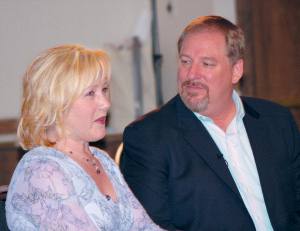
Purpose Driven Life author Rick Warren and his wife Kay were key Christian participants at last month's AIDS 2006. Peter Biggs spoke with Kay Warren while she was at the conference.
BCCN: When did HIV/AIDS first personally impact you?
Kay Warren: Four years ago, I was completely unaware of the issues, when I was reading a news magazine. It was about AIDS in Africa. I was not particularly interested, it just caught my attention. The photos were so awful, I found myself trying to cover them with my hand; but I still read the article. It described 12 million orphaned children in Africa. I tossed the magazine down, but the sheer number began to haunt me. My reaction was: "There is nothing I can do about it." After a month or so, I was purposing to forget about it. But I felt there was a choice: either I go back to my comfortable life, or I say 'yes' to God. I said yes - and God shattered my heart.
BCCN: So you were motivated to do something. But what? And who could you speak to?
KW: I sought out World Relief and World Vision. They sent me material and helped educate me; they were incredibly gracious. After nine months, I went to Africa - first to Mozambique with World Relief, and then to Malawi with World Vision. I saw AIDS up close - the impact it had on people. It was bigger than I could have imagined. It destroyed me. But I realized that the church offered hope.
BCCN: How would you express your desire for local churches to be involved?
KW: We didn't come back with any kind of big vision, except to share with our own church. At the beginning of March 2004, Rick preached on 'God's compassion for the sick' - and we began to talk about HIV/AIDS. People were a bit puzzled at first - but folks rallied. Some had, in fact, spoken against those with AIDS - but there was repentance for that attitude.
BCCN: You spoke on video about why you chose AIDS, and not other illnesses. You began with the issue around stigma. How are North American evangelicals dealing with this?
KW: I remember a man in our church who was HIV-positive. It turned out that he had revealed this to his past church, and they asked him to leave. With all this emphasis, he cautiously began to talk to us about it. Eventually, he stood before the whole church and told them he was HIV-positive. He received a standing ovation for his courage.
BCCN: There is plenty of AIDS in North America. Are you emphasizing only overseas AIDS, or local as well?
KW: We are emphasizing both. Local and overseas.
BCCN: Although it might not be the best term to use, surely your passion to help people with HIV/AIDS has gained you some strange bed-fellows! These are people evangelicals have rarely worked with.
KW: [Laughter] Yes! We have made some new friends, but we are clear that we are passionate about people connecting with God. We have carved out a difficult path. God has standards; behaviour and purity are issues with consequences. Some may accuse us of compromising; but we are clear in our belief in the authority of scripture. Some don't see the Bible in that way. That does not mean that we cannot work with them and find common ground.
BCCN: What is the biggest challenge in working with diverse groups?
KW: The biggest challenge is to find what are the common issues, so we can move forward on those things and identify the points of contact.
BCCN: As you connect with and work alongside groups, such as gays, who historically have been at odds with evangelicals, what have you yourself learned?
KW: I think we have been arrogant. It caused me to have to look within myself. Why are my sins somehow 'acceptable,' and yet others are not? Some folks are unsure of us - and us of them; we may, in fact, violently disagree - but we concentrate on building relationships.
BCCN: What is your assessment of the overall picture emerging at the AIDS 2006 conference?
KW: Two years ago, I went to the AIDS conference in Bangkok. I came away totally depressed; there was no cure, and millions were suffering and dying. This conference is leaving me so convinced that the church needs to be involved.
September 2006