
World Vision and children of AIDS
BC Christian News, · Top Stories
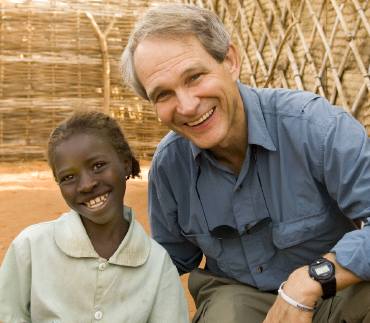 |
SOME faith-based organizations are becoming increasingly involved in combating HIV/AIDS. One such group is World Vision Canada, whose president and CEO, Dave Toycen (pictured, with a Sudanese girl), has been at the forefront of Canadian Christian aid agency work in addressing issues related to the pandemic. Peter Biggs spoke to Toycen August 9, shortly before he and some 30 other World Vision representatives took part in AIDS 2006.
BCCN: During your 18 years of leadership with World Vision Canada, you have seen AIDS spread. Can you describe points of impact this pandemic has had on you personally?
Dave Toycen: It has been encounters with children. I was recently in Zambia, and I remember a young 19 year old wife. It turned out her husband, who had left her - but not before she became pregnant - was HIV positive, and infected her. Her baby was likely also infected. As I talked to her, I reached out and simply touched her hand. It was hot; she was feverish. I was from Canada - I knew she would likely die before I would return.
I remember a little boy, John. He was 14, but looked more like nine; he had AIDS. His mother had left, and his father had died. He was being raised by his grand-father. He had a three-legged dog that followed him everywhere. He would try to play a little soccer with other kids, but was now very weak - and could only manage a few minutes before being overcome by exhaustion.
He was unusually trusting of a white visitor. He sat down with me and proceeded to snuggle right up to me. I can still remember the feeling of his arm rubbing against mine.
I heard that, soon after, John had died.
BCCN:Considering World Vision's focus on children, how is the pandemic affecting this population?
DT: It is projected that 20 million children will be orphaned in Africa alone by 2010. There are now around 2.3 million HIV positive children in the world. Ninety percent of AIDS deaths occur in Africa, with 15 million children there having lost a parent.
BCCN: How do aid agencies like World Vision respond?
DT: It requires a multi-disciplinary response, with a community development approach. Care [involves] retro-viral drugs being made available; but an improved diet is critical along with that. Even green vegetables in the diet can prolong life. Clean water, hygiene and spiritual care and encouragement, all have their part to play.
Along with this, there are advocacy issues. For instance, in some countries, inheritance laws need to be changed to give the land to a widow. Rape laws need strengthening in many cultures. Educating children as to abstinence before marriage, and faithfulness in marriage. We are concerned about the many commercial sex trade workers also - for whom abstinence is impossible - that they use condoms.
BCCN: Have you seen a change in the way groups like World Vision are partnering with secular and governmental agencies to get the job done?
DT: I think the sheer size and scope of the challenge of AIDS has raised partnering to a new level. Governments and agencies look at this and realize that there is no way they can address the need without religious groups. Local churches are on the ground, with all kinds of care and spiritual support in AIDS-ravaged communities.
September 2006