

Preston Manning, John Stackhouse and other Canadians assess the changing role of U.S. evangelicals in politics.
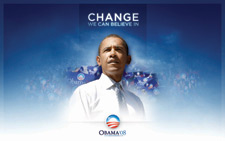 THE AMERICAN election may have constituted a victory for president-elect Barack Obama, the Democratic Party, African-Americans and racial harmony.
But it represented “a very difficult choice for conservative Christians,” according to one Canadian commentator.
The problem was that there was no candidate evangelicals could feel totally comfortable with, said John G. Stackhouse, professor of theology and culture at Regent College in Vancouver.
Republican John McCain, he maintained, is not an evangelical, has been divorced and is not as strongly pro-life as many evangelicals would like. Democrat Obama is a “church-going Christian,” he noted, but is also pro-choice on the abortion question.
As a result, many evangelical leaders “sat on their hands” in this election, said Stackhouse.
The appointment of Sarah Palin as the Republican vice presidential nominee galvanized some evangelicals, but she proved to be “not as bright and pure as some evangelicals had hoped,” in addition to coming across as overly ambitious – and out of her depth.
White evangelical support was crucial to giving Republican George W. Bush his narrow election victories in 2000 and 2004.
But while Bush won 79 percent of the white evangelical vote in 2004, McCain won only 74 percent this year. That is not a huge change, but it was significant because white evangelicals represented 23 percent of voters this year.
Moreover, Obama did better among evangelicals in ‘swing states’ – states where the election was close – and among young evangelicals, gaining 32 percent of the votes of white evangelicals aged 18 – 29.
Church attendance
Obama won only 43 percent of the vote of weekly churchgoers, but 75 percent of those affiliated with no religion.
He won 94 percent of the vote of those who attend black churches and 54 percent of Roman Catholics – a figure that includes 47 percent of white Catholics and 72 percent of Hispanic Catholics.
Black churches in the U.S. have a “rich political heritage,” said Brian Stiller, president of Tyndale University College and Seminary in Toronto.
They are sometimes considered to be evangelical, because they worship like evangelical and charismatic churches. However, their theological tradition is quite different.
There have been widespread accusations that Obama is not really a Christian because he doesn’t espouse evangelical values. However, Obama is being “true to his religious tradition,” said Paul Rowe, associate professor in political studies at Trinity Western University.
He maintained that black churches have always had an emphasis on ‘liberation theology’ – and the social gospel, the application of the gospel in this world. They have an emphasis on religious experience, he added; however, Rowe contended, they do not have a well-developed theology.
Black churches have strongly supported the Democratic Party in the past, but not in the overwhelming numbers they did this time.
Roman Catholics represent about the same percentage of the U.S. population as evangelicals, but have not tended to vote as a bloc. Changes in evangelicalism
For Republicans to assume that evangelicals would automatically vote for them because of the hot button issues of abortion and homosexuality was a big mistake, said Stiller.
There may still be “pockets of single-issue Christians” in the U.S., but evangelical concerns are generally broader than that, he said. Young evangelicals in both the U.S. and Canada are increasingly interested in issues such as poverty and the environment.
“U.S. evangelicals are also human beings and Americans,” said Stackhouse, suggesting that their voting decisions were influenced by issues such as the economic crisis, just like other Americans. “Evangelicals don’t vote just on religious considerations.”
“The issues evangelicals feel are important are diversifying,” Rowe said, noting a widespread sense that the Republicans have mismanaged foreign policy and economic policy.
“Young evangelical voters are still not pro-abortion – but may feel that issue has been settled for now. They want a more progressive foreign policy.”
Stiller added: “The Religious Right is highly fragmented over the failure of the Bush administration in many areas, including the lack of progress [to limit] abortion and gay rights.”
Conservative salvos
In the last days of the election campaign, ideological salvos were fired at the Obama campaign from a number of conservative Christian sources.
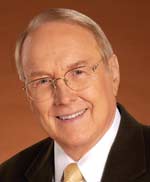
These consequences included the entrenchment of abortion rights, the legalization of same-sex marriage, the silencing of Christians, the prohibition of gun ownership, nationalized medicine (a medicare system similar to Canada’s), economic disaster in the U.S., military gains by militant Islam and Russia, and the dropping of a nuclear bomb on an Israeli city.
 |
The letter exemplified Dobson’s position as the most prominent remaining leader of the Religious Right, which is now an unorganized movement – but is the successor to the Moral Majority organization formed by televangelist Jerry Falwell to elect Ronald Reagan president in 1980.
It was this same evangelical bloc that helped elect Republican George W. Bush in 2000 and 2004.
Dobson’s letter was castigated by some other Christians, most notably Jim Wallis, founder of the evangelical social action group Call to Renewal, and editor of Sojourners magazine. Wallis declared:
“James Dobson, you owe America an apology. The fictional letter . . . crosses all lines of decent public discourse. In a time of utter political incivility, it shows the kind of negative Christian leadership that has become so embarrassing to so many of your fellow Christians in America. We are weary of this kind of Christian leadership, and that is why so many are forsaking the Religious Right in this election.”
Leadership changing
The leadership of the U.S. evangelical movement is changing, said Stiller. Falwell and James Kennedy have died, and Pat Robertson is pretty much “a spent force.”
| Previous article Religious Right is losing steam | Next article Our joy in God is only a shadow of his joy in us |
 |  |
| Page 1 |
Stackhouse noted that the “most prominent evangelical spokespeople” in the U.S. – those with TV shows and big book contracts – have almost always been on the extreme right wing.
It is not clear whether this is because people with other outlooks don’t watch religious television or because there is something about the medium of television that “leans toward dramatic, extreme and simple” presentations.
He suggested televangelists have never been representative of the full spectrum of the evangelical movement.
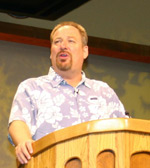
Warren is pro-life, but has also supported ministry to AIDS victims in Africa and other social causes. Warren invited both McCain and Obama to his church to talk about their personal faith and the issues in mid-August.
Stiller said Warren is “more reflective of the evangelical community than the Religious Right has ever been.”
Impact on issues
Because of the election, “there will be a decline in the significance of religion in terms of public importance,” Rowe suggested, adding that the Democrats “will try to pull religion out of public life.” However, he added, it would be a mistake to overstate that. “America is a deeply religious country, and nothing has changed about that.”
Rowe pointed out that a proposition banning same-sex marriage passed in California, even though the state voted strongly for Obama. Arizona and Florida passed similar propositions. Therefore, the Democratic Party should not think it has “a blank cheque,” he warned. “The Democratic Party does not represent the broad scope of Christian or American culture on issues such as abortion.” He added that the Democratic Party’s move to the left in the 1960s sowed the seeds for the rise of the Religious Right in the 1980s.
On the other hand, “Just because you are paranoid doesn’t mean they aren’t out to get you,” Stackhouse quipped.
Both Stackhouse and Rowe stated Dobson’s strongest argument was that Obama will have the power to make appointments to the Supreme Court. That could lead to decisions in favour of abortion and same-sex marriage and even to restrictions on the freedom of Christians to talk about those issues. Dobson cited instances from Canada on the latter point.
However, “even well vetted justices don’t do what you thought they would do,” as has been proven by the conservative justices appointed by Republicans, said Stackhouse.
“Judges have a habit of thinking for themselves.” As well, there are numerous “checks and balances” in the U.S. system, and “things take a long time.”
Stackhouse considered it “very likely” that, if present trends continue, same-sex marriage will be approved in the U.S. and other English-speaking democracies – because it will be “framed as a matter of individual human rights.”
However, he added that “history doesn’t always move in one direction.” In particular, there is an axiom that “hemlines fall with the stock market” – that is, economic hard times tend to push society in a more conservative direction.
Political pendulum
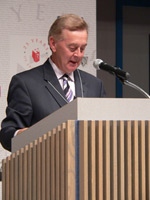
While there is “room for concern” about current trends, it would be a mistake to keep fighting the same battles in the same ways, he said. For instance, because of the discovery that DNA contains the entire genetic code of a person, “it is increasingly difficult to maintain that personhood only begins at birth,” said Manning. “Science is changing the framework.”
Christians are not changing the nature of their concerns, but “getting wiser in what political action to take,” said Manning.
“Christians are called to be as wise as serpents and as gracious as doves – and more believers are learning what that means.”
Application to Canada
What happens in the U.S. usually has some impact in Canada.
The Roman Catholic Church has expressed some concern that an ‘assisted suicide’ proposition that passed in Washington state – and which is similar to a proposition passed in Oregon a few years ago – may encourage assisted suicide proponents here.
However, all the experts BCCN spoke to said there is no direct political connection. “These countries run separately on social and moral issues,” said Stackhouse. Manning noted Canadians elected a conservative government about the same time as Americans elected a liberal one.
Evangelicals don’t have the same critical mass in Canada, said Stiller. There are three million evangelicals in Canada, compared to 90 million in the U.S., and Canadian evangelicals have therefore been less tempted to seek political power.
Canadian televangelists David Mainse of 100 Huntley Street and Willard Thiessen of It’s a New Day have deliberately chosen not to be politically partisan, he noted.
Manning said the same thing about Stiller’s earlier leadership of the Evangelical Fellowship of Canada. The approach taken by Canadian evangelicals is “fundamentally different” from that taken by many American evangelicals, he said, “and beneficially so.”
Toward fairness
Stiller added that Canadians, including Canadian evangelicals, have a cultural bent toward fairness that recoils at the kinds of extremes sometimes evident in the U.S.
The weakening of the connection between American evangelicals and the Republican Party is “a healthy development,” said Manning.
“It is dangerous for faith communities to get identified exclusively with one party . . . A faith perspective should transcend party politics.” He added that there should be Christian people on both sides subjecting policy to scrutiny.
Stiller agreed. “The lesson for us is that it is a huge mistake when politicians or voters get trapped into believing that faith and a party are, by nature of their doctrine, in lockstep,” he said.
“For me, it is a good sign that the partisan evangelical connection no longer seems to rule [in U.S. politics]. When faith becomes captured by an ideological and partisan focus, it sells its inheritance for a mess of political pottage.”
December 2008