

What does Christ’s death truly mean to us?
By Jim Coggins
 CONTROVERSY surrounding William P. Young’s The Shack has drawn attention to a major theological debate that many readers of the popular novel may not be aware of.
Simply put, the debate is about how Christians understand the significance of Christ’s death on the cross. Questions are being raised about the traditional concept of atonement.
The controversy came to light in a popular forum recently, when Baptist pastor Kendall Adams interviewed Young on radio station KAYP in Iowa. Adams pressed Young on why he had God assert in the book: “I don’t punish sin. Sin is its own punishment.”
Young stated: “The cross is the plan of God . . . to redeem us back from being lost, living in the grip of our sin . . . There’s no hope for any human being . . . apart from the cross.”
However, Young also stated that God is always motivated by love, and the wrath of God is always directed against sin, not against sinners. Therefore, God the Father did not punish Jesus on the cross as the penalty for human sin.
Young also raised the possibility of “ultimate reconciliation,” that all people will be saved, reconciled to God in the end.
Adams replied that Young was denying “penal substitutionary atonement” – that Jesus paid the penalty for human sins on the cross – which Adams stated was “the heart of the gospel.”
Young agreed that he did not fully accept the penal substitutionary view of the atonement.
In the interview, Young defended his position by stating that there is “a huge debate that’s going on in theology right now within the evangelical community” concerning the doctrine of the atonement.
Battle of the books
As evidence of this, he cited the recent book, Stricken by God? NonViolent Identification and the Victory of Christ, edited by Brad Jersak and Michael Hardin.
Adams in turn cited another recent book, Pierced for Our Transgressions: Rediscovering the Glory of Penal Substitution by Steve Jeffery, Michael Ovey and Andrew Sach.
 These are only a few of numerous recent books on the subject of the atonement.
Others include In my Place Condemned He Stood: Celebrating the Glory of the Atonement by J.I. Packer and Mark Dever; and The Future of the Atonement: A Response to N.T. Wright, by John Piper. These books contain endorsements by a variety of Christian leaders, and lists of other books on the subject.
Theologians from Canada, and B.C. in particular, are very involved in this broad-based theological debate. William P. Young is the son of Canadian missionaries.
Brad Jersak is a leader with Fresh Wind Christian Fellowship and Fresh Wind Press, based in Abbotsford. The contributors to his volume include Wayne Northey, co-director of M2/W2, a prison ministry based in the Lower Mainland; and Ron Dart, who teaches religious studies and political science at the University of the Fraser Valley.
Another of the contributors to Jersak’s book is N.T Wright, Bishop of Durham in England, who frequently lectures at Regent College in Vancouver – which is where J.I. Packer is Board of Governors’ Professor of Theology.
Three approaches
To help sort through this issue, BC Christian News consulted Hans Boersma, who is the J.I. Packer Professor of Theology at Regent College. He has not read The Shack, but has written his own book on the atonement: Violence, Hospitality and the Cross: Reappropriating the Atonement Tradition.
The first thing Boersma said is that the current debate is not new. From the beginning of the church, Christians have struggled to understand the meaning and implications of Christ’s death on the cross.
Christians have, in general, taken three main approaches.
Christus Victor
The first is the ‘Christus Victor’ approach, which sees Christ as coming to conquer death. Jesus became human and died on the cross so human beings could ‘become deity’ and enter into the eternal life of God.
This view was common in the early church and in Eastern churches, such as the Orthodox denominations.
Substitution
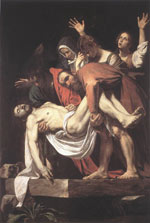 The second approach is the substitutionary theory (which comes in various forms): Jesus came to earth and died on the cross as the representative of human beings, so their sins could be forgiven.
It is sometimes suggested that this view was developed by the 11th century theologian Anselm of Canterbury in his book Cur Deus Homo (Why God Became Man).
It was later accepted by the Protestant Reformation – it still finds many of its staunchest defenders among Reformed theologians – and by many evangelicals. However, Boersma pointed out that while Anselm formulated this position very clearly, it was also present in many earlier theologians as well.
Moral influence
The third approach includes various ‘moral influence’ theories, which see Jesus Christ coming to earth primarily as a moral example and teacher, “to show us what it is to live a life worthy of God.”
This view was particularly expounded by Abelard in the early 12th century and has been popular among Anabaptists (Mennonites), liberal Protestants and sometimes leaders of the Emerging (or Postmodern) Church.
Many of the contributors to the Jersak/Hardin book are Mennonites and mainline Protestants.
The problem, Boersma said, is to take any one of these approaches and insist it is right and the others are wrong.
In his view, “it is impossible to read the scriptures and not see punishment and substitution.” But, he said, the idea of a “cosmic battle” and Jesus’ victory over the forces of evil (the first approach) is also in scripture, particularly in John’s gospel.
Similarly, he maintained, holding only the penal substitutionary approach makes the gospel too objective; those who hold the third view are correct that the gospel still needs to be personally appropriated.
| Previous article Okanagan round-up | Next article A step forward for social housing in B.C. |
 |  |
| Page 1 |
Implications of theories
One of the reasons the debate becomes so heated, Boersma suggested, is the many implications of atonement theories.
For instance, if God is our example and we believe God punished his innocent son, then this could justify violence and abusive human structures.
“Divine child abuse” could justify human child abuse, and God’s use of violent punishment could support just war theories.
 This is one reason ‘peace churches’ such as the Mennonites are suspicious of the penal substitutionary theory.
Such suspicion, Boersma suggested, may be partly based in “a strict social trinitarianism” that sees God as three separate persons.
This does not do full justice to “the incomprehensible mystery of the triune God,” since all of God was involved in salvation through the cross.
Moreover, as the Gospel of John makes clear, Christ voluntarily laid down his life. Further, if Jesus is the ‘new Adam,’ then there is also a sense that humans are included in his sacrifice; there is a representative and inclusive aspect to the substitution.
Boersma said Young is quite correct to say that the wrath of God is always motivated by the love of God.
God sent his Son “to reconcile the world to himself,” and “it is never wrong to remind ourselves of God’s love.”
However, he noted, there are lots of scriptures about God’s wrath and judgment which go “well beyond saying that this is just sin’s own consequences.” God also “honours human choices,” and God sometimes steps in to punish people – including God’s people – when they refuse to listen.
Old vs New Testament
One of the dangers of trying to cut punishment out of the Bible, Boersma said, is that it can “pit the Old Testament against the New Testament.” This can lead to the heresy which sprang up in the 2nd century, which divided God into an Old Testament ‘God of wrath’ and a New Testament ‘God of love.’
This is a misunderstanding because “love is all over the place in the Old Testament,” and “warnings of eternal punishment are scattered throughout the New Testament.”
Another implication of how we understand the atonement is our attitude toward sin.
If we “take away the need for punishment,” Boersma suggested, “it downplays human depravity.”
For this reason, he appreciates the stronger sense of human sinfulness in the Roman Catholic and Reformed traditions.
“It is crucially important, especially in today’s culture, that we restore the importance of getting our lives in line with God’s loving desire for us.”
Similarly, Boersma has a great appreciation for the Roman Catholic call to subordinate all earthly hopes to the great hope of entering “the eternal life of God.”
 In their desire to “incarnate the gospel so they can speak to the surrounding society,” evangelicals sometimes forget this and focus on what God does for us here and now. In a materialistic society, this can lead to the “health and wealth gospel.”
Another corrective to this is the “Anabaptist call to radical commitment.”
God’s love rules
While Boersma defended the penal substitutionary view of the atonement, he warned that its proponents should not “speak too glibly about eternal punishment.”
They should not proclaim that “God hates” homosexuals or any other group. “We should hold out hope for salvation to anyone to whom we speak.” Christ came to offer salvation to everyone, and God’s punishment is always an expression of God’s love.
Boersma commended the analogy in a recent encyclical by Pope Benedict XVI: that the burning of God’s love can become for us the burning of God’s wrath if we reject that love. It is not that God has changed – but that we have become so disfigured that we can’t stand the light of God’s love.
One of the painful things in the whole atonement debate, Boersma noted, is that people get very emotionally attached to their own viewpoints and find it difficult to speak across the boundaries of their traditions.
Therefore, it is important to “bring humility to the table” and try to understand each other. We can “never say we have explained it all,” since human language is “always inadequate to fully define the divine mystery.”
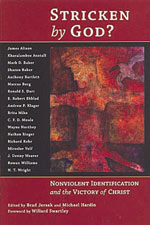 Brad Jersak
Pastor of Fresh Wind Christian Fellowship
“My conviction is that, on the cross, God the Father was not punishing Jesus . . . Instead of God’s wrath being poured out on and satiated in his own Son that day, we see God choosing to reject wrath . . . Christ’s sacrifice is the first-fruits of a whole movement – who would take up the cross, and become living sacrifices of co-suffering love for the world.” – Stricken by God?
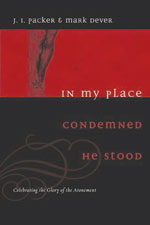 J.I. Packer
Regent College professor and author
“For Paul, this substitution – Christ bearing our penalty in our place – is the essence of the atonement. Certainly, he celebrates the cross as a victory over the forces of evil on our behalf, and as a motivating revelation of the love of God toward us; but if it had not been an event of penal substitution, it would not for him have been either of these.” – In My Place Condemned He Stood
April 2009