
Silk roads of faith
Mission Fields,
THE WORD on the street is that The Heavenly Man is a good book. 'Good' in terms of books, however, has so many meanings that it can become downright meaningless. This book is 'good' because it is important - for many reasons.
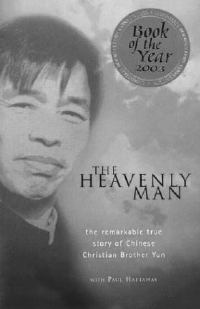 |
The Heavenly Man (Monarch, 2003) is primarily the story of Brother Yun, an extraordinary Chinese believer who has gone through the imprisonments and torture of a Christian leader behind the bamboo curtain. But it's not just a narration of those events; it's about the direction and experiences of the church in China as a whole.
Most remarkable is the current focus of Brother Yun and so many others in China: a growing campaign to take the gospel across Asia to the Holy Land.
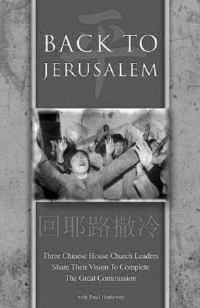
This has warranted a book entitled Back to Jerusalem (Gabriel, 2003), by three church leaders including Brother Yun; it was written in conjunction with Paul Hattaway, who also assisted with The Heavenly Man.
The two books outline a key movement that began eight decades ago, and is just now gathering momentum.
 |
In the 1920s, a group of believers in China called 'The Jesus Family' began a ministry aimed at taking the gospel from China through the Middle East. The initiative to sell all they had and begin the trek west was called 'Back to Jerusalem.'
The idea was not necessarily to reach Jerusalem, but rather to travel back along the old 'Silk Roads' of ancient trade between China and Southeast Asia, the Middle East and the land of the former Russian provinces.
The motto of this original group, which thrived into the 1940s, was 'Sacrifice, abandonment, poverty, suffering, death.' The goal was to reach the lands of Islam, Buddha and the Hindu gods.
Brother Yun recounts the story of meeting an old Chinese gentleman in 1995 at a worship meeting. The old man, Simon Zao, told the story of how he and a group had been imprisoned on the eve of venturing into the Soviet Union in 1948. After 40 years of imprisonment, all of his fellow missionaries and his young bride had been long dead.
Every day in prison he faced the west, and prayed that there would be others from China who would pick up the call to take the gospel into Muslim lands.
Everyone in the meeting wept; Brother Yun took Zao's hand and said, "We will carry on the vision!" That became a turning point in Brother Yun's life; and now the vision of 'Back to Jerusalem' is his primary focus.
Brother Yun began to discover that the mission was still alive throughout China; and it became apparent that the Chinese church was prepared to train and send out 100,000 missionaries as part of this historical outreach.
Some of this has already begun. Of a group of 39 sent out in 2000, 36 were arrested. But once sent home, they simply regrouped and prepared to find way to leave China and begin the journey again.
The Heavenly Man describes these missionaries as "broken-hearted and cleansed with a mighty fire." Their training includes how to suffer and die for the Lord, how to witness for the Lord and how to escape for the Lord - not ordinary seminary training, for sure.
It is this context, shared by the two books, whichmake Brother Yun's other stories and comments all the more meaningful and challenging.
His stories of the trials of Christian leaders in China include honesty about the divisiveness and denominationalism amongst the house churches that came about in the 1970s and 80s.
This phenomenon began after Western literature found its way into China along with Bibles. Yun is careful not to lay the blame on the Western church; but the question remains as to how that literature contributed to divisiveness in the Chinese church.
Yun also acknowledges what some Christian leaders and pioneers never have - that sometimes family is being sacrificed at the altar of 'ministry.'
His wife Deling's contributions to the book express her thoughts and feelings about her own imprisonment and struggles of faith when she was alone with her children - wondering when, or if, her husband would be released.
It seems paradoxical to maintain the importance of dedication to one's family and also support giving it all up for the entirely sacrificial life demanded by 'Back to Jerusalem.'
But it is an important message - and each one knows the call he or she is to make.
One can only imagine that the 100,000 heading out on the call are not abandoning family responsibilities - but rather have chosen to make their own missionary troupe their family, and sacrifice the opportunity to create a family of their own.
The Christians in China will continue to amaze the world with their self-sacrifice, and the tribulations they endure for the sake of the gospel. The journey west 'to Jerusalem' has just begun.