
Seeking Canada's help for Zambia's AIDS tragedy
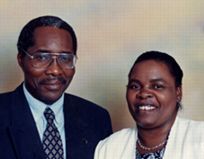
THOMAS LUMBA is looking for help -- for millions of Africans suffering from AIDS.
The executive chair of Inter-National Needs (IN) Zambia spent the month of March in Canada, speaking at churches, home Bible groups and Bible schools in Manitoba, Alberta and B.C.; late last year, he conducted a similar campaign in Ontario. His ministry is partnering with IN Canada, to raise prayer and financial support to combat the AIDS scourge throughout Africa. Just before his return to Zambia, he spoke to CC.com.
"Statistically, in 1999 alone," Lumba said, "200,000 died in civil wars in sub-Saharan Africa. But in the same year, 2.2 million died of HIV / AIDS. The total number of AIDS orphans is double the total population of children in Canada.
"In Zambia alone, in 1999, we lost 1,300 teachers. Life expectancy has dropped in the past two years from 53 to 46. Two out of five adults in Zambia have tested positive; If the present rate of infection continues, it could be three out of four."
In addition to Zambia, some of the hardest hit countries are Botswana, Zimbabwe, Tanzania and South Africa. But one country has shown distinct improvement, he said. Uganda once had the highest rate of infection on the continent. "But it is now the leading country where it's decreasing."
"It's hard to tell how they measure the decrease. But the encouraging thing is the response of the population. People are going for testings. There has been so much awareness on the dangers of AIDS; they are educating themselves. They are not ashamed or afraid to talk about these issues."
There has also been a shift of attitude elsewhere in Africa.
"Churches in Zambia are now coming to accept the people with the HIV virus. In the past, people with AIDS were shunned -- as if they deserved it. The reason they were shunned was because it was claimed that you only get AIDS through sex.
"But the people are now beginning to ask about innocent victims -- for example, one who gets AIDS through rape; or a faithful wife who gets it through the promiscuity of an unfaithful husband; or a small boy or girl who gets it through the birth process. How can you reject such people?"
This new perspective, he said, has resulted in churches being more welcoming of people with AIDS -- who "are being accepted in churches." Further, "these people are being given hope -- which they will find in the Lord Jesus Christ. A lot of people with AIDS are accepting Christ -- because they know they will soon die."
IN Zambia has several operations, including ZACTS (Zambia Agriculture Crafts and Theological Studies), a Bible school which aims to send out graduates who can "go out as self-reliant, tentmaking leaders of churches." Students are also given AIDS awareness education.
Another IN ministry is the Famcare Centre. Lumba and his wife Joyce invite church leaders to come to the centre for several days a month. "They come to discuss strategies on how to reach out to people with AIDS, and also to raise awareness -- to warn people. We also teach them family values from the biblical perspectives." They stress the importance of marital fidelity and abstinence outside of marriage -- as opposed to programs which distribute condoms.
"In some cases," Lumba said, "AIDS is poverty-driven. People cannot afford the anti-viral medications. Some women turn to prostitution because of economic problems, and they catch AIDS. Another reason for the epidemic, he said, is "the lack of proper medical equipment," and inferior medical facilities. In some hospitals, he said, "syringes are not properly sterilized."
He stresed: "We are living with these realities. People are living with people with AIDS. They are losing beloved family members; or they themselves are infected."
The disease has also taken a personal toll on Lumba. "My wife and I recently lost a 22 year old boy we had adopted at eight years old; he had been infected in his mother's womb. We didn't even know he had AIDS until after his death; he died of malaria, because his immune system failed."
However, despite the ongoing, multiplied tragedies, Lumba said he also wanted to stress the positive aspects of African life.
"Christians in the West need to know the good side. Good things are happening. Churches are very much alive in Africa; they're filled to capacity."