
The Great Commission in China
Mission Fields,
"WE CALL on the government to admit to God's great power . . . If it were not the work of God, why have so many churches and Christians been raised up in China? Therefore [the Communist authorities] should readjust their policies on religion lest they violate God's will to their own detriment."
This extraordinarily bold statement, part of a 1998 ‘United Appeal' made by leaders of 10 house church groups, is emblematic of China's explosive church growth.
In China's Christian Millions (Monarch, 1999), Tony Lambert writes: "In a country where Maoism did its utmost to extinguish the very name of God from the consciousness of the people, closed all the churches and indoctrinated several generations in atheistic materialism, the greatest in-gathering the church has seen since Pentecost has been taking place."
History of evangelism
The first known evangelists to bear the name of Christ to China were considered heretics by the mainstream church of their time. The Nestorians had thousands of followers in Asia in the late 7th century.
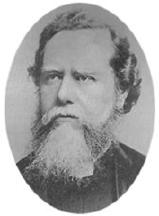
From the late 13th to the early 18th centuries, Roman Catholic evangelism met both obstacles and success. Protestant evangelism began in the early 19th century, despite government opposition. The most successful missionary was Englishman James Hudson Taylor; in 1865, he founded the China Inland Mission. By the time he died, in 1905, there were an estimated 125,000 Christians affiliated with his organization.
Missions were seen by many Chinese as a manifestation of Western colonialism. In the early 20th century, "attitudes of paternalism persisted among many foreign missionaries," writes Daniel H. Bays in Christianity in China from the Eighteenth Century to the Present ( Stanford, 1996).
Increasing reaction against foreign influence helped spawn an indigenous form of Christianity. Missionaries encouraged the ‘Three-Self Movement,' which "aimed at making Chinese Christians responsible for ‘self-management, self-support and self-propagation.'"
Several emerging groups were influenced by the Pentecostal movement, including the True Jesus Church. This group, according to Bays, "was sometimes militantly anti-foreign. Its relations with foreign missions were usually contentious." A similar attitude was sometimes evident in Watchman Nee, who founded the ‘Little Flock' movement.
In the late 1940s, some Christians promoted evangelism beyond China. The Back to Jerusalem Band, citing the fact that the gospel had moved from the Holy Land to China, believed the Chinese would bring the faith back to the land of its origins.
Communist takeover
In 1949, Mao Zedong's Communists took power. All foreign missionaries were expelled, and the government established the Catholic Patriotic Association and the Protestant-based Three Self Patriotic Movement (TSPM). Many Christians were driven underground, and leaders were imprisoned. The worst period of persecution came during the Cultural Revolution (1966 - 1976). Cut off from the West, and refined by persecution, the Chinese church was forced to grow on its own.
After Mao died, Deng Xiaoping's government officially recognized Buddhism, Islam, Daoism and Christianity. TSPM churches, which had been closed since 1966, reopened in 1979. However, in the early 1980s, the government cracked down on house churches.
Persecution is still a harsh reality for many Chinese believers. Yeow Mooi, of Asian Outreach International in Hong Kong, says punishments "can include imprisonment, fines, house arrests, and sometimes beatings."
Ironically, there were less than four million Christians when the Communists took over; those numbers have mushroomed. According to Operation World (Bethany/WEC, 2001), there were 17 million Christians in government-controlled churches as of 1997. The numbers of house church Christians, say the book's authors, "are a matter of conjecture. Reasonable estimates range between 30 and 80 million."
The Chinese government sanctions the TSPM, but members are not allowed to evangelize outside church buildings. Meanwhile, house churches, which refuse to register with the government, risk punishment by evangelizing clandestinely. However, Mooi says, "most house church leaders would tell us that the persecution is not as bad as it used to be."
"There is a tremendous improvement in the openness toward Christianity," maintains William Tsui, of Christian Communication Inc. of Canada. The Communists, he asserts, "are using religious openness to trade for economic development."
Some Christians are taking full advantage of this openness. "Many people from Mainland China are in North America, and dedicate themselves to becoming theological students," says John Kao, head of the Canadian branch of the Chinese Coordination Centre of World Evangelism.
Back to Jerusalem
Some observers believe Chinese Christians will become a huge missionary force. Lambert maintains that they will be "at the forefront of world evangelism" in the 21st century.
In January 2000, Dale Hiscock, international director of the Ontario-based AsiaLink Ministries, attended the Back to Jerusalem Conference – a meeting of house church leaders and Western mission leaders. "I was deeply moved by their sense of calling to fulfil the Great Commission. There is a deep passion within their hearts to reach not only their own country but also the Asian world."
"Chinese Christians have moved across their borders into Muslim countries . . . such as Uzbekistan," says veteran missionary Garth Hunt, of White Rock, B.C. "They also have a vision that God's going to open the door for the house church movement to go across Central Asia to Israel." Mooi adds that "Some teams have also been sent across the borders to Myanmar, Vietnam [and] Russia."
"The Chinese know suffering, pain and persecution," says Hiscock. "What better group of missionaries to send, than those who know the significant commitment level that is required to reach people with the message of God's love – no matter the personal cost or sacrifice?"