
Campaign to end slavery is far from over

THIS YEAR'S 200th anniversary of the end of England's slave trade is being marked in a variety of ways -- most notably by campaigns against modern slavery.
Probably the most high-profile event is the release of Amazing Grace, a film dealing primarily with the work of British politician William Wilberforce.
A vocal Christian -- and a renowned orator -- he expressed his opposition to slavery with great eloquence, writing at one point: "If it please God to honour me so far, may I be the instrument of stopping such a course of wickedness and cruelty as never before disgraced a Christian country." Wilberforce spearheaded a movement which, after many years of struggle, led to the 1807 abolition of human trafficking throughout the British Empire.
Like The Passion of the Christ, The Lion, The Witch and the Wardrobe, and The Nativity Story, Amazing Grace is being directly promoted to church congregations. In this case, however, the purpose is not merely the marketing of a film, but rather the proclamation of a social justice campaign.
The high point of the initiative will come February 18, which has been dubbed 'Amazing Grace Sunday.' More than 2,000 church congregations in the U.S. and England will sing the much-loved John Newton song which gives the film its title; they will then join in prayer for the end of slavery. The film will premiere February 23 in the U.S.; a Canadian release date has not yet been announced.
Amazing Grace is the most visible manifestation of an ambitious anti-slavery initiative called The Amazing Change, which provides resources for various forms of activism. Amazing Change is one of several such efforts worldwide.
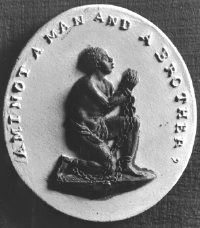
The World Evangelical Alliance is offering a 'Church Resource Kit,' featuring study guides, sermons, slide shows and film clips from Amazing Grace. The Canadian Ecumenical Anti-Racism Network, affiliated with the Canadian Council of Churches, is releasing a similar kit, with the stated goal of "undoing racism in Canadian churches."
This surge in activism is aimed at current forms of slavery. Recently, the efforts of groups such as International Justice Mission (IJM) have drawn attention to the problem of human trafficking. REED (Resist Exploitation, Embrace Dignity) -- a Vancouver-based Christian organization which advocates for trafficking victims -- offers a combination of awareness training and prayer.
"Unfortunately," wrote REED executive director Michelle Miller last year in a letter to BC Christian News, "we as a country are embarrassingly behind the world community in addressing human trafficking." IJM Canada executive director Jamie McIntosh stressed in an interview last year that Christians "led the fight against slavery in the past -- and should do so again."
Bob Beltz expresses the same conviction. One of the producers of Amazing Grace, he has just released Real Christianity -- his revision of Wilberforce's renowned book, A Practical View of Christianity. "It's fascinating that one man had as much influence as he did," Beltz told CC.com.
Working from the 1824 edition of Wilberforce's book, with the object of rendering it into contemporary language, Beltz found himself unexpectedly captivated by the power of the prose. "I kept being amazed, and writing comments in the margins."
Remarkably, he noted, the Wilberforce book "grappled with the same kinds of issues we're dealing with in the church today." As for the film, he said, "we're hoping it . . . brings awareness of the human trafficking going on today."
The film has made an impact on some who have seen preview showings, as exemplified by the response of Southern Baptist Ethics & Religious Liberty Commission president Richard Land, who saw the movie at a January screening.
"I thought it was an excellent movie that shows what happens when a man of true faith takes seriously the command to be salt and light," he told Baptist Press, adding that Wilberforce "should be an inspiration to every person of faith who takes seriously the obligation, responsibility and commission to make a difference in society."
Estimates of the number of current victims of slavery range as high as 27 million. To this number, Beltz would also add 250 million Dalits, the 'lowest of the low' in India's Hindu caste system. He noted that Wilberforce, in an 1813 speech, "said the caste issue was a bigger problem than slavery." For Beltz, the plight of the much-abused Dalits "eclipses apartheid, and segregation in the U.S."
He stressed that the Amazing Change initiative would be a key element in the current struggle -- which, he said, "is going to require a lot of action." He added: "Hopefully, awareness can inspire the kind of outrage which demands political action."
Related stories:
Are we in denial over slave role?
Canada's first known African settler, Olivier LeJeune, came to Quebec as a slave boy in 1628, owned by a Jesuit priest, Father Paul LeJeune from France.
Royson James, Toronto Star, February 5
February 8/2007