
Da Vinci Code: dissecting an insidious best-seller
Mission Fields,
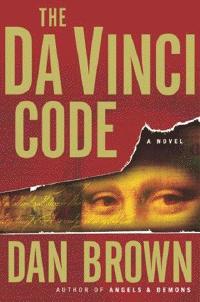 |
I GOT interested in speaking about Dan Brown's runaway best-seller, The Da Vinci Code, when a Christian asked me what I thought of it. Although he was a lifelong student of the Bible, he didn't know how the New Testament documents were collected.
He wasn't familiar with Gnostic Christians, an early sect with ideas quite contrary to mainstream Christianity. He knew very little about the first Christian Emperor, Constantine I; the Council of Nicea in 325; and the history of non-Christian religions.
His confusion reminded me that many churches have tended to spoon-feed attendees. Thus, most Christians know little about how their faith got from the 1st century to the 21st -- and even less about opposing ideas.
I also decided to lecture on Da Vinci when I read online reviews at Amazon.com and BarnesandNoble.com, featuring 'testimonies' of people who claimed to have given up their Christian faith because of this book.
A lot of people have assumed that Brown's historical insinuations are true. The fact is, however, that most of his allegations would be regarded as bogus by almost any professor of history, art history or religious studies.
Among other things, Brown asserts that "almost everything our fathers taught us about Christ is false;" that "every faith in the world is based on fabrication;" and that "since the beginning of recorded time, history has been written by the 'winners' (those belief systems that conquered and survived)."
This last assertion implies that Christianity, since it triumphed in Western culture, is based on a fraud.
Further, Brown claims there is a secret organization called The Priory of Sion, whose members have included Sir Isaac Newton, Botticelli, Victor Hugo and Leonardo da Vinci; that Tarot cards were "devised as a secret means to pass along ideologies banned by the Church"; and that Leonardo "incorporated in many of his Christian paintings hidden symbolism that was anything but Christian . . . a subtle thumbing of his nose at the church."
Brown also appeals to politically correct cliche, claiming that "Constantine and his male successors successfully converted the world from matriarchal paganism to patriarchal Christianity by waging a campaign of propaganda that demonized the sacred feminine, obliterating the goddess from modern religion forever;" that during the Inquisition, "those deemed 'witches' by the church included all female scholars, priestesses, gypsies, mystics, nature lovers [and] herb gatherers"; and that "during 300 years of witch hunts, the church burned at the stake an astounding five million women."
His most outlandish claims are that the legendary Holy Grail was really the bloodline of Jesus, who married and fathered children with Mary Magdalene; and that there were thousands of equally authoritative early Christian documents, from which Constantine and his henchmen chose 27 books to concoct the New Testament.
Da Vinci is a skillful piece of fiction. The author clearly knows a lot about history, religion, art, architecture and especially code-making. However, of the 30-plus works his website lists as his major sources, only a couple are by recognized scholars; most are by journalists. One of his main sources is Holy Blood, Holy Grail by Michael Baigent, Richard Leigh and Henry Lincoln, published in the 1980s; its conspiracy claims were later discredited by a British TV documentary.
Da Vinci promotes a neo-pagan, goddess-centred spirituality. Gnosticism, the original Paganism, Wicca and other ancient religions are claimed as 'balanced,' 'feminist,' 'egalitarian' and 'life-affirming' -- and orthodox Christianity is rejected for being just the opposite. Both concepts are unhistorical constructs.
Why are so many people attracted to this book? Many are Protestants who believe the Catholic Church has deceived people, and who suspect there may be some truth to the conspiracies suggested in the book. Other readers are attracted to New Age ideas, which are strongly affirmed by Brown.
But the majority of the readers who believe this book, in my opinion, are people who were brought up as Christians, but have dropped out along the way. They are happy to find a book which gives them a convenient and convincing argument for an assumption they've already made -- namely, that Christianity is based on bogus claims.
Ward Gasque co-founded Vancouver's Regent College and is a historian of early Christianity.