
Jesus film at 25
Mission Fields,
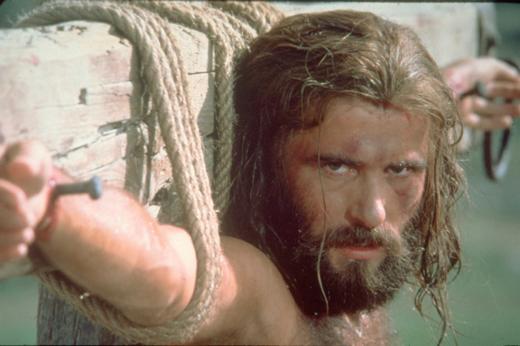
AFTER 25 years of the 'Jesus film' project worldwide -- and 13 years in Canada -- some of the most recent experiences with the film have been the most rewarding, Brian Vaughan recently told Mission Fields.
Recent work in Indonesia has been a "significant and satisfying experience," according to Vaughan, executive director of the Jesus Film Project of Canada. He estimated that the Indonesian film showings have inspired between 25 and 30 percent of audience members to accept Christ.
The ministry, Vaughan emphasized, "is not just about showing the film and how many people see it, but it's about the follow-up and church planting." Close to 500 Indonesian churches have been planted in a four-year period.
In most countries the film is presented in public venues; but in Indonesia -- the largest Muslim country in the world -- it is shown house to house with extended family groups of 30 to 40 people.
A study by DAWN Ministries asserts that 75 percent of the 1.1 million churches planted worldwide in the last 10 years were started by using one or more formats of the Jesus film.
The Canadian Campus Crusade for Christ office in Langley, B.C. has shared the late Bill Bright's vision of the 'Jesus film' project since 1991; and in the U.S., the ministry is currently celebrating its 25th year.
The Canadian office has produced 220 of the 858 languages of the film that have been distributed throughout the world, funded by church and business partnerships. Each language requires approximately $100,000 and an indigenous team of 200 to assist in dubbing, showing and follow-up activities. The team documents each new believer, and enfolds them into established or new congregations.

All the work is done through Canadian ministry partners who have gained the vision for a particular language group and provide the prayer and resources to complete it, Vaughan said. Each project takes approximately 18 months. Canadian activities have included an Inuit project in northern Quebec, translating the film into Inuktituk.
While some critics have dismissed the film as artistically lacklustre, it has nevertheless served as a very effective catalyst toward Christian faith.
Lerie Canlas has participated in several of the ministry's projects, and writes of a particularly notable encounter in Africa last December.
"Hogien Yiri is 15 km from Tuna, a village under the Bole district in the northern region of Ghana. Almost everybody in Hogien Yiri is ignorant about Jesus Christ. When the Jesus film was first screened in the Birifor language at Hogien Yiri . . . the villagers perceived the event as strange, and pinned it down as a source of entertainment. They even considered it great fun when they saw Jesus walking and stumbling as he was being tempted in the wilderness. A group of mockers laughed, hooted and made fun of the scene.
"However, towards the end . . . they understood what the film was all about. The group of mockers were touched in their hearts by what they saw, especially when Jesus allowed himself to be mistreated and crucified, then resurrected on the third day to save and set mankind free from bondage. Interestingly, before the altar call was made, five of the mockers were ready to give their lives to Jesus. They were among a number of people who willingly gave their lives to Christ that day."

Another memorable response occurred in the Chiuhis community at Quechua Cuzco, Peru. "The people were really attentive, but when it came to the moment where Jesus was suffering, all the people and children there started to cry."
When the film was over, "the people continued to cry, and at that time I went to the front and shared the word of God -- and I told them it doesn't matter if we cry, if we don't accept Jesus as our Lord and Saviour. And when I invited them to receive the Lord, the whole town accepted Jesus."
In Gitonga, Mozambique, said Canlas, a pastor viewed the film, and afterwards declared:
"God is great and powerful! I have been a Christian for a long time, but I never knew that I could receive Christ the way that the film explained it at the end. I can see that I was lying to myself. Now I really believe that I have Jesus in my life."
The Jesus Video Project America (JVPA) recently announced a digitally remastered DVD of the film. It is available in English as well as seven dubbed languages and four subtitle languages. This edition includes a scene-by-scene commentary, and a shorter version -- with extra footage -- entitled The Story of Jesus for Children.
"The release of the new Jesus DVD is especially relevant at this time, given increased interest in the life of Jesus -- and 'faith and film' -- created by movies like The Gospel of John and Mel Gibson's The Passion of the Christ," according to JVPA executive director Kevin Mascaro.
Vaughan echoed this, stating that when Gibson's film made its blockbuster debut, it increased the interest in the already popular Jesus film for all the various organizations that use the film for purposes of evangelism.
"It's been a great boost," he said.
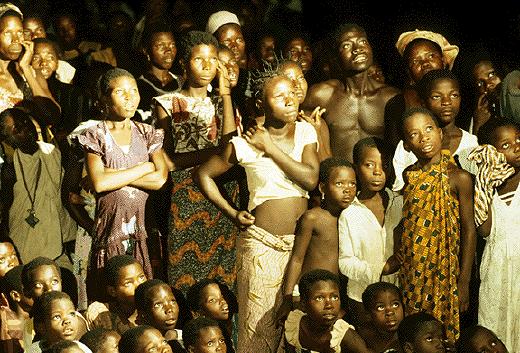
The Jesus film continues to impact audiences worldwide, as this showing in Africa demonstrates.