
India: Election results good news for Christians
Mission Fields,
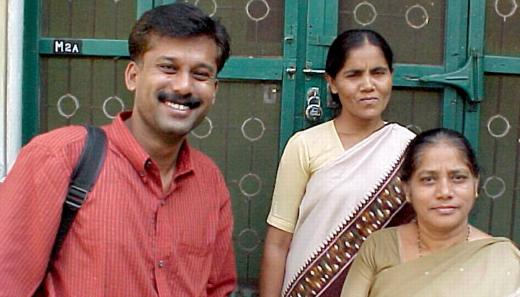
Vern Middleton, recently retired from his post at ACTS Seminaries, spent many years as a missionary in India. Mission Fields recently spoke to him regarding that country's new political landscape, resulting from the defeat of the Hindu nationalist Bharatiya Janata Party (BJP):
Mission Fields: How does the election result affect the status of Christians in India?
Vern Middleton: The election results in India were a miracle for minority communities in that land. The former government was definitely a strong supporter of Hindutva -- which means the political assertion of Hindu values, beliefs and traditions.
Over the past several years, there has been a strong attempt to forge unity among the diverse segments of Hinduism. The 18th and 19th century celebration of diversity in Hinduism was replaced by the BJP with an attempt to create a strong sense of Hindu oneness and solidarity. This has resulted in overt pressure and oppression upon Christians, Muslims and Sikhs. Anti-conversion laws were adopted by several states. The new Congress government is more secular in nature.
Just before the election was called in India, a national newspaper published a scathing article against Christian missionary activity. The article claimed that George W. Bush was funding Christian conversion activity in India. It also charged the Indian Christian missions with partnering relationships with Western missions. Had the BJP won the election, steps would have been taken to shut down the threat of Christian missionary activity, whether national or international.
MF: Can you speculate on how evangelism will now progress in India?
VM: India has 200 indigenous mission societies with a combined number of workers in excess of 20,000. Unfortunately, a vast majority of these missions and workers are targeting the tribal communities and ignoring other doors of opportunity -- such as the 250 million middle class people in urban centres, the 170 million Muslims who are far more responsive than Muslims living in an Islamic country, and the Dalit population that is making vast strides to overcome the stigma of caste. In the next 10 years, India's missions will refocus on some of these other ministries.
I have observed that evangelism in India has become deinstitutionalized, and that a more holistic approach is being taken by many missions. I have also observed that areas of India previously neglected have now opened up to a real move of God's Spirit. Cell groups are springing up in villages where previously there was no witness.
MF: In your view, will the activities of militant Hindus continue to cause problems for the Christian community in India?
VM: Militant Hindus will want to retain the influence they have enjoyed for the past eight years; however, their activities will be restrained. They will not be able to get away with the horrible atrocities they have committed in the past. The communal riots against the Muslims in Gujarat will be curtailed. The burning of churches and the false charges against Christian workers will largely be a thing of the past.
MF: How will the election results probably affect India's caste system?
VM: The BJP reign in India polarized the high castes against the Dalits. This tension will continue but the Dalits are resisting the age-old oppression against them. In some places this may spark violence and even civil uprisings. Many Dalit communities are turning to Christ in search of dignity, meaning, purpose and spiritual freedom.
Other views:
"The whole situation had become quite tough, with the pro-Hindu government encouraging the Hindu militants. We were praying all over the country. All the polls indicated that the BJP would sweep the elections. The result was a real surprise to everyone. But from a Christian perspective, we shouldn't have been surprised -- because we had prayed."
Richard Gnanakan, International Needs India
"The opposition to Christianity [in India], at times violent, is not based on political influence. It has been always the work of some fanatic groups, either Hindu or Muslim. Government, whether the earlier Congress or BJP, always was obligated to take action against it. But during the BJP days, the fanatic groups got little more morale boost assuming that the ruling part was notably Hindu minded. This gave way to more violence against Christians. With the new government, perhaps such daring acts will be much curtailed."
Matthew Koshy, Indo-Canadian ministry leader, Richmond Pentecostal Church, Richmond, B.C.
"Civil society is now looking forward to the rejection of the Hindutva agenda that has affected many areas of Indian life. A national anti-conversion law is now out of the question. Most certainly, there will be a review of the anti-terrorism laws that have been used to victimize the innocent. Civil society wants an immediate review of the education policies adopted by the outgoing dispensation. Most importantly, more attention needs to be given to the oppressed [caste], the Dalits."
Joseph D'Souza,
President of the All India Christian Council
The main obstacles to communicating the gospel to Indian expatriates are "ethnic and religious bonding; fear of losing cultural identity; community pressure to conform; family honour and fear of change. Other reasons are suspicion, indifference, hostile reactions and polarization of religious groups with resistance to any efforts at association."
Pritam Singh Sandhu,
Coordinator of the South Asian Global Convention