
Spreading the Word
Mission Fields,
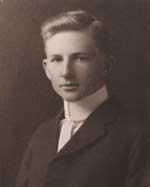
NAMED AFTER John Wycliffe, the first person to translate the Bible into English, Wycliffe Bible Translators has been officially operating for seven decades.
The organization's work had its origins in 1917, when Cameron Townsend unsuccessfully attempted to sell Spanish Bibles to the Cakchiquel people of Guatemala. Upon discovering that they had no written form of their own unique language, he began living among them. He set out to learn the language, then created a written alphabet for it. Within 10 years, he had translated the New Testament into Cakchiquel.
Inspired by this experience, Townsend established Camp Wycliffe in Arkansas in 1934. His aim was to train young people in linguistic skills and translation techniques. The following year, he and five others began work in Mexico. From that point on, Wycliffe grew to become a widely-respected ministry with thousands of people operating in many parts of the world.
The organization now works with various universities, non-profit agencies and governments to bring scripture to indigenous peoples -- often in cultures where standard missionaries are not welcome. One of their most recent projects was the completion of a New Testament translation for the Dogrib people of Canada's North West Territories.

Wycliffe's educational arm in this country is the Canada Institute of Linguistics, in Langley, B.C. CanIL has recently opened a permanent facility on the campus of Trinity Western University. The significance of the new building is more than just new facilities, according to director Mike Walrod. "It helps us meet the need to recruit and train many, many more people for the still so enormous task of Bible translation worldwide."
The cross-cultural scope of CanIL's programs is enhanced by its increasing appeal to students from around the globe; in recent years, students have come from 30 nations. "This actually helps us in that we have our students interacting with fellow students from different nations right on campus," according to Walrod.
CanIL's programs include translation, language and culture learning, linguistics and literacy. It integrates scholarship with service to language communities worldwide. In addition to their affiliation with Christian organizations, CanIL faculty regularly contribute papers to the Canadian and American linguistic associations and are requested to present and publish papers on their research and work in linguistics on a regular basis.
Wycliffe has further connections to the academic world through its sister organization, SIL International. Begun in 1942 as the Summer Institute of Linguistics, SIL has established itself as a credible entity in the secular realm.
Among other things, SIL's efforts are directed at the preservation of endangered languages. SIL, writes the group's linguistics coordinator Michael Cahill, "has worked in languages of fewer than 100 speakers. At the time, those languages looked like they were dying, but today are thriving."

"SIL is highly respected and highly visible in linguistic circles, at least in the fora I amprivileged to attend," says Jerold A. Edmondson, who was for several years the chair of the linguistics department at the University of Texas in Arlington (UTA). SIL, he says, "will often have one of the largest contingents of participants at international meetings, such as the International Conference on Sino-Tibetan languages and Linguistics and the South East Asian Linguistics Society."
Since 1975, SIL has collaborated with UTA to produce a series of books -- which, says Edmondson, "are highly sought after and sell well." Further, he says, "I have worked with very competent [SIL] people in the field, who have great local language skills -- and who have been able to work 'within the system' in some difficult countries, such as China . . . I would say that the reputation of SIL has grown over the last twenty years."
This, he says, is partly because SIL "has been encouraged to participate in the secular world." He adds: "There are still some in our field who refuse to be associated with SIL and SIL activities." However, "they are a small minority and getting smaller."