
The nations sing for joy
Mission Fields,
"May the peoples praise you, O God; may all the peoples praise you. May the nations be glad and sing for joy." (Psalm 67:4)
THE TEMPERATURE was approaching 40 degrees, with barely a breath of wind to rustle the stray tufts of dried grass that clung to the parched soil surrounding the Vagla village. From the tin-roofed church near the edge of the village came the sounds of voices singing in typical African 'call and response' fashion, accompanied by an ensemble of traditional Vagla instruments -- bells, rattles and drums.
The singers were clapping their hands, dancing in a circle, and swaying to the beat of dugu, a type of traditional music the Vagla people of Ghana sing and dance on social occasions. The music and the words were Vagla, but the text of the song was 2,000 years old: "If you are carrying a heavy load and getting tired, bring it to Jesus. He will save you. You who labour hard, come to Jesus, because he has peace."
This was an occasion of great joy and celebration, for it marked the creation of the first indigenous hymns by Vagla Christian musicians. Although they had had the New Testament in their own language for 20 years, until this day in 1997, their worship music had been borrowed from other cultures.
Now, with the guidance and encouragement of a missionary ethnomusicologist, they were being set free to worship God with new understanding, using the language and music of their own hearts.
Pastor Phillip, a blind Vagla musician, testified to the power of the new songs being composed. "You can't see my eyes because of these dark glasses, but when I heard these new songs, tears came to my eyes. For many years, we could have used our music to worship God and reach our people. Instead, the music has been used by the devil."
Throughout history, Christians everywhere have worshipped God and witnessed to the reality of his truth through "songs, hymns, and spiritual songs," drawn from scripture and from their own experience of God's grace.
Unfortunately, in many cases, attempts to transplant western music and western hymnody into the newly planted churches instilled negative views of their culture into the minds of many non-western Christians.
The sad result has been that these believers have often been hampered in their worship, and in their ability to communicate the gospel in their own societies.
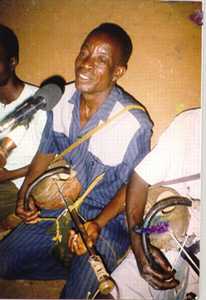
Against the background of past mistakes, many mission agencies today are enlisting ethnomusicologists to assist emerging churches in creating and preserving their own native hymnody. The task of the missionary ethnomusicologist is to study a people's music system in order to help believers within the culture to create their own music for worship, teaching and outreach.
The ethnomusicologist's role is not to compose the music, but to be a catalyst to encourage the local believers, especially musicians, to develop their own culturally relevant musical expressions, using the cultural resources already available to them.
The strategic significance of ethnomusicology in church planting has been demonstrated in many parts of the world. Some years ago, Yoruba Christians in Nigeria composed and recorded a musical setting of the book of Hebrews, using their own musical forms and instruments.
When the tapes were distributed throughout the villages of the region, the response was astounding. Christians and non-Christians alike memorized entire chapters, just by listening to the cassettes over and over. The tapes were played by people going to their farms, in the market place, in homes, in taxis, even in the beer halls. Because the music was appreciated by the people, they were eager to listen, to sing and to learn the songs. The music became the means through which the word of God was planted in the hearts of thousands of people, many of whom were illiterate and could not have read a printed Bible if they had had one.
During the summer of 1998, Carmen Binder, an ethnomusicology student from Prairie Bible College, assisted in Scripture in Song workshops held by Wycliffe Bible Translators among the Abidji people of Côte d'Ivoire. After hearing and singing the new songs that were composed at one workshop, the first indigenous Abidji Christian music, one man shared this testimony with Carmen, "I have never before experienced such joy in worship. Today God has become Abidji!"
Vernon Charter coordinates the ethnomusicology program at Prairie Bible College.