
Nordicity: God's heart for the North
Mission Fields,
Frozen, barren, wasteland -- these words tend to come to mind when thinking of that region of land 70 degrees north and beyond. Fine for a few foolhardy adventurers, perhaps, and the native peoples who have lived there for centuries, but as a major destination for missions? Not likely.
Yet God is using people like Youth With A Mission's (YWAM) Geoff and Milja Clarke to slowly but surely reveal his heart for the north and reverse the stigma so many southern-dwellers hold about the Arctic region.
"It was the same with Africa. People used to say: 'Don't send me to Africa.' Now it's 'Don't send me north,'" says Clarke, northern missions coordinator with YWAM in Kelowna, B.C.
Trained as a wildlife fisheries biologist, Clarke spent 18 years in National Parks Canada as a warden in the Rocky Mountains, Northwest Territories and Quebec. God first placed missions in his heart 11 years ago after meeting Norwegian missionaries at his warden station in Jasper National Park. It soon became clear, after a missions trip to Samiland, formerly known as Lapland, that God had given Clarke a love for 'nordicity' -- all things northern. Soon after, Clarke met and married Milja, his Finnish wife.
Together, the couple coordinate missions outreaches in northern nations, including Greenland, Norway, Finland, Canada and the Alaskan U.S.
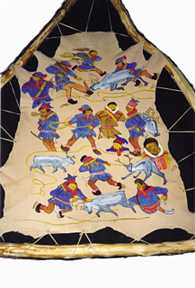
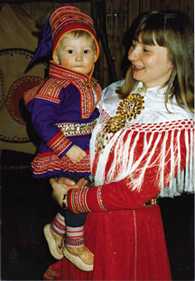
The Sami reindeer herders of northern Europe have been a particular focus, but Clarke is adamant that their ministry is about northern people groups, such as Finns, Norwegians, Swedes, Sami and Canadian First Nations. "It's a very integrated multicultural approach to missions," he explains. "God gives you nations to minister to."
"They're all people of the land," he adds. "We have a heart for the land and the people, as part of God's glory and his creation."
Clarke believes it's a "dangerous assumption" when people question the point of ministering to the cold, lonely, underpopulated north. "God makes no mistakes in his creation. We might have forgotten these people, but God has not forgotten them. God doesn't look at the earth in terms of proximity to the equator. It's his earth, and we need his perspective on it."
One of the greatest needs in the north at this time is discipleship, Clarke says. The recent Transformations II video has drawn attention to the sweeping spiritual changes occurring in the Canadian Arctic. The First Nations people of the north have seen these changes as a sign that God cares for them, Clarke says. "How do we respond as a nation to what is happening to our brothers and sisters there?" Clarke asks. "Is is just 'oh Lord, make it happen here, come and hit us next'? How do we serve them? They've been transformed, but is that enough?" he questions.
Serving native believers brings a great blessing, Clarke believes. "There is a tremendous spiritual release when First Nations are saved and starting serving God," he says. He believes this is because they are so close to "God's creation and the Creator."
The Clarkes oversee a new Discipleship Training School (DTS) that benefits from the input of native believers. Called Life Skills, it combines classic DTS curriculum with practical life skills development.
"We noticed over the years that many people who joined YWAM were lacking practical skills," Clarke says. Learning skills that most of the world uses, such as packing and saddling an animal, using tools such as chain saws, and even harvesting an animal for food can increase the confidence people in the rest of the world place in westerners, he says.
"If you can say, 'Let me help you saddle your donkey, pack your llama or help you with your goats,' it connects us with a people group, and gives those other people confidence that these people of God can work with them," he explains.
In the Life Skills DTS, First Nations believers teach about planting, harvesting animals and wild plant identification. "We as western believers have a lot to learn about God and Jesus through his First Nations believers," Clarke says. "It will bless you so much to spend time with these believers in their place on their land."
In Life Skills, professionals also train in the use of machinery. "We've had slightly built Asian women cutting down huge trees after proper training," Clarke says. "It's a faith builder -- combining faith and work together -- a practical tool to put in the missions belt."
Another unique course which has grown out of Geoff's warden background is a wilderness discipleship course that takes place in Arctic Norway. It is a chance to encounter God in the wilderness, to be challenged physically, and to learn to trust God and hear him, he says.
One night during a wilderness discipleship course, Clarke says, the group was sharing testimonies -- when the Northern Lights suddenly came on, as brightly as if someone had flicked a switch. "They were the most brilliant I have ever seen," Clarke remembers. "It was like God was saying he was pleased with his children. We were stunned, silent. What else are the Northern Lights for, but to display his glory?
"When Jesus said 'Go,' he didn't just say go when it's warm and you're comfortable. 'Go' is for all seasons and climates, for every part of the earth. Go to the north in February when it's coldest and darkest. Even in winter, it's still full of his glory: the Northern Lights, his hand sweeping across the heavens."