
A candid vew from street level
Mission Fields,
 |
Emerging from the Evangelical Fellowship of Canada's roundtable on poverty and homelessness, Street Level was a late-April Ottawa gathering of some 300 individuals representing organizations from across Canada. The conference focused on solutions to poverty and homelessness; participants included political, media, business and church leaders. A hard-hitting document, The Ottawa Manifesto, was issued in conjunction with the event. A few days later, plenary speaker Rick Tobias, executive director of Toronto's Yonge Street Mission, spoke with reporter Steve Weatherbe.
Mission Fields: What is your reaction to the conference?
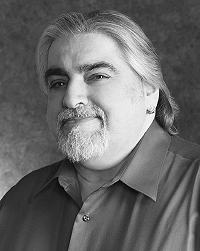
Rick Tobias: I personally think it is the most exciting thing to happen in the evangelical church in Canada in 50 years. Evangelicals have never stood for justice in Canada; they've just pretended to stand for justice. Usually, when they talk about justice, they mean serving their own needs and their own agendas.
This was a conference where they actually talked about the needs and agendas of other people. Instead of it being "We're against gay marriage, we're against all the things that violate our principles, and we're using all our political energy to fight those things," it was actually a first time for them to say, "There are other people in Canada who are having their rights violated and we're going to stand with them."
MF: What are the main features of the injustice that you see?
RT: Let me back up and insert a point between this question and the last one. Evangelicals, to be fair to them, have a great track record at doing compassion. We are able to help people as individuals but we don't often help in the end to change whole communities, neighbourhoods or whole systems.
At this [conference] there was kind of a communal consensus that it was time to move beyond compassion to justice. That's the theological shift that says we have to stand for justice. So injustice means living in a land that does not have a national housing strategy. That's immoral for a country like Canada. We live in a land where the poor are not protected under the Charter of Rights and Freedoms.
MF: What do they need protection from?
RT: From landlords who don't rent to them because they're poor or on welfare. From employers who won't hire them on the basis of the neighbourhoods they live in. From MPs who won't listen to them because they don't make enough money to be powerful taxpayers.
MF: The Ottawa Manifesto did not ask for specific measures. But you have already mentioned a national housing policy. What are some other measures?
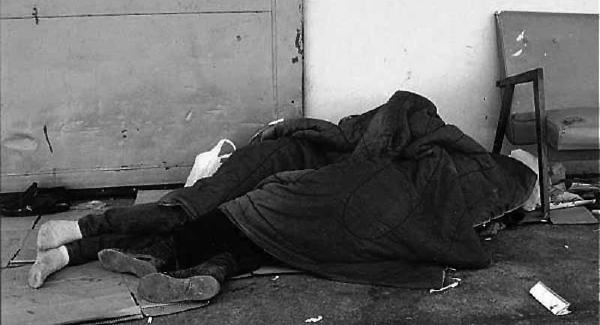
RT: If you had been at the conference you would have heard a whole lot more from me. We talked about violence against women as being unjust. We talked about the fact mentally disabled people in Canada are left to fend for themselves, homeless on the street. The mentally disabled are poor by virtue of infirmity; they are the least of the least of the poor that Jesus would allude to, and we leave them to homelessness in one of the richest nations in the world. They live in gutters; they live in ravines; they live in back alleys; they eat out of the garbage - and that's a violation of human rights the evangelical Church has to come to grips with.
Two thousand passages of scripture speak about God's care for the poor. Two thousand! We've taught five generations of Christians that good Christianity is sitting in church listening to the pastor. Good Christianity is changing the world and extending the kingdom to the least of the least.
MF: In what ways could evangelical churches respond?
RT: What if evangelical Christians in Canada said, 'We will not vote for any political party that does not have a national housing strategy?' What if every evangelical Christian in Canada said, as Deuteronomy 14 says, that 1/3 of your tithe belongs to the poor? What if every evangelical Christian in Canada gave three percent of their income to care for the poor in the land? What if every evangelical Christian volunteered in a local mission? What if every Christian family gave to food banks? There's an unlimited array of things that evangelicals can do.
MF: Why did the conference happen?
RT: We got together because [we] got tired of being treated like the second-rate children in the evangelical family. We got tired of going to conferences and asking for a workshop on this and being told no. We got tired of going to seminaries and asking for a course on poverty and justice and being told no. So finally we said, "We have enough strength now to speak for justice. We have a network that is informal now; but it will formalize over the next five years."
MF: Can you say something about the variety of missions you saw across Canada?
RT: We saw the larger missions like the Mustard Seed in Calgary or the Yonge Street Mission in Toronto or Welcome Inn in Montreal, or Salome Mission in Winnipeg or the Salvation Army clear across the country. And then we saw little ministries like the Ark in Halifax. The Ark in Halifax is absolutely amazing. Three women who for five years have been working with street kids on a total budget of $70,000 a year.
MF: What's the hardest part of your job?
RT: One that comes to mind is what happens when we see our people diminish or watch our people die needlessly, whether children or adults, simply because nobody got to them or we got to them but it was too late and we couldn't get through to them. They were too broken or wounded. And there's no street worker who doesn't have stories that have scarred their heart as they have watched evil take its toll in the lives of people. For me personally I've been listening for 35 years to people in the church asking me when I am going to get a real ministry.
MF: Do you have hopes this conference will change that?
RT: I don't know. What I do know is: We are the future of evangelicalism in Canada. Because evangelicalism as it has historically existed is morally and spiritually bankrupt. I have no apology in saying that. It has lost its way. It has lost its biblical rootedness. It bows down to the God of commercial success.
MF: How does it do that?
RT: Who do we appoint as our elders? Who do we appoint as our deacons?
MF: Lastly, can I ask you for a closing thought?
RT: I want to say that this Street Level as a conference was significant. Over a half of the delegates were under 40, with lots under 30. This [non youth] gathering has the lowest average age of any Christian gathering I've ever been to. This is hugely encouraging, and speaks well to the future of evangelicals and social justice in Canada. It will put pressure on the evangelical wing of the church.
 |
A special visit to Yonge Street
In April, Yonge Street Mission hosted a private meeting arranged by Canada's Governor General, Michaëlle Jean (right). Her Excellency invited several experts, including ministry head Rick Tobias, for a discussion on family violence, including violence against women. From l979 to l987, Jean worked with Quebec shelters for battered women. She was also involved in aid organizations for immigrant women and families. Her passion for this work continues to be very much in evidence. Following the meeting, Tobias escorted Jean to the Evergreen Centre for Street Youth, where she had a lengthy tour and interacted with many staff and youth.