
Standing against Illegal detention
Mission Fields,
NIGHTLY newscasts about Canadian citizens William Samson, Zahra Kazemi and Majer Arar have brought illegal detention and torture flooding into our homes. For most Canadians, even proximity to the TV feels just a bit too close for comfort. Feeling powerless, we change the channel. I know I do.
For innocent victims, however, the channel is locked on - supersaturated images and noise in high definition and surround sound, the remote control in someone else's hand, with no reprieve in sight. Many do not survive.
Paul
On a Friday in 2003, Esther visited her husband Paul at the police station; he had been arrested for an argument with a neighbour. Expecting his release, she returned the next day - to find her husband lying face-up in a pool of blood, with his broken cell door beside him.
The police commander told Esther her husband had died from self-inflicted wounds by banging himself against the walls of the cell. An autopsy revealed severe head and chest injuries, traumatic bruising and massive internal bleeding.
A local priest referred the family to International Justice Mission, a Christian human rights agency. IJM investigated, and presented reports proving the police were responsible for Paul's death. IJM staff later visited Paul's grave with his mother Mary, his wife and their son John. The sunken plot was unmarked - its wooden marker stolen for firewood.
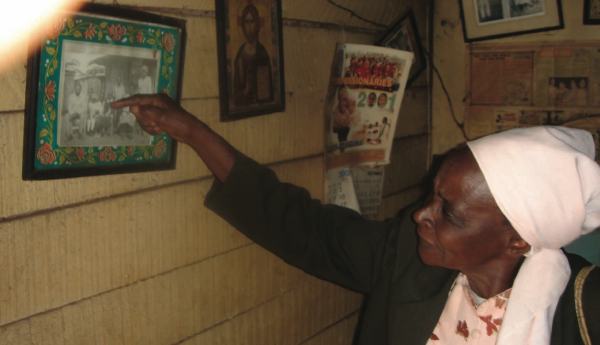
As Mary longingly traced her finger over her lost son's photograph, her courage to reach beyond her devastation was inspiring. She remarked that, despite terrible circumstances, they remained prayerful - even when thinking of the people who committed the crime against her son and perpetrated injustice against their family. "You must have a forgiving heart - to forgive even our enemies, to love our enemies."
IJM continues striving to bring accountability to those who killed Paul. Esther has encouraged the others to remain patient, and asked for prayer "that this case may be resolved."
Samuel
For nearly four years Samuel, a caring husband and father, had been locked away on charges of armed robbery - though his family, the investigating officers and the judge who sentenced him all knew he was innocent. He was a convenient scapegoat, and would suffer horrors in a Kenyan prison - including torture, mutilation, familial separation, loss of reputation, disease and an agonizingly slow death sentence.
After realizing he had been detained for several days without counsel, Samuel's wife hired a lawyer to contest the detention. Samuel was charged with robbery with violence, a non-bailable offence that carries a mandatory death sentence.
Lacking a case, police proceeded to torture Samuel to obtain a confession. Eyewitness testimony that Samuel was not at the scene of the robbery was available to the investigators; but Samuel and his co-accused languished in police custody season after season. At the end of each hearing, the presiding magistrate adjourned the case for months at a time.
Two years into his imprisonment, IJM learned of the case from a missionary working in Nairobi. IJM advocates lodged complaints to relevant authorities when they perceived any misconduct; the case thereafter proceeded in a prompt manner.
IJM applied for the court proceedings and realized that not one of 37 prosecution witnesses had implicated Samuel. In fact, no credible evidence was ever produced linking Samuel to the robbery. IJM was allowed to make the final arguments, and the defence closed its case. On December 14, 2001, Samuel and his co-accused were acquitted of the charges.
Scars on the soul
Sometime before his release, Samuel had told me about his torture at the hands of a particularly notorious officer.
He said he drew strength from the knowledge that the fate of others was worse than his own; if they could make it, he said, then he would be given the strength to survive. This perspective has enabled him to rise above his suffering.
Five years after his release, it is clear that his ordeal marked Samuel - not merely with scars on his body, but to the core of his soul. Yet maybe not in ways that one might expect. Instead of raging bitterness, a certain peaceful gentleness and guileless passion exudes from within his spirit, as he quietly encourages me to understand that God has called each of us to "remember those in prison as if it were we ourselves."
He further explains that those in prison are to be remembered not because perhaps someday a false accusation or unjust imprisonment or horrific torture might visit us.
Rather, they are to be remembered as ourselves because the holy Lamb of the ancient scriptures, who knows what it is to suffer for crimes not his own, has shown us a more excellent way, the way of sacrifice and love.
Jamie McIntosh is executive director of IJM Canada. In order to protect torture victims, pseudonyms have been used. © 2006 International Justice Mission.