
Why Azusa Street still matters
Mission Fields,
This year marks the 100th anniversary of the renowned Azusa Street Mission revival in Los Angeles. The mission's charismatic manifestations of faith soon spread beyond California, and inspired tremendous missions activity - as this excerpt from The Azusa Street Mission and Revival demonstrates.
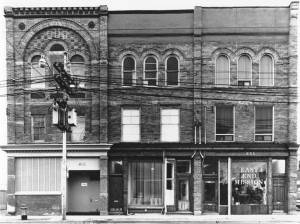
THERE ARE several reasons this African American mission received so much coverage and why the story bears retelling today.
First, it grew with unparalleled speed. The Azusa Street Mission was aggressively evangelistic. In a day of 'church growth' schemes, burgeoning 'megachurches' and 'emergent' churches on the one hand, and declining church membership in many historic congregations on the other, it is important for us to hear once again how a small prayer meeting of some 15 people, including children, grew into an internationally acclaimed congregation of hundreds in just three months.
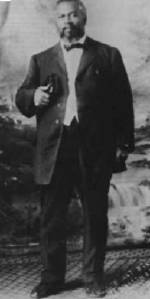
In a day when the growing challenge of secularism questions the legitimacy of evangelistic and missionary activities by the church, when governments around the world are increasingly enacting 'anti-proselytism' laws or are challenging the church's freedom to proclaim the gospel in the public square without censorship, the successes and failures of the Azusa Street Mission's policies need to be studied anew.
Within days of its beginning, meetings at the mission exploded as crowds swarmed the place, filling the building and spilling outside. There they listened for hours even through the open windows of the mission, where they hoped to catch a glimpse or hear a snippet of what was happening inside.
Estimates from the period suggest that crowds grew to as many as 1,500 people on any given Sunday during 1906. From time to time, literally hundreds of hymn-singing celebrants, candidates and members of the mission made trips to nearby San Pedro and Terminal Island, commandeering trains and streetcars that took them to all day baptismal services at the beach. It was common to find as many as I50 to 250 new converts being baptized at each of these events.
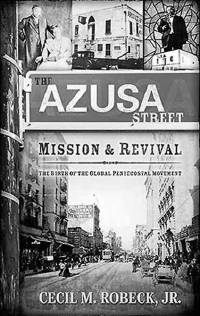 By late-summer 1906, less than six months after it was founded, members and sympathizers had established several related congregations in Los Angeles and surrounding communities.
Leaders participating in the Azusa Street revival used the public transportation system to spread the revival. The streetcar lines provided easy access for the Azusa Street faithful to take their message to the surrounding suburbs.
As a result, many Azusa Street participants moved out of the mission to hold meetings on heavily trafficked street corners in the nearby towns of Pasadena, Monrovia, Whittier, Anaheim, Long Beach and San Pedro.
They distributed tracts, set up tents or rented storefronts, plotting out where they would be most effective as they established other permanent places for Pentecostal worship.
By September 1906, the mission had sent a score of evangelists up and down the west coast of the United States to places such as San Jose, San Francisco, and San Diego, California, to Salem and Portland, Oregon, and to Spokane and Seattle, Washington. By December 1906 they were in Denver and Colorado Springs, in Indianapolis and Minneapolis, in Akron, Alliance, and Cleveland, Ohio, in Chattanooga, Tennessee, in Norfolk, Virginia, and even in New York City.
By December 1906 the mission had commissioned and sent at least thirteen missionaries to Africa. Four of them were white; they all went to Angola. Nine of them were African Americans who, in their travels across the United States, recruited three more people to join them for ministry in Liberia.
By January 1907 they had begun ministering in Monrovia, Liberia and surrounding outstations and by 1909 an Apostolic Faith Mission, which boasted 154 baptized converts, had been firmly established there.
By early 1907, missionaries from the Azusa Street Mission had entered Mexico, Canada, Western Europe, the Middle East, West Africa, and several countries in Asia. By 1908, the movement had spread to South Africa, Central and Eastern Europe, and even Northern Russia. It is because of the singular success of Azusa Street's missionary program, before any others were in place, that I have chosen to claim that its story is unique to the birth of global Pentecostalism.
Successes like these did not come easily. They often took their tolL Most of the earliest missionaries to Liberia died of malaria and related diseases within weeks of their arrival. Evangelists and missionaries with an uncommon experience of God, and a headstrong zeal for telling others of what had happened to them, were often ridiculed or arrested for their troubles.
Sometimes they were so noisy that they could be heard blocks away. And their antics were often unseemly. Sometimes they violated the public peace and even disrupted cornman standards of public decency. They were harassed by neighbors seeking peace so that they could sleep.
The unwillingness of many of these people to seek medical attention and their dogged reliance upon healing through the prayer of faith, led to scrapes with the law over the nature and limits of acceptable medical practice.
Their initial reliance on prayer instead of doctors, and complaints lodged by neighbors who were concerned with the exposure of children to what they perceived to be nothing more than psychological manipulation, led child welfare agencies to investigate charges of child abuse. Their noise, their antics, and their belief in divine healing even fueled the fires of public debate on the legitimate limits of the free exercise of religion in the United States.
Reprinted by permission of Thomas Nelson, Inc., Nashville, TN., from The Azusa Street Mission & Revival, copyright 2006 by Cecil M. Robeck, Jr. All rights reserved.