
Opening Pandora's care package
Mission Fields,
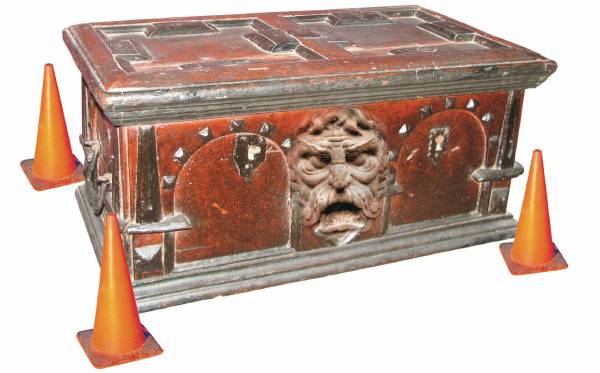
WHILE there are no statistics or hard facts about the care packages sent to missionaries abroad, there is plenty of anecdotal evidence that the senders sometimes miss the mark.
Urban legend
There's an old story that has circulated through North American churches for generations. Although it has become something of an urban legend, there are many missionaries that insist it's true. It goes something like this:
A missionary plying away in some foreign land receives a parcel in the mail from the congregation 'back home.' Inside is a gift, a show of good will, meant to lighten the missionary's load. In this case (so the story goes) someone took the time to carefully wrap, address and air mail a box of . . . used tea bags. In the most literal sense, a tasteless gift. The sender took the first 'fruits,' then sent the dregs in the guise of something that had value.
The missionary care package is, unto itself, a unique form of communication. The items inside convey a lot about the sender and that person's understanding of those serving in the field.
The 'gifts,' tucked into boxes that are thrown, rolled, x-rayed, inspected, sniffed and sometimes pilfered enroute to destinations abroad, signify, loud and clear, what a churchgoer in North America really believes about missionaries.
Gifts can be invaluably practical. Yet, they are sometimes cumbersome and thoughtless. Some offerings are beautiful in their simplicity. Some are puzzling or even bizarre. Many signify a deep appreciation and concern for one's spiritual 'brothers and sisters.' Others are the product of stereotypes and misunderstandings about missionaries gladly accepting any manner of castoffs from the developed world, as if the mission field were a Value Village, not a global village.
Caviar in Tanzania
One Canadian missionary to Tanzania recalls receiving a package from a Sunday school class which contained, among other things, old Christmas ornaments, half a pack of gum, some pepperoni sticks and one child's sarcastically toned letter about the luxuries of caviar and swimming pools - that the missionaries were surely missing out on.
"I replied with a letter thanking them but also letting them know of the pool in our backyard and our Russian friends (there in our town) who often had us over and served us caviar," she told Mission Fields.
"I also told them of how God blesses us richly when we are in his work. Then I gave their class some ideas of other things they may want to send missionary children in the future."
In talking to missionaries, it's evident that the cost of the gift is irrelevant. The small things do make a difference. Little comforts from home that can't be found abroad - a favourite chocolate bar or candy, a brand of shampoo, cooking ingredients - are all treasured.
An African missionary I once spoke to was able to watch NHL hockey games from his remote post on video tapes he received in the mail. As a Toronto Maple Leaf's fan, however, he had no Stanley Cup parade through the jungle.
Fresh apples
Missionary Nick Pauls remembers how he and his wife Doris longed for the taste of fresh apples when they were working with Wycliffe Bible Translators in Papua New Guinea during the 1970s. Apples were scarce there and, when they were found, were expensive and of poor quality.
Seizing the opportunity, Doris' sister airmailed two apples from Chilliwack, B.C. "We lovingly unwrapped the carefully packaged Macintoshes and savoured the smell of home, then we carefully cut these two treasures into pieces to share them with our four children," recalls Nick.
"The net result of this kind act was much greater than the value of two apples. It was a demonstration to our entire family that the Almighty cares about the 'desires of your heart.' . . . Kindness has a way of reaching across oceans and lasting for generations."
While there are many missionaries who live and work in urban areas with easy access to high-quality goods and services, there are just as many who go to great lengths just to retrieve the mail. In these cases, a well-timed care package can make a world of difference.
Gloria Drayton spent 35 years of her life as a missionary in Zimbabwe. Drayton now works in the Centre for Life Calling and Career Development at Trinity Western University, in Langley B.C. She still thinks of her grandmother every time she smells freshly baked bread.
Yeast
When she was a child, Drayton would look forward to the times her family would make the two day bicycle trip to the nearest post office. Every week, her grandmother would send a letter that contained three small packages of yeast.
"I always recognized Grandma's letters by the distinct rattle of the yeast in the envelope, even when I was too young to read the return address," she says. "During the rainy season, with rivers flooding, we would often go for a month or more without receiving our mail, and those were long weeks without any bread. So, Grandma's little care packages meant a lot to us."
Also in Zimbabwe, a missionary nurse who worked with Drayton's family would regularly receive a package from an elderly supporter who lived in a nursing home in the United States. The woman would collect her tithing money in one- and five-dollar bills, package them up in a fat envelope and send it in the mail, perhaps trusting God that the cash would not get lost. In order to avoid theft however, she printed the word 'pictures' in bold words on the front. Because the greenbacks were printed with the faces of past presidents, the shut-in believed that her clever ruse - though diversionary - didn't break any of the commandments.
Like a lot of things in life, the spirit behind a gift can supersede the value of the item itself. It's easy to tell the difference between a well-meaning misstep and a carelessly conceived one. And, in some cases, God can even use a well timed faux pas to encourage those in the field.
Eight dollars
Marilyn Shaferly, who works with Radio 4VEH in Haiti, remembers a time when staff morale was in a "low ebb." During this period, the group received a message that there was a package waiting for them at Haitian customs. After forking over eight dollars, they returned to their station to find out what was inside the mysterious package that had been so carefully scrutinized by the government officials.
"Much to our amazement, it was a box of ties - really old, really garish ties," recalls Shaferly. "Without much hesitation, and with a great deal of hilarity, various staff members began grabbing ties. Around the neck they went - frontwards or backwards, it didn't matter. Soon we found ties gracing our microphones or the backs of chairs . . . The morale of the staff shot up to the top. It was the best eight dollars we ever spent."
While mission work can be very rewarding, there are times of loneliness, alienation and self doubt that can be cured by simply connecting with someone in another part of the world. In that sense, a well-timed, thoughtful care package has the unique ability to nurture missionaries both physically and spiritually, all in one shot.